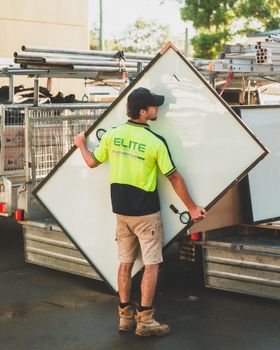
You may have seen a solar crew working on a nearby roof and wondered, “Could I do that without a college degree?” For many people, the answer is yes. Solar installer jobs can provide an entry point into the energy and construction industries, especially for applicants who are comfortable using tools, working outdoors, and learning through hands-on training.
The occupation involves more than carrying panels up a ladder. Installers measure and prepare surfaces, assemble mounting systems, position photovoltaic modules, assist with wiring, test equipment, and follow detailed safety procedures. With experience and additional training, an entry-level installer can move into crew leadership, electrical work, system design, project management, sales, or business ownership.
What Does a Solar Installer Do?
Solar photovoltaic installers build and maintain systems that turn sunlight into electricity. Their exact responsibilities depend on the employer, the project, and state licensing rules. Residential crews usually work on sloped or flat roofs, while commercial and utility-scale teams may install large systems on warehouses, parking structures, or open land.
A typical day may include:
- Reviewing plans, measurements, and jobsite conditions
- Setting up ladders, lifts, fall-protection equipment, and tools
- Locating roof attachment points and checking measurements
- Assembling rails, racks, supports, and mounting hardware
- Lifting, positioning, and securing solar panels
- Applying flashing or sealants to prevent water intrusion
- Routing cables and assisting with approved electrical connections
- Testing components and documenting completed work
- Cleaning the site and inspecting the system for visible problems
Not every installer is permitted to complete all electrical tasks. Depending on local laws and company policies, a licensed electrician may handle connections to service panels, inverters, batteries, or the utility grid. Solar panel installer jobs therefore require teamwork among installers, electricians, roofers, designers, inspectors, and project managers.
Do You Need a Degree?
Most entry-level solar installer jobs do not require a four-year degree. Employers commonly look for a high school diploma or equivalent, although requirements vary. New hires often receive moderate-term, on-the-job training under experienced crew members. Community colleges, technical schools, workforce programs, unions, and apprenticeships may also offer relevant instruction.
The U.S. Bureau of Labor Statistics overview of solar photovoltaic installers reports that workers typically need a high school diploma and may learn through technical courses, apprenticeships, or employer training. The agency lists a May 2025 median annual wage of $53,140 and projects employment to grow 37% from 2025 through 2035. Actual pay can differ considerably based on location, experience, overtime, licensing, project type, and supervisory responsibilities.
Skills Employers Look For
Previous solar experience can help, but employers also value transferable skills. Construction laborers, roofers, carpenters, HVAC technicians, warehouse workers, equipment operators, and electrician helpers may already understand jobsite expectations and tool safety.
Physical readiness
Installers may spend much of the day standing, climbing, bending, and carrying materials. Some projects involve hot roofs, cold weather, confined attics, or uneven ground. Candidates should be able to perform the employer’s essential job duties with or without reasonable accommodation.
Comfort with tools and measurements
Solar system installer jobs commonly involve drills, impact drivers, wrenches, saws, levels, tape measures, and electrical testing equipment. Basic arithmetic and geometry help installers calculate spacing, dimensions, and array layouts.
Attention to detail
A misplaced attachment, loose connection, or incomplete seal can create serious problems. Good installers follow plans carefully, check their work, and report unexpected roof or electrical conditions instead of guessing.
Communication and reliability
Crews depend on each member to arrive on time, use safety equipment, and communicate clearly. Installers may also interact with homeowners, building managers, inspectors, and other tradespeople.
How to Get Your First Solar Installer Job
Start by reading local job listings to identify recurring requirements. Search for titles such as solar installer, PV installer, installer trainee, solar technician, electrical helper, rooftop installer, or solar construction laborer. Some companies use “solar installer” broadly, while others separate mechanical installation from electrical work.
- Build basic construction knowledge. Learn how to use common hand and power tools, read a tape measure, recognize roof types, and follow jobsite procedures.
- Complete safety training. Employers may prefer applicants familiar with fall protection, ladders, electrical hazards, heat precautions, and personal protective equipment.
- Consider a short training program. A reputable course can introduce photovoltaic components, system layouts, basic electricity, and installation practices. Compare tuition, instructor experience, hands-on lab time, and job-placement claims before enrolling.
- Create a skills-focused resume. Highlight construction, mechanical, electrical, warehouse, outdoor, or team-based experience. Include relevant licenses, safety courses, and reliable transportation if applicable.
- Apply directly to contractors. Smaller installation companies may be willing to train dependable candidates even when no formal trainee position is advertised.
- Prepare for a practical interview. Expect questions about heights, outdoor work, early start times, travel, tool experience, and your approach to safety.
Before accepting a position, ask whether training is paid, how travel time is handled, whether work is seasonal, who provides tools and protective equipment, and how advancement decisions are made. Clarify whether compensation is hourly, salaried, or tied partly to completed installations.
Licenses and Certifications
Licensing requirements vary by state and locality. A general installer may be allowed to assemble racking and mount modules but not complete regulated electrical work. Other jurisdictions may require a contractor or specialty license for certain tasks. Employers should explain which duties you can legally perform and who supervises licensed work.
Voluntary solar credentials can demonstrate knowledge, but they are not substitutes for required trade licenses. Certification may become more valuable after you have completed training and documented field experience. If your long-term goal is electrical work, investigate a registered electrician apprenticeship and your state’s licensing pathway.
Safety Is Part of the Profession
Solar installation combines construction, roofing, lifting, and electricity. Major hazards include falls, electric shock, burns, power tools, overhead lines, falling objects, heat, and changing weather. Panels can produce electricity when exposed to light, so equipment should never be treated as harmless simply because the system is not fully commissioned.
A responsible employer provides job-specific instruction, appropriate protective equipment, fall-prevention systems, and a process for reporting unsafe conditions. New workers should not perform unfamiliar tasks without training or bypass procedures to finish a job faster.
How to Move Up
Advancement usually comes from combining dependable performance with broader technical knowledge. An installer may become a lead installer or crew chief, coordinating daily work and checking quality. From there, possible paths include site assessment, inspection, operations and maintenance, system design, estimating, project coordination, project management, technical sales, or training.
Electrical education can open additional opportunities involving inverters, batteries, service equipment, troubleshooting, and commissioning. Workers with strong organizational and customer-service skills may move into office-based roles. Experienced professionals may eventually qualify to operate a contracting business, subject to licensing, insurance, and local requirements.
If you are comparing solar with other occupations, reviewing the broader benefits and considerations of a career in energy can help you evaluate work environment, stability, training, and long-term goals.
Is Solar Installation a Good Fit for You?
Solar installer jobs may suit people who enjoy visible results, practical problem-solving, outdoor work, and team-based projects. The field can be physically demanding, schedules may change with weather or project deadlines, and some positions require regular travel. However, it offers several entry routes for people without a bachelor’s degree and can lead to technical, supervisory, or business roles.
When comparing solar panel installer jobs, look beyond the starting wage. Consider the quality of training, safety culture, benefits, travel expectations, licensing support, and opportunities to learn electrical or leadership skills. The strongest first job is often the one that teaches you to work safely, understand complete systems, and take on greater responsibility over time.