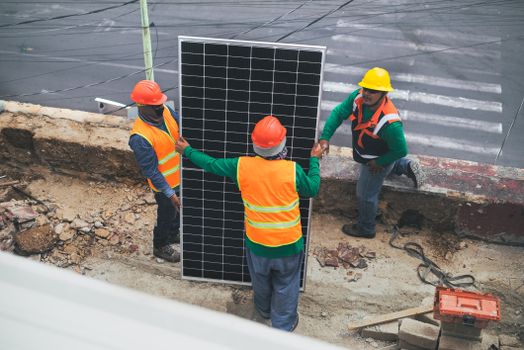
You may have noticed solar panels appearing on more homes, warehouses, schools, and open fields—and wondered who installs and maintains all that equipment. The answer includes far more people than rooftop technicians. Solar jobs range from hands-on installation and electrical work to system design, sales, project management, manufacturing, operations, and software support.
That variety makes solar accessible to people with different backgrounds. Some entry-level solar panel jobs require only a high school diploma and paid on-the-job training, while engineering and management positions may require a degree or substantial industry experience. The best starting point depends on your skills, preferred work environment, and long-term goals.
What Types of Solar Jobs Are Available?
Solar energy projects move through several stages, including planning, financing, design, permitting, construction, inspection, and maintenance. Each stage creates different career opportunities.
Installation and field operations
Solar photovoltaic installers assemble racking systems, position panels, connect components, test equipment, and perform maintenance. They may work on residential roofs, commercial buildings, or ground-mounted solar farms. Common entry-level titles include solar installer, PV installer, installation technician, electrical helper, and solar laborer.
This work can be physically demanding. Installers spend much of the day standing, climbing ladders, carrying equipment, and working outdoors. Rooftop crews must follow fall-protection rules, while electrical tasks require careful attention to shock and fire hazards. Employers generally provide safety training and personal protective equipment.
Electrical and technical roles
Electricians connect solar arrays to buildings, batteries, inverters, and the electrical grid. Depending on state and local requirements, certain wiring tasks must be performed or supervised by a licensed electrician. Solar companies also employ commissioning technicians, operations and maintenance technicians, energy-storage specialists, and troubleshooting professionals.
These roles are a natural fit for people with experience in electrical work, construction, HVAC, roofing, or equipment maintenance. An electrical apprenticeship can also create a broader career path beyond solar alone.
Design, sales, and project support
Not every solar career requires climbing onto a roof. Designers evaluate energy use, roof dimensions, shading, structural conditions, and electrical requirements. Project coordinators manage permits, inspections, schedules, materials, and customer communication. Other office-based solar jobs include estimating, procurement, accounting, marketing, software support, and human resources.
Sales representatives explain system options, incentives, financing, and expected energy production. Successful solar sales professionals need communication skills and enough technical knowledge to set realistic expectations. High-pressure sales tactics may create short-term results, but accurate information and ethical customer service build stronger careers.
How Do You Qualify for Entry-Level Solar Panel Jobs?
Solar installation is one of the more accessible entry points. According to the U.S. Bureau of Labor Statistics profile for solar photovoltaic installers, workers typically need a high school diploma or equivalent and receive moderate-term on-the-job training. The agency reported median annual pay of $53,140 in May 2025 and projected employment to grow 37% from 2025 through 2035.
Requirements vary by employer, location, and assignment. A company may look for candidates who have a valid driver’s license, can lift and carry equipment, are comfortable working at heights, and can travel to job sites. Construction experience is helpful but is not always required.
Useful preparation may include:
- Basic construction, electrical, mechanical, or roofing experience
- Training in ladder safety, fall protection, and tool use
- Comfort with measurements and practical math
- Familiarity with plans, diagrams, and written instructions
- A community college, trade school, pre-apprenticeship, or workforce training course
- Reliable attendance, teamwork, and professional communication
Before paying for a private training program, review local job postings. Look for the credentials employers repeatedly request and ask whether the program provides hands-on practice, recognized instruction, employer connections, or job-placement support. A costly course is not automatically better than an apprenticeship or employer-paid training.
How to Find Your First Solar Job
Start by searching several job titles rather than using only “solar installer.” Employers may advertise openings as PV technician, installer trainee, electrical apprentice, solar crew member, field service technician, permit coordinator, site surveyor, or project assistant.
Tailor your résumé to the position. For a field role, highlight construction, warehouse, landscaping, military, maintenance, or other physically active experience. Mention safe tool use, outdoor work, equipment handling, punctuality, and teamwork. For office or customer-facing positions, emphasize scheduling, sales, technical support, documentation, and problem-solving.
If you lack direct experience, consider applying to electrical contractors, roofing businesses, utilities, equipment distributors, and general construction companies that participate in solar projects. Apprenticeships, community workforce programs, internships, and temporary project assignments can also provide an initial foothold.
How to Move Up in a Solar Career
Advancement usually comes from combining field experience with technical knowledge, leadership ability, and a record of safe, dependable work. An installer may become a lead installer, crew chief, site supervisor, quality-control specialist, project manager, or operations manager. Others transition into design, estimating, sales, training, inspection, or business ownership.
To prepare for promotion, learn the entire project process instead of focusing only on your assigned task. Ask how site surveys affect design, how permits affect schedules, how equipment choices affect installation, and how inspections confirm code compliance. Keep records of completed training, projects, safety achievements, and new responsibilities.
Professional certification can demonstrate knowledge and may help with certain employers or projects, although it does not replace licenses required by state or local law. Before pursuing a credential, confirm that it matches your intended role and has value in your regional job market.
People considering the industry more broadly may also benefit from exploring whether a career in energy fits their interests and priorities. Solar work can offer multiple advancement routes, but daily conditions differ significantly between field, technical, sales, and management positions.
Questions to Ask Before Accepting an Offer
Job titles do not always reveal the full working conditions. During an interview, ask about the typical schedule, travel area, overtime, weather policies, safety training, benefits, pay structure, and opportunities for advancement. Sales applicants should understand whether compensation is hourly, salaried, commission-based, or a combination. Installation applicants should ask who provides tools and protective equipment and whether travel time is paid.
Also find out whether the position is permanent or tied to a particular project. A clear explanation of training, performance expectations, and promotion requirements can help you compare offers more accurately.
Building a Career That Can Grow
The most effective way to enter solar is to choose a realistic starting role, build relevant skills, and treat the first job as part of a longer career path. You do not necessarily need extensive experience to begin, but you should expect to learn continuously as equipment, codes, and project practices evolve.
Whether you prefer physical work, electrical systems, design, customer service, or project leadership, solar jobs provide several ways to participate in the energy industry. Careful training, strong safety habits, and dependable performance can help turn an entry-level opportunity into a lasting career.