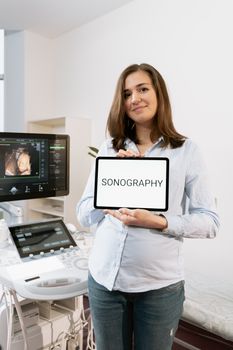
You may be wondering whether you can train for a hands-on imaging career without spending every weekday on campus. The short answer is yes—but “online” does not mean completing the entire sonography program from home. While lectures may be delivered virtually, students still need supervised laboratory practice and clinical experience with real patients and ultrasound equipment.
That distinction matters when comparing sonogram technician online schools. A credible program should prepare you not only to understand anatomy and imaging principles, but also to position patients, operate equipment, recognize image quality problems, communicate with healthcare teams, and perform examinations safely.
What does a diagnostic medical sonographer do?
Diagnostic medical sonographers, often called ultrasound technicians or sonogram technicians, use specialized equipment to create images of structures inside the body. Ultrasound uses high-frequency sound waves rather than the ionizing radiation used in X-rays. The images can help physicians evaluate organs, monitor pregnancies, examine blood flow, and investigate possible injuries or disease.
Sonography involves much more than moving a probe across a patient’s skin. A sonographer must understand anatomy, adjust technical settings, capture specific views, document findings, and recognize when additional images may be needed. Sonographers do not generally make the final medical diagnosis, but the quality and completeness of their work can influence a physician’s interpretation.
Can sonography school really be completed online?
Online sonography programs usually use a hybrid format. Academic subjects may be taught through recorded lectures, live video classes, discussion boards, virtual simulations, and online assignments. Skills laboratories and clinical rotations take place in person.
Depending on the school, students may complete laboratory sessions at the main campus, attend periodic hands-on intensives, or train at an approved facility near their community. Clinical education commonly occurs in hospitals, physician offices, outpatient centers, or diagnostic imaging facilities under qualified supervision.
Be cautious if an online ultrasound tech school claims that students can qualify for entry-level clinical practice without in-person scanning experience. Reading about probe placement cannot replace learning how to obtain diagnostic images from patients with different body types, health conditions, mobility limitations, and communication needs.
Common types of online sonography programs
The appropriate educational path depends on your previous education and healthcare experience. Options may include:
- Associate degree programs: Often designed for students entering sonography for the first time. These programs combine general education, sonography courses, laboratory training, and clinical rotations.
- Bachelor’s degree programs: May provide broader education in healthcare, leadership, research, or advanced imaging topics. Some accept beginners, while others are degree-completion programs for working sonographers.
- Postsecondary certificate programs: Frequently intended for applicants who already hold a degree or have education in a related patient-care field.
- Specialty or completion programs: May help credentialed professionals expand into areas such as vascular, cardiac, or general sonography.
Before enrolling in a sonography school online, confirm whether the program accepts beginners or requires an existing healthcare credential. A short certificate marketed to experienced radiologic technologists or nurses may not provide an appropriate route for someone with no clinical background.
Admissions requirements to expect
Requirements differ among online colleges for sonography, but competitive programs commonly ask for a high school diploma or equivalent and completion of college-level prerequisites. These may include anatomy and physiology, algebra, physics, medical terminology, psychology, or communication.
Applicants may also need to meet a minimum grade-point average, submit transcripts and references, complete an interview, or document observation in an ultrasound department. Because students work with patients, accepted applicants may be required to complete:
- A criminal background check and drug screening
- Immunization and health documentation
- Cardiopulmonary resuscitation or basic life support certification
- Technical standards related to communication, mobility, hearing, vision, and physical stamina
- Health insurance or professional liability coverage
Admission to the college does not always guarantee admission to its sonography cohort. Ask whether the program has a separate competitive application, a waiting list, or limits on the number of available clinical placements.
Coursework and hands-on training
A well-designed ultrasound tech school online typically begins with foundational science before moving into advanced scanning applications. Coursework may cover:
- Human anatomy, physiology, and pathophysiology
- Cross-sectional anatomy
- Medical terminology and patient care
- Ultrasound physics and instrumentation
- Image optimization and quality assurance
- Abdominal and superficial-structure sonography
- Obstetric and gynecologic sonography
- Vascular or cardiac imaging, depending on the program’s concentration
- Medical ethics, communication, and professional practice
Laboratory instruction allows students to develop scanning technique before entering clinical education. During rotations, students progress from observing examinations to performing portions of procedures and, eventually, demonstrating competency under supervision. Clinical schedules may include early mornings, daytime hours, or occasional evenings and weekends. These requirements can be difficult to combine with full-time employment, even when lectures are online.
Why accreditation and certification eligibility matter
Do not evaluate a program only by tuition, convenience, or the word “accredited” on its website. Institutional accreditation applies to the college as a whole, while programmatic accreditation evaluates a specific sonography program. Prospective students can use the CAAHEP directory of accredited education programs to review current listings and distance-education options.
Program choice may affect eligibility for professional credentialing examinations. Many employers require or prefer credentials such as Registered Diagnostic Medical Sonographer, Registered Diagnostic Cardiac Sonographer, or Registered Vascular Technologist. Ask each school which certification prerequisites its graduates meet, what examinations the curriculum supports, and whether additional clinical experience will be necessary.
Licensing rules also depend on location. Before applying, check the current requirements in the state where you plan to work rather than assuming that graduation or certification alone will be sufficient.
Questions to ask before enrolling
A school should provide clear, specific answers about how online learning connects with practical training. Ask:
- Where will I complete skills laboratories and clinical rotations?
- Does the school arrange clinical placements, or must students find their own?
- Is travel or temporary relocation required?
- Which sonography concentrations are included?
- What are the program’s completion, credentialing-exam, and job-placement outcomes?
- What is the total cost, including fees, equipment, uniforms, travel, and examinations?
- Are online classes scheduled or self-paced?
- What happens if a local clinical site becomes unavailable?
Students comparing flexibility, cost, interaction, and technology requirements may also benefit from reviewing the advantages and limitations of online technical programs before committing.
Preparing for the realities of the career
Sonography can be rewarding for people who enjoy technology, detailed problem-solving, and direct patient care. It can also be physically and emotionally demanding. Sonographers may stand for long periods, assist patients with limited mobility, maintain uncomfortable arm positions, and work with people who are anxious or in pain. Hospitals may require evening, weekend, overnight, or on-call shifts.
Successful career preparation therefore includes more than passing courses. Look for instruction in ergonomics, injury prevention, compassionate communication, infection control, confidentiality, teamwork, and professional judgment. Strong online sonography programs should help students build these habits throughout laboratory and clinical education—not wait until graduation to discuss them.
The best program is one that fits your circumstances while providing verified accreditation status, dependable clinical training, appropriate credentialing eligibility, and transparent student outcomes. Taking time to confirm those details can help you avoid an attractive but incomplete online program and choose an educational path that genuinely prepares you for patient care.