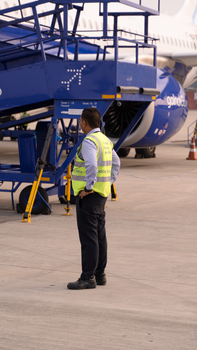
You may see a listing for a ramp agent, security screener or customer-service representative at Washington Dulles International Airport and wonder whether it is a short-term job or the beginning of a real career. The answer depends on the employer, training path and role. Many Dulles airport jobs are accessible with a high school diploma, while technical and supervisory positions can lead to substantially higher pay and long-term advancement.
Airport work can also affect everyday life in ways that are easy to overlook. Dulles operates around the clock, so employees may work early mornings, overnight shifts, weekends and holidays. Some positions involve outdoor weather, aircraft noise, prolonged standing or lifting. Before applying, consider the schedule and commute as carefully as the hourly rate.
Who hires workers at Dulles?
There is no single employer responsible for every airport position. Someone searching for jobs at Dulles International Airport in VA may encounter openings from several types of organizations:
- The Metropolitan Washington Airports Authority, which operates Dulles and Reagan National
- Airlines serving passengers, operating flights and maintaining aircraft
- Federal agencies, including the Transportation Security Administration and U.S. Customs and Border Protection
- Ground-service and aircraft-support contractors
- Restaurants, retailers and airport concession companies
- Cargo, logistics, fueling and catering businesses
- Construction, engineering, information technology and maintenance contractors
This fragmented hiring system explains why a general search may miss opportunities. Applicants should search by occupation and employer, not only by location. Useful terms include “IAD ramp agent,” “Dulles aircraft maintenance,” “airport operations specialist” and “Dulles passenger service.” People who type “jobs Dulles International Airport VA” into a search engine should still verify whether each job is physically based at IAD, since some listings cover multiple regional locations.
Common entry-level roles and training
Ramp, baggage and aircraft-service work
Ramp agents load baggage, guide aircraft, move equipment and help prepare planes for departure. Employers commonly provide task-specific instruction covering safe lifting, equipment operation, aircraft zones and emergency procedures. A high school diploma or equivalent is frequently sufficient, although applicants may need a valid driver’s license and the physical ability to work outdoors and handle luggage.
Reliability is especially important because one late or incomplete task can affect an entire flight. Workers who learn several functions may advance to lead agent, dispatcher, trainer or station supervisor positions.
Passenger service and airline customer support
Ticket-counter, gate and lounge employees assist with check-in, boarding, rebooking and passenger questions. Training usually covers the airline’s reservation system, identification requirements, accessibility procedures and handling difficult situations. Customer-service experience, clear communication and basic computer skills can matter more than an aviation background.
Foreign-language ability may be valuable at an international airport. Experienced employees can move into operations coordination, premium services, training or management.
Security and federal positions
Transportation security officers screen travelers and baggage. Federal hiring can involve eligibility reviews, assessments, medical requirements and background checks, followed by formal training. Other security jobs may be offered by private contractors and have different qualifications.
Many positions requiring access to restricted airport areas also involve identity verification, fingerprinting, a background review, security training and an airport identification badge. A job offer does not automatically guarantee that a worker will receive unrestricted airport access.
Food service, retail and cleaning
Restaurants and stores hire cooks, cashiers, servers, stock workers and supervisors. Cleaning contractors need employees for terminals, offices and other airport facilities. These jobs often provide the quickest entry into airport employment, with most training completed at work.
Advancement may come through shift leadership, inventory responsibility, food-safety credentials or multi-location management. Because passengers arrive throughout the day, schedule flexibility can improve an applicant’s chances of being hired.
Technical careers require a longer training path
Skilled trades are among the most promising Dulles airport jobs for people who prefer practical work. Electricians, HVAC technicians, plumbers, electronics technicians, locksmiths and heavy-equipment mechanics help maintain a complex transportation facility. Training may involve trade school, an apprenticeship, licensing and several years of supervised experience.
The Airports Authority has offered registered apprenticeships that combine paid employment, classroom instruction and on-the-job learning. Its listed trades have included electrical work, HVAC, plumbing-pipefitting, structural maintenance and equipment maintenance. Registered apprenticeships typically take several years, but they provide a structured route from beginner to skilled journey-level work.
Aircraft mechanics follow a different path. Many attend a Federal Aviation Administration-approved aviation maintenance technician program and pursue FAA mechanic certification. Avionics technicians focus on electronic and aircraft communication systems. These careers require greater technical preparation, precise recordkeeping and strict attention to safety, but their earning potential is generally higher than that of entry-level ground-service work.
What do Dulles airport jobs typically pay?
Pay varies widely by employer, union agreement, shift, credentials and experience. As of January 1, 2026, the Airports Authority’s wage program established a base rate of $17.13 per hour for covered hourly employees of certain airport concession and commercial aviation-support businesses. Not every worker or employer is covered, so applicants should read the compensation section of each posting.
The latest available Washington-area occupational wage data show why broad regional averages must be interpreted carefully. In May 2025, mean hourly pay was approximately $20 to $21 for local food-service and cleaning occupations, $27 for transportation and material-moving work, $28 for office support, $33 for installation and repair, and $34 for protective-service occupations. These are metropolitan-area averages, not guaranteed Dulles starting rates, and they include experienced workers.
Nationally, aircraft mechanics had median annual pay near $80,000 in May 2025, while avionics technicians had a median above $82,000. Senior managers, engineers, pilots and specialized technology professionals may earn considerably more, but they also need more education, certification or experience.
Benefits can change the real value of an offer. Compare health insurance, retirement contributions, paid leave, overtime rules, shift differentials, parking or transit assistance and travel privileges. When reviewing dental coverage and planning possible long-term care, information about dental implant longevity and common misconceptions may help you identify practical questions to ask about coverage limits.
Are airport jobs stable over the long term?
Airports require workers even when individual employers change. Aircraft must be serviced, passengers assisted, facilities maintained and security procedures completed. Dulles is also the subject of a multiyear revitalization program with major planning and construction work scheduled into the 2030s. That activity may support opportunities in construction, engineering, project management and building systems, although project work does not always become permanent employment.
Air travel remains sensitive to recessions, public-health events, fuel costs and airline schedule changes. Contractors may gain or lose accounts, and seasonal passenger demand can affect staffing. Technical credentials and transferable skills provide the best protection against these changes.
How to improve your chances of being hired
- Apply through the actual employer rather than assuming the airport manages every vacancy.
- Emphasize attendance, safety awareness, customer service and schedule flexibility.
- Prepare a complete work and address history for background-review paperwork.
- Keep your driver’s license and professional credentials current.
- Ask whether the position is permanent, seasonal, union-represented or contractor-based.
- Compare the full benefits package, commute and shift schedule before accepting.
- Choose training that remains useful outside one employer, such as an FAA certificate, commercial driver’s license or recognized trade credential.
A Dulles job can be an accessible first step or a lasting aviation career. Entry-level work offers quick experience, while apprenticeships, technical certificates and consistent performance can open doors to better-paid specialist and supervisory roles. The strongest candidates look beyond the job title and choose a position that develops skills they can carry throughout the airport industry.