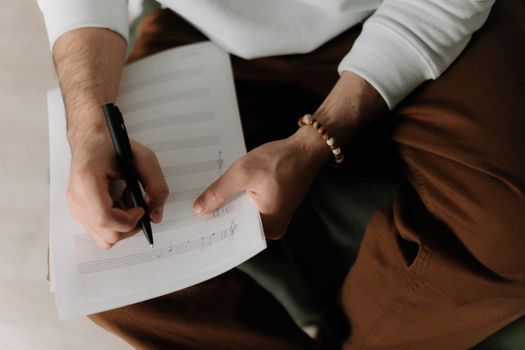
You can hear a melody in your head, imagine the perfect soundtrack for a scene, or reshape a few chords until they create a completely different mood. But how do you turn that instinct into a real career? Learning how to become a composer involves more than having musical ideas. You need a reliable creative process, strong technical skills, practical experience, and a portfolio that shows others what you can do.
There is no single route into composition. Some composers study at conservatories, while others learn through private lessons, online courses, performance, production, and steady independent practice. The best path depends on the music you want to write and the people or industries you hope to serve.
What Does a Composer Actually Do?
A composer creates original music or arranges existing material for a particular purpose. That may include music for films, television programs, video games, theater, advertisements, podcasts, orchestras, choirs, performing artists, or digital media.
The work often extends beyond writing melodies. Depending on the project, a composer may:
- Develop melodies, harmonies, rhythms, and musical structures
- Write scores or create digital mockups
- Arrange music for particular instruments and voices
- Discuss creative goals with directors, performers, and producers
- Revise music after receiving feedback
- Prepare files, sheet music, or recording sessions
- Manage deadlines, contracts, and project records
Some composers focus mainly on notation and live musicians. Others work almost entirely with digital audio workstations, virtual instruments, and recorded sound. Many use both approaches.
Build a Strong Musical Foundation
You do not have to master every instrument, but learning at least one instrument well is extremely useful. Piano or keyboard is especially practical because it allows you to see harmony, test melodies, and enter notes into composition software. Guitar and other instruments can also provide an effective foundation.
Music theory helps you understand why musical ideas work. Start with scales, intervals, chords, rhythm, key signatures, and common forms. Then study harmony, counterpoint, orchestration, voice leading, and score analysis as your goals become more advanced.
Ear training is equally important. Practice identifying intervals, chord qualities, rhythms, and melodic patterns by listening. Try transcribing short passages from recordings without looking at published music. This develops the connection between what you hear and what you can write.
Learn by Studying Real Music
Listening for enjoyment is different from listening as a composer. Choose pieces related to the work you want to create and examine them closely. Ask which instruments are present, when the harmony changes, how tension develops, and what makes each section feel complete.
Recreating a short section for educational practice can help you understand its structure and production choices. You can then apply the underlying technique to an original piece rather than copying the original material. Study music outside your preferred genre as well. Classical orchestration, jazz harmony, electronic sound design, and popular songwriting can all strengthen your creative vocabulary.
Write Consistently, Not Only When Inspired
One of the most important lessons in how to become a music composer is that inspiration cannot be your only working method. Professional projects usually involve schedules, specifications, and revisions. Build the habit of composing even when the first idea is not exciting.
Set manageable assignments for yourself. Write a 30-second theme, arrange one melody for three instruments, or score a short silent video. Completing small pieces teaches structure and decision-making more effectively than repeatedly starting ambitious works that remain unfinished.
Save different versions and make notes about what you changed. Over time, you will learn which methods help you move from a rough idea to a polished composition.
Do You Need a Music Degree?
A degree can provide structured training, feedback, access to performers, and professional connections. Composition, music theory, film scoring, music production, and performance are all relevant areas of study. However, education requirements vary by role and musical field. The U.S. Bureau of Labor Statistics overview of music directors and composers notes that these professionals typically need a bachelor’s degree, although some positions do not require formal education and many require related experience.
If a degree is not practical, consider private instruction, community college classes, workshops, ensembles, online coursework, and disciplined self-study. A good mentor can identify weaknesses and help you improve faster. Whatever route you choose, clients will ultimately want evidence that you can produce suitable music, communicate clearly, and meet deadlines.
Become Comfortable With Music Technology
Modern composers often need to create convincing recordings before live musicians become involved. Learn to use a digital audio workstation for recording, editing, arranging, and mixing. You should also understand MIDI, virtual instruments, tempo mapping, file organization, and common audio formats.
If you plan to write concert music or work with performers, learn notation software and basic score preparation. Musicians need readable parts with accurate notes, dynamics, articulations, page turns, and performance instructions.
You do not need the most expensive equipment to begin. A capable computer, suitable software, dependable headphones or monitors, and a small MIDI keyboard can support many beginner projects. Skill and musical judgment matter more than collecting tools.
Choose a Direction Without Limiting Yourself
It is helpful to choose an initial specialty because each field has different expectations. A video game composer may need to create interactive layers and seamless loops. A film composer must support pacing, emotion, and dialogue. A concert composer needs a detailed understanding of notation and live instruments. A songwriter may focus more heavily on memorable melodies, lyrics, and collaboration with performers.
You can still explore several styles, especially early in your development. Your goal is to identify where your abilities, interests, and available opportunities overlap.
Create a Focused Portfolio
Your portfolio should contain your strongest finished work, not every piece you have written. Include several examples that demonstrate the type of work you want to be hired to do. Someone seeking film projects might present short scenes with original scores, while an aspiring orchestral composer might provide recordings and readable scores.
Make each example easy to access and label it clearly. Explain your role when a project involved collaborators. Replace older work as your skills improve, and avoid including unfinished demonstrations unless a client specifically requests them.
Gain Experience Through Small Projects
Your first opportunities may come from student filmmakers, local theater groups, independent game developers, school ensembles, community organizations, or online creators. These projects can teach you how to interpret a brief, estimate your time, handle revisions, and deliver usable files.
Be selective about unpaid work. A project should offer meaningful practice, a useful portfolio piece, a credit, or a worthwhile professional relationship. Put the scope, deadline, ownership, payment, and revision expectations in writing whenever possible.
If you are still comparing possible careers, reviewing how skills and qualifications differ across fields, such as these career opportunities in building inspection, can help you evaluate whether a creative, project-based profession fits your preferred working style.
Develop Professional and Business Skills
Clients remember reliability as much as creativity. Respond clearly, ask useful questions, organize files carefully, and deliver work in the requested format. Learn basic budgeting and keep records of agreements, invoices, expenses, project versions, and collaborator contributions.
Understand that a musical composition and a specific sound recording of that composition are separate creative assets. Before accepting commercial work, clarify who will own the music, where it may be used, whether you will receive credit, and whether additional use requires further permission or payment. Consider obtaining qualified legal advice for important contracts.
A Practical Way to Get Started
Begin with a simple routine: practice your instrument, study one musical concept, analyze a short piece, and compose something each week. Learn one production or notation tool well enough to finish projects. After completing several pieces, select your best work for a focused portfolio and begin approaching suitable collaborators.
Becoming a composer is rarely a single breakthrough. It is a gradual process of writing, listening, revising, collaborating, and completing increasingly demanding work. If you build those habits consistently, each finished composition becomes both a learning experience and evidence that you are ready for the next opportunity.