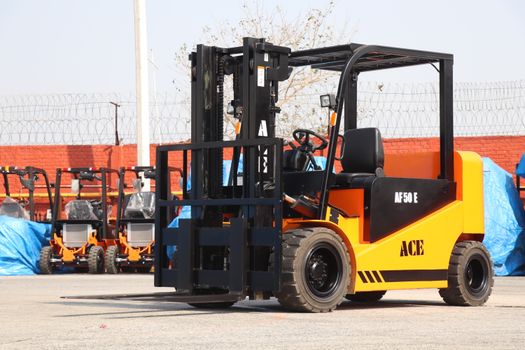
You have completed an online forklift course, printed a wallet card, and arrived for your first shift. Can you legally climb into the truck and start working? Usually, no. In the United States, a course certificate alone is not the same as an employer’s authorization or permit to operate lift equipment at a particular workplace.
For forklifts and other powered industrial trucks, the employer must ensure that an operator receives appropriate instruction, completes hands-on training, and demonstrates safe operation in the workplace. Understanding this process can help employees avoid unnecessary courses and help employers maintain accurate, compliant records.
What Is a Lift Operator Permit?
A lift operator permit is generally an employer-issued record showing that a worker has been trained, evaluated, and authorized to operate specified equipment. It may be called a forklift certification, operator card, authorization card, or license. The terminology varies because OSHA does not issue a universal federal forklift license directly to individual workers.
This distinction matters. A third-party training company may provide useful classroom instruction and a certificate of completion, but the employer remains responsible for confirming that the worker can safely use the actual type of truck under the conditions found at the jobsite.
Federal requirements cover powered industrial trucks such as counterbalanced forklifts, reach trucks, order pickers, powered pallet trucks, and certain rough-terrain forklifts. Aerial work platforms, scissor lifts, boom lifts, cranes, and construction equipment may be covered by different requirements. Before seeking a permit, identify the exact machine and the work it will perform.
Who Needs Authorization to Operate a Lift?
Anyone assigned to operate a powered industrial truck must be trained and evaluated before working independently. This requirement applies even when operation is occasional, such as moving one pallet at the end of a shift. Temporary workers and experienced operators are not automatically exempt.
During practical training, a trainee may operate the equipment only under the direct supervision of a person qualified to train and evaluate operators. Training must also take place where the activity will not endanger the trainee or other employees.
In nonagricultural employment, workers younger than 18 generally may not operate forklifts. Employers should also review applicable state rules, local requirements, insurance conditions, and equipment manufacturer instructions, which may impose additional restrictions.
Training Required Before a Permit Is Issued
The process normally has three connected parts. Completing only one part is not enough.
Formal instruction
The operator first learns the principles of safe lift operation through a lecture, discussion, written material, video, or interactive course. Topics should be relevant to the equipment and workplace and commonly include:
- Controls, instruments, warnings, and operating instructions
- Steering, visibility, braking, and maneuvering limitations
- Load capacity, stability, load centers, and attachments
- Fork positioning and safe stacking techniques
- Pedestrian traffic, ramps, docks, narrow aisles, and overhead hazards
- Battery charging or fuel-handling procedures
- Required inspections and reporting of defects
Hands-on instruction
A qualified trainer must demonstrate safe practices and allow the trainee to perform practical exercises. The equipment should represent the type the person will operate. Experience on a sit-down counterbalanced forklift, for example, does not necessarily establish competence on an order picker or reach truck with different controls and operating characteristics.
Workplace performance evaluation
The final step is an evaluation of the operator’s performance. The evaluator observes whether the person can inspect, start, maneuver, load, travel, park, and shut down the truck safely under relevant working conditions. OSHA’s powered industrial truck training requirements specify that instruction must combine formal training, practical training, and evaluation.
What Information Should the Certification Contain?
After the operator successfully completes the required process, the employer must document the certification. The record must include:
- The operator’s name
- The date of training
- The date of the evaluation
- The identity of the trainer or evaluator
Many employers add the authorized truck types, work location, restrictions, issue date, and scheduled review date. A wallet card can be convenient, but maintaining the underlying training and evaluation record is more important than the card’s format.
The trainer does not need to hold a particular federal instructor credential. However, that person must have the knowledge, training, and experience necessary to teach operators and evaluate their competence.
How Long Does a Lift Permit Last?
OSHA requires each powered industrial truck operator’s performance to be evaluated at least once every three years. This is sometimes described as a three-year certification period, but an employer should not simply renew a card based on the calendar. The operator must actually be evaluated.
Refresher training and another evaluation may be needed sooner when:
- The operator is observed using a truck unsafely
- The operator is involved in an accident or near miss
- An evaluation identifies unsafe performance
- The operator is assigned to a different type of truck
- Workplace conditions change in a way that affects safe operation
Examples of meaningful changes include a redesigned warehouse, new loading docks, different pedestrian routes, unusual loads, or new attachments that affect capacity and handling.
Does a Permit Transfer to a New Employer?
Previous training can reduce duplication, but authorization does not automatically transfer from one workplace to another. A new employer must determine whether the earlier training is appropriate for its trucks and conditions and must evaluate the worker’s competence.
An experienced operator may need only site-specific instruction and an evaluation if prior training remains relevant. Someone moving to unfamiliar equipment or a substantially different environment may require more extensive training. This employer-based approach explains why advertisements promising a universally valid license can be misleading.
Fitness, Medication, and Safe Operation
The federal powered industrial truck standard does not establish a routine medical examination or a single vision and hearing test for every forklift operator. Instead, the employer must determine whether the individual can operate safely and perform the job’s essential functions while complying with applicable disability and employment laws.
An operator should report a condition or medication side effect that may impair alertness, coordination, judgment, or safe control of the equipment. If an employer knows or reasonably should know that a worker is actually impaired, it must take appropriate safety measures, which may include temporarily removing the person from lift operation. Medical details should be handled confidentially and reviewed through appropriate workplace procedures.
Daily Safety Responsibilities After Certification
Receiving a permit does not end the operator’s responsibilities. The truck should be inspected before use or at the beginning of the shift according to workplace and manufacturer procedures. Typical checks include tires, forks, mast components, chains, hydraulic systems, steering, brakes, horn, alarms, lights, restraints, fluid levels, and data plates.
A defective or unsafe truck must be removed from service until repaired. Operators should also keep loads stable and within rated capacity, maintain a clear view, slow down at blind intersections, sound the horn where visibility is obstructed, keep people away from raised forks, and follow site traffic rules.
Steps to Obtain a Permit to Operate Lift Equipment
- Confirm the exact lift type and workplace where it will be used.
- Ask the employer which training program and records it accepts.
- Complete equipment-specific and workplace-related instruction.
- Practice under direct supervision in a safe training area.
- Pass a hands-on workplace performance evaluation.
- Make sure the employer documents training and authorization.
- Complete refresher training and reevaluation whenever required.
Workers considering paid instruction should first determine whether an employer provides training. Comparing the advantages and limitations of professional training can also help applicants decide whether an outside course is worthwhile.
The Bottom Line
A permit to operate lift equipment is not simply a card purchased online. For powered industrial trucks, valid authorization depends on relevant instruction, supervised practice, a hands-on evaluation, and employer certification. Because different machines and workplaces present different hazards, operators should confirm that their authorization matches both the equipment and the jobsite before taking the controls.