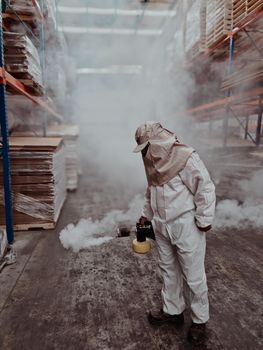
You see a job posting for a pest control technician, but the description asks for customer service skills, safe driving, accurate recordkeeping, and the ability to crawl under buildings. Is this an entry-level trade job or a specialized technical career? In many cases, it is both. Pest control exterminator jobs are accessible to applicants without a college degree, yet employers still expect reliability, sound judgment, and a serious approach to safety.
The work involves much more than spraying chemicals. Technicians inspect properties, identify pests, determine why they are present, explain treatment options, apply control methods, and help customers prevent future infestations. If you enjoy practical problem-solving and working independently, this career may offer a realistic path into a skilled service industry.
What Does a Pest Control Exterminator Do?
A typical day may include visiting homes, restaurants, warehouses, schools, offices, or apartment buildings. At each location, the technician looks for evidence such as droppings, damaged materials, nests, moisture problems, entry points, or live insects and rodents.
Depending on the job and the technician’s certification, treatment may involve traps, baits, exclusion materials, monitoring devices, dusts, or liquid pesticides. Modern pest management often emphasizes prevention and targeted treatment rather than automatically applying chemicals throughout a property.
Common responsibilities include:
- Inspecting indoor and outdoor areas for pest activity
- Identifying insects, rodents, termites, or other nuisance wildlife
- Measuring treatment areas and selecting appropriate control methods
- Reading and following pesticide labels
- Applying products with properly maintained equipment
- Sealing small gaps or recommending structural repairs
- Documenting findings, treatments, and follow-up instructions
- Explaining services and safety precautions to customers
- Driving a company vehicle between appointments
The occupation can be physically demanding. Technicians may climb ladders, carry equipment, work outdoors, kneel for extended periods, or enter attics, basements, and crawl spaces. Schedules may also include evenings or weekends because customers often need appointments outside standard business hours.
Skills Employers Look For
Observation and pest identification
Good technicians notice details that customers miss. A few insect wings near a window, grease marks along a wall, or damaged wood may reveal the type and location of an infestation. Employers value applicants who can collect evidence carefully instead of making quick assumptions.
You do not need to recognize every pest before being hired. Many companies provide training. However, you should be willing to study pest appearance, behavior, life cycles, nesting habits, and food sources.
Safety awareness
Pesticides must be handled according to their labels, applicable regulations, and company procedures. Employers want technicians who measure products accurately, wear required personal protective equipment, secure materials during transport, and keep people and pets away from treatment areas when necessary.
Depending on the product and route of exposure, pesticides may irritate the skin, eyes, or respiratory system, and some products can present more serious health hazards. Gloves, protective clothing, eye protection, or respiratory protection may be required for particular tasks. Safety-conscious workers do not improvise or assume that using more product will produce better results.
Customer service and communication
A customer may be embarrassed, frustrated, or frightened by a pest problem. The technician must remain calm and explain what was found without making the situation sound worse than it is. Clear communication is also necessary when giving preparation instructions, discussing treatment limitations, or recommending repairs.
Sales ability can be useful, but employers generally want honest problem-solvers rather than aggressive salespeople. Building trust can lead to contract renewals, positive reviews, and referrals.
Dependability and time management
Most technicians manage a route containing several appointments. Arriving late can disrupt the rest of the day and inconvenience customers. Strong candidates show that they can follow schedules, communicate delays, keep supplies organized, and complete service records before moving to the next stop.
Comfort with physical work
Pest control is not a desk-only occupation. Applicants should be prepared to bend, lift, climb, walk over uneven ground, and work in uncomfortable spaces. Employers may also ask whether a candidate can tolerate heat, cold, dust, unpleasant odors, or encounters with insects and rodents.
Driving and recordkeeping
A valid driver’s license and acceptable driving history are common requirements because field technicians usually operate company vehicles. Accurate documentation is equally important. Service reports may record products used, application amounts, pest activity, customer instructions, and areas requiring follow-up.
Education, Training, and Licensing
Many pest control exterminator jobs require a high school diploma or equivalent rather than a college degree. New employees commonly receive classroom instruction and supervised field training covering pest identification, equipment, customer service, label comprehension, and treatment procedures.
Licensing and certification rules vary by state and by the kind of work performed. Federal requirements also apply to people who use or supervise the use of restricted-use pesticides. Applicants may need to complete training, pass an examination, work under a certified applicator, or obtain a credential after being hired.
Before applying, review the requirements published by your state’s pesticide regulatory agency. A legitimate employer should clearly explain which credentials are needed, who pays for training and testing, and whether you can work under supervision while preparing for an examination.
How to Break Into the Field
Start by searching several job titles, including pest control technician, route technician, termite technician, wildlife control technician, service specialist, and applicator trainee. The word “exterminator” remains common among customers, but employers may use broader titles in job advertisements.
Then tailor your résumé around transferable skills. Experience in delivery driving, landscaping, maintenance, hospitality, retail, construction, cleaning, or property management can demonstrate useful abilities. Highlight examples of working independently, following safety procedures, solving customer problems, maintaining equipment, or completing detailed records.
You can strengthen an application by taking these steps:
- Maintain a safe driving record and reliable transportation for the hiring process.
- Learn basic information about common local pests and integrated pest management.
- Practice explaining technical information in simple, respectful language.
- Ask companies whether they provide paid training and licensing assistance.
- Prepare to discuss your comfort with confined spaces, ladders, weather, and physical tasks.
- Emphasize punctuality, honesty, and your ability to work without constant supervision.
During an interview, ask what a normal route looks like, how performance is measured, which protective equipment is provided, and whether compensation is hourly, salaried, commission-based, or a combination. You should also clarify expectations for overtime, weekend work, emergency calls, and sales.
Pay and Career Growth
Earnings vary by location, experience, specialty, licensing level, and compensation structure. The U.S. Bureau of Labor Statistics overview of pest control workers provides current national information about pay, training, duties, and employment projections.
Experienced workers may advance into termite treatment, fumigation, commercial accounts, wildlife management, quality assurance, sales, route supervision, training, or branch management. Some professionals eventually start their own businesses after gaining the required licenses, field knowledge, insurance, equipment, and business experience. The industry also includes scheduling, customer support, compliance, sales, and other remote pest control career opportunities for people who want to use their knowledge outside full-time field service.
Is This Career a Good Fit?
Pest control exterminator jobs may suit you if you like varied locations, practical science, independent work, and direct interaction with customers. They may be less suitable if you strongly dislike driving, insects, tight spaces, changing schedules, or physically active work.
You do not have to enter the field knowing everything about pesticides or pest biology. Employers can teach technical procedures, but qualities such as honesty, attention to detail, patience, and respect for safety are harder to teach. Present those strengths clearly, verify your state’s licensing requirements, and look for an employer that offers structured training. That combination can turn an entry-level technician position into a long-term skilled career.