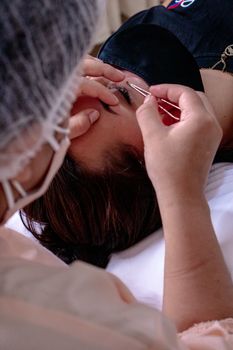
You may visit one professional for a haircut, another for a facial, and someone else for a manicure—then wonder whether all these services count as cosmetology. The short answer is that cosmetology is the professional practice of improving and maintaining the appearance of the hair, skin, and nails. However, the exact services a cosmetologist may legally provide depend on their training, license, specialty, and state regulations.
What Is the Meaning of Cosmetology?
The cosmetology meaning extends beyond applying makeup or styling hair. It describes a field that combines artistic skill, technical training, personal care, sanitation, product knowledge, and customer service. Cosmetologists help clients manage their everyday grooming, prepare for special occasions, explore new styles, and learn how to care for their hair, skin, or nails at home.
Cosmetology is not medical care. A cosmetologist may recognize that a client has scalp irritation, unusual hair loss, damaged nails, or an inflamed area of skin, but they are not qualified to diagnose a disease unless they hold a separate healthcare credential. A responsible professional should postpone services when necessary and recommend that the client consult a physician or dermatologist.
What Services Do Cosmetologists Provide?
The scope of practice varies by license and location, but cosmetology commonly includes several categories of personal appearance services.
Hair services
- Shampooing, conditioning, cutting, and blow-drying
- Temporary, semi-permanent, and permanent hair coloring
- Highlights, lowlights, and color correction
- Texture services such as permanent waves and chemical straightening
- Braiding, updos, extensions, and wig styling where permitted
- Basic scalp and hair-care guidance
Skin and makeup services
- Makeup application for daily wear, photography, weddings, or events
- Basic facials and cosmetic skincare treatments allowed by state rules
- Hair removal using approved methods within the license holder’s scope
- Recommendations for nonmedical beauty routines and cosmetic products
Nail services
- Manicures and pedicures
- Nail shaping, polishing, and decorative nail art
- Application or maintenance of artificial nail enhancements
- Basic cosmetic care of the hands, feet, and surrounding nail area
Not every cosmetologist performs every service. Some concentrate almost entirely on hair, while others pursue separate licenses or advanced training in esthetics, barbering, manicuring, or makeup artistry.
What Does Cosmetology Training Cover?
Cosmetology education usually takes place at a state-approved private school, technical college, or community college. Programs combine classroom instruction with supervised practice on mannequins and, later, clients. The required curriculum and number of training hours differ by state.
Students commonly study haircutting, styling, coloring, chemical texture services, nail care, basic skincare, anatomy, product chemistry, sanitation, infection prevention, and state laws. They also learn consultation skills, professional ethics, recordkeeping, time management, retail practices, and salon operations.
Hands-on training is important because a student must learn more than the steps of a service. They need to evaluate hair condition, follow manufacturer instructions, use tools safely, prevent chemical contact with the eyes and skin, and understand when a service should not be performed.
After completing an approved program, candidates generally must pass the examinations required by their state licensing board. Testing may include written and practical components. A license may also require periodic renewal and continuing education, depending on the jurisdiction.
Why Safety and Sanitation Matter
Cosmetologists work close to the skin, scalp, eyes, and nails while using sharp instruments, heated tools, adhesives, dyes, disinfectants, and other chemical products. Proper hygiene protects both the client and the professional.
Reusable tools must be cleaned and disinfected according to state rules and product instructions. Single-use items should be discarded after use, and professionals should wash their hands between clients. Services should not be performed over open wounds, active bleeding, visibly infected skin, or painful and inflamed nail tissue.
Cosmetic products can also cause irritation or allergic reactions. Hair dyes, for example, may trigger itching, redness, swelling, or a rash in sensitive individuals. Clients and professionals should follow package warnings and the manufacturer’s testing directions. The FDA’s hair dye safety guidance recommends performing the instructed skin test before each coloring application, even if the product has been used previously without a problem.
Ventilation, protective gloves, correct product storage, and careful handling of spills help reduce workplace exposure. Persistent coughing, breathing difficulty, facial swelling, severe burning, widespread hives, or eye injury requires prompt medical attention rather than another salon treatment.
How Is Cosmetology Different From Related Fields?
Cosmetology overlaps with several beauty professions, but the terms are not always interchangeable. A hairstylist mainly cuts, colors, and styles hair. A barber commonly specializes in short haircuts, beard care, and shaving services. An esthetician focuses on cosmetic skincare, while a nail technician concentrates on manicures, pedicures, and nail enhancements.
A cosmetology license is often broader, although its permitted services depend on state law. Advanced treatments such as injections, medical-grade procedures, diagnosis of skin disease, and prescription therapy fall outside standard cosmetology practice. Titles such as medical esthetician may sound clinical but do not automatically indicate that a person is a licensed medical professional.
Career Paths in Cosmetology
Graduates may begin as salon assistants or entry-level stylists and gradually build a regular client base. Employment is available in salons, spas, resorts, hotels, retail beauty businesses, photography studios, entertainment productions, and senior living communities. Some professionals provide mobile or on-location services for weddings and other events.
Possible career directions include:
- Hairdresser, colorist, texture specialist, or extension specialist
- Makeup artist for events, photography, theater, film, or television
- Nail technician or skincare specialist with the appropriate license
- Salon manager, independent contractor, suite renter, or business owner
- Beauty school instructor after meeting state experience and licensing rules
- Product educator, brand representative, platform artist, or retail consultant
- Editorial, fashion, wig, or theatrical styling professional
Income can vary considerably based on location, experience, specialty, schedule, pricing, tips, and whether the professional is employed or self-employed. Building a stable career often requires technical consistency, communication skills, client retention, scheduling discipline, and basic business knowledge. Readers considering the field can learn more by exploring cosmetology career opportunities and work settings.
Is Cosmetology a Good Career Choice?
Cosmetology may suit people who enjoy creative work, personal interaction, practical learning, and visible results. It can offer flexible career options and opportunities to develop a specialty or operate a business. However, the work can involve long periods of standing, repetitive hand movements, chemical exposure, evening or weekend appointments, and the challenge of building a loyal clientele.
Before enrolling, compare state-approved programs by tuition, supplies, completion rates, scheduling options, student support, and preparation for licensing examinations. Confirm that the program qualifies graduates for the license they want. Prospective students should also ask about clinic-floor experience, safety instruction, financial aid, and additional fees for kits or examinations.
Ultimately, cosmetology means combining creativity with trained, responsible personal-care service. It is a regulated profession—not simply an interest in beauty—and success depends on practical ability, sanitation, sound judgment, communication, and continued learning.