You may be ready for a healthcare career but not ready to spend four years in college. That often leads to a practical question: how long does it take to become a surgical tech? For most students, the answer is about 18 months to two years. However, the timeline can be shorter or longer depending on the program, admission requirements, clinical schedule, certification process, and rules in your state.
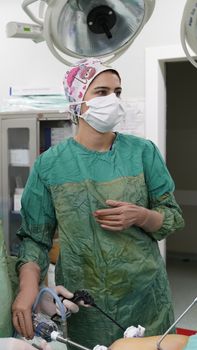
Surgical technologists work in operating rooms, where they prepare instruments and supplies, maintain the sterile field, and assist the surgical team before, during, and after procedures. Because the job affects infection prevention and patient safety, becoming work-ready involves more than completing classroom courses.
The typical timeline for becoming a surgical tech
Most new surgical technologists follow an associate degree pathway that takes approximately two academic years of full-time study. Some certificate or diploma programs can be completed in roughly 12 to 18 months, although program availability and certification eligibility vary.
The total time may fall into one of these ranges:
- About 12 to 18 months for certain certificate or diploma programs
- About 18 to 24 months for many associate degree programs
- Two and a half to three years if you need prerequisite courses, attend part time, encounter a program waiting list, or must repeat a course or clinical requirement
Current CAAHEP-accredited surgical technology pathways generally lead to at least an associate degree. Other routes may exist through military training, hospital-based education, or differently accredited programs. Before enrolling, confirm that the program’s accreditation and academic award will qualify you for the certification you intend to pursue.
What happens during surgical tech school?
Surgical technology education combines academic instruction, skills laboratory practice, and supervised clinical experience. The pace is often demanding because students must learn both the science behind surgical care and the precise routines used in an operating room.
Classroom and laboratory training
Coursework commonly covers anatomy and physiology, medical terminology, microbiology, pharmacology, surgical procedures, patient safety, sterilization, and infection control. In laboratory sessions, students practice setting up sterile supplies, identifying instruments, handling specimens, counting materials, and responding to breaks in sterile technique.
Programs may also include general education courses such as English, mathematics, psychology, or communication. These courses are one reason an associate degree usually takes longer than a narrowly focused certificate.
Clinical rotations
Clinical education places students in hospitals or outpatient surgery centers under supervision. Students gradually participate in procedures across different surgical specialties while demonstrating that they can protect the sterile field and anticipate the needs of the surgical team.
Clinical rotations usually take place during regular daytime operating hours, although schedules vary. This can affect everyday life for students who work, care for children, or have a long commute. A rotation may begin early in the morning, and missing required clinical hours can delay graduation.
Admission requirements can add time
Being accepted into a college does not always mean that you can begin surgical technology courses immediately. Some programs admit a limited number of students each year and use a separate competitive application process.
Common requirements may include:
- A high school diploma or equivalent
- Placement testing or prerequisite college courses
- A minimum grade point average
- CPR or Basic Life Support certification
- A physical examination and required immunization documentation
- A criminal background check and drug screening
If you need to complete prerequisites before applying, add one semester or more to your estimate. Ask each school whether its advertised program length includes prerequisites and whether students typically face a waiting list.
Do surgical techs need certification?
National certification is not identical to a state license. Certification shows that you met an organization’s eligibility standards and passed an examination. Many employers require or strongly prefer certification, even where state law does not make it mandatory.
A widely recognized credential is the Certified Surgical Technologist, or CST, offered by the National Board of Surgical Technology and Surgical Assisting. Eligibility generally depends on graduating from an approved accredited surgical technology program or qualifying through an accepted military pathway, followed by passing the certification exam.
Exam preparation and scheduling may add several weeks after graduation, although some programs help students complete the application and test near the end of school. When comparing options, review first-time exam pass rates and ask whether certification testing is included in tuition or program fees.
Licensing and state requirements
There is no single federal license required for every surgical technologist in the United States. Instead, requirements depend on the state and the employer. Some states regulate education, certification, or registration, while others allow healthcare facilities to establish their own hiring standards.
This means that finishing school may not be the final administrative step. Depending on your location, you might need to submit proof of education, maintain national certification, register with a state agency, or satisfy specific continuing education requirements. Check the rules in the state where you plan to work before selecting a school, particularly if you may move after graduation.
The U.S. Bureau of Labor Statistics overview of surgical technologists notes that these professionals typically need a certificate or associate degree, employers may prefer certification, and some states regulate the occupation.
Can you become a surgical tech through online school?
Some academic courses may be delivered online, but surgical technology cannot normally be completed entirely from home. Students need hands-on laboratory instruction and supervised experience with real surgical teams and patients.
An online or hybrid program can make lectures more convenient, but it does not eliminate clinical travel. Confirm where laboratory sessions and clinical rotations occur, whether the school arranges placements, and how far students may be expected to commute.
How to avoid unnecessary delays
The fastest program is not always the fastest route to employment. A short course that does not meet certification or employer requirements could leave you needing additional education later.
Before enrolling, ask the school:
- Is the surgical technology program programmatically accredited?
- What degree, certificate, or diploma will I receive?
- Will I be eligible for the certification exam after graduation?
- Are prerequisites included in the stated completion time?
- How are clinical placements assigned?
- Does the program meet requirements in my state?
- What percentage of admitted students graduate on schedule?
You can also explore career opportunities available through a surgical technologist program to better understand where this training may lead.
Planning your personal timeline
So, how long does it take to become a surgical tech from start to finish? A realistic plan is about two years for a full-time associate degree, plus any time needed for prerequisites, certification testing, and state or employer paperwork. A shorter certificate route may take 12 to 18 months when it is available and meets your career goals.
Before committing, compare accreditation, clinical access, certification eligibility, cost, and schedule—not just the graduation date. Choosing the right program at the beginning can help you move from student to operating-room professional without avoidable setbacks.