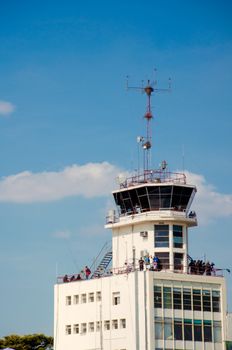
You see an air traffic controller guiding aircraft at a busy airport and assume the answer is obvious: that person must work for the federal government. In many cases, that assumption is correct—but not always. The honest answer to “are air traffic controllers federal employees?” depends on the controller’s employer, facility, and type of service.
Most civilian air traffic controllers in the United States work directly for the Federal Aviation Administration (FAA), making them federal employees. However, some controllers work for private companies at contract towers, while others serve in the military or hold civilian positions with the Department of Defense. These distinctions can affect hiring, pay, benefits, retirement, and career mobility.
Are Air Traffic Controllers Federal Employees?
Most air traffic controllers employed directly by the FAA are federal civilian employees. They work within the FAA’s Air Traffic Organization and manage aircraft operating through airport towers, terminal radar facilities, and en route control centers.
FAA controllers receive federal pay and benefits, must follow federal employment rules, and generally apply through the federal hiring system. Their responsibilities may include issuing takeoff and landing clearances, maintaining safe distances between aircraft, monitoring radar, coordinating with neighboring facilities, and responding to changing weather or emergencies.
Still, the job title alone does not establish federal employee status. Two controllers may perform similar safety-sensitive duties while technically working for different employers.
The Main Exception: Federal Contract Towers
Some airport control towers participate in the FAA Contract Tower Program. Although the FAA funds and oversees this program, the controllers at these locations are generally employees of private companies rather than direct FAA employees. The FAA’s explanation of the Federal Contract Tower Program specifically distinguishes private contractor employees from FAA personnel.
This arrangement can create confusion because the controller is performing air traffic services within the national aviation system and must follow applicable FAA standards. The tower may even be commonly described as a “federal contract tower.” Nevertheless, federal funding or oversight does not automatically make the individual controller a federal employee.
A contract controller’s paycheck, benefits, leave policies, and employment relationship usually come from the private contractor. Hiring requirements and qualifications may overlap with federal standards, but the application process and employment package can be different.
What About Military Air Traffic Controllers?
Military air traffic controllers are another important category. Controllers serving on active duty in the Air Force, Army, Navy, Marine Corps, or Coast Guard are military personnel, not federal civilian employees. Their compensation, benefits, promotions, and assignments are governed by military systems.
The Department of Defense may also employ civilian air traffic control personnel. Those civilian workers can be federal employees even though they do not work for the FAA. Therefore, a controller at a military installation could be an active-duty service member, a Department of Defense civilian, or, in some circumstances, a contractor.
Why Employment Status Matters
Whether a controller is a federal employee affects much more than the name on a paycheck. Before accepting a position, applicants should understand the practical differences in the following areas.
Pay structure
FAA controllers are covered by specialized compensation arrangements rather than the standard General Schedule used for many federal jobs. Earnings can vary according to facility level, assigned responsibilities, certification status, location, shift differentials, overtime, and other factors.
Contract tower employers establish their own compensation packages. A private employer may calculate wages, raises, premiums, and overtime differently. Comparing only the advertised base salary can therefore give an incomplete picture.
Health, retirement, and leave benefits
Eligible FAA employees may have access to federal health insurance, life insurance, paid leave, the Thrift Savings Plan, and retirement coverage under the Federal Employees Retirement System. Federal air traffic controllers may also fall under special retirement provisions because of the demanding and safety-sensitive nature of operational control work.
Private contract controllers receive the benefits offered by their employer. Those benefits may be valuable, but they are not automatically identical to the federal package. Applicants should compare employee premiums, deductibles, retirement contributions, employer matching, paid leave, disability coverage, and eligibility waiting periods.
Job protections and workplace rules
Federal employees work under federal personnel policies, ethics requirements, security procedures, and disciplinary systems. Many FAA controllers are represented by a labor organization, although representation and bargaining coverage can depend on the position.
Contract controllers operate under the policies of their private employer, applicable labor laws, and the terms of any employment or collective bargaining agreement. Their workplace protections and grievance procedures may differ from those available to direct federal employees.
Career movement
Federal status can influence how easily a controller competes for other government positions, transfers between facilities, or receives credit for prior federal service. A contract controller does not automatically gain federal tenure or competitive status simply by working in an FAA-funded tower.
Contract experience can still be professionally valuable and may help demonstrate relevant qualifications when applying for another position. However, applicants must satisfy the eligibility rules listed in each vacancy announcement.
How Can You Tell Who Employs a Controller?
The most reliable approach is to examine the job announcement rather than relying on the airport’s name or the appearance of the facility. Look for the following details:
- The employer named in the posting
- Whether the application is submitted through USAJOBS or a private company
- The agency, department, or contractor listed on the offer
- References to federal appointment type or competitive status
- The retirement and insurance programs included
- Whether the position is civilian, military, or contractor-based
If the announcement is unclear, ask the recruiter directly, “Will I be an employee of the federal government or of a contractor?” It is also reasonable to ask whether the position earns federal service credit and which retirement system applies.
Does Every FAA Controller Work in an Airport Tower?
No. The popular image of a controller standing in a glass tower represents only part of the profession. Tower controllers manage aircraft on runways, taxiways, and in the airspace immediately surrounding an airport. Terminal radar controllers handle arriving and departing aircraft across a broader area, while en route controllers manage flights traveling between regions at higher altitudes.
Many of these employees work in radar rooms rather than airport towers. Their schedules may include nights, weekends, holidays, rotating shifts, and mandatory breaks designed around the concentration required for the job.
What Should Prospective Controllers Consider?
If you are choosing between federal, military, and contract opportunities, evaluate the complete career package. Consider your eligibility, willingness to relocate, preferred work environment, long-term retirement goals, training obligations, and tolerance for rotating schedules. You should also review citizenship, age, education or experience, security, testing, and medical qualification requirements for the specific hiring pathway.
Federal employment may appeal to candidates seeking government benefits and a long-term FAA career. Contract towers may provide opportunities for experienced controllers or people pursuing an approved contract-tower pathway. Military service can offer structured training and operational experience, but it also carries the broader commitments of military life.
For a closer look at preparation, eligibility, and the application process, review these steps to become an air traffic controller.
The Bottom Line
So, are air traffic controllers federal employees? Most civilian controllers working directly for the FAA are, but not every air traffic controller has federal civilian status. Contract tower controllers generally work for private companies, active-duty controllers are military personnel, and some civilian controllers work for other federal agencies such as the Department of Defense.
Always confirm the employer listed in the vacancy announcement. That single detail determines which hiring system, benefits, retirement rules, workplace protections, and career options are likely to apply.