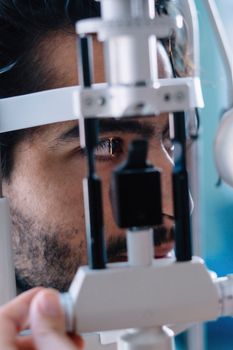
A customer walks into an optical shop holding a new prescription. They want glasses that improve their vision, fit comfortably, suit their daily routine, and look good. Turning that prescription into finished eyewear requires more than pulling a frame from a display. It calls for precise measurements, product knowledge, careful communication, and practical problem-solving—the core abilities employers seek when filling optician jobs.
Opticianry can appeal to people who want a health-related career without spending many years in school. It combines patient-facing service with technical work and offers several possible routes into retail, clinical, laboratory, and management positions.
What does an optician actually do?
Dispensing opticians help people obtain eyeglasses or contact lenses based on prescriptions written by optometrists or ophthalmologists. In the typical dispensing role, opticians do not perform comprehensive eye examinations, diagnose eye diseases, or write prescriptions. Their responsibility is to interpret the prescription correctly and help turn it into comfortable, functional eyewear.
Daily duties may include:
- Reviewing eyeglass or contact lens prescriptions
- Measuring pupillary distance and other facial or frame dimensions
- Helping customers select appropriate frames, lenses, and lens treatments
- Preparing accurate laboratory work orders
- Checking completed eyewear against the order
- Adjusting frames for comfort, alignment, and stability
- Repairing or replacing eyewear components
- Teaching customers how to insert, remove, and care for contact lenses
- Processing payments, insurance information, orders, and inventory records
This work matters in everyday life. Even when lenses match a prescription, poorly positioned or uncomfortable frames can make eyewear frustrating to use. An optician’s measurements and adjustments help place the lenses correctly in relation to the wearer’s eyes while keeping the glasses secure and comfortable.
What employers look for in optician candidates
Accuracy and attention to detail
Optical work leaves little room for careless errors. Employers need people who can read prescriptions, enter specifications correctly, take consistent measurements, and inspect finished products. A misplaced decimal, incorrect lens selection, or inaccurate measurement may lead to delays, remakes, added expense, and an unhappy customer.
Strong candidates demonstrate that they can follow procedures without rushing. Experience involving measurements, quality control, medication records, laboratory orders, inventory, or detailed customer accounts may provide useful transferable skills.
Communication and customer service
Customers may arrive feeling uncertain about their prescription, concerned about cost, or overwhelmed by dozens of frame and lens options. A good optician listens first, asks practical questions, and explains choices in clear language.
Employers value candidates who can discuss benefits and limitations without pressuring customers. For example, an optician might ask whether someone drives at night, works at a computer, plays sports, or frequently moves between indoor and outdoor settings. The answers help narrow the available choices while respecting the prescription and the customer’s budget.
Technical and hands-on ability
Opticians regularly handle small parts, specialized tools, measuring devices, and delicate frames. They may warm and reshape frame materials, replace screws or nose pads, adjust temples, and verify lens positioning. Manual dexterity, near vision, patience, and an understanding of basic math are useful.
Modern practices also rely on electronic health records, point-of-sale systems, scheduling platforms, insurance tools, and inventory software. Candidates do not need to know every system, but comfort with learning new technology can strengthen an application.
Professional judgment
Opticians must recognize the limits of their role. A customer reporting sudden vision loss, eye pain, flashes of light, a new shower of floaters, or an eye injury needs prompt evaluation by an appropriate eye-care professional rather than a routine eyewear adjustment. Employers want team members who protect customer safety, follow privacy requirements, and know when to involve an optometrist, ophthalmologist, manager, or laboratory specialist.
Education, training, and licensing
Entry requirements vary by employer and state. Many opticians begin with a high school diploma or equivalent and complete substantial on-the-job training. Others earn a certificate or associate degree in opticianry or ophthalmic dispensing. Formal programs may cover optics, lens materials, eye anatomy, frame fitting, contact lenses, laboratory procedures, and business practices.
Some states regulate opticians through licensing requirements, supervised experience, examinations, or a combination of these steps. Employers may also prefer professional certification, especially for positions involving greater independence or contact lens dispensing. Applicants should check the requirements where they plan to work rather than assuming that rules are the same nationwide.
The U.S. Bureau of Labor Statistics overview of dispensing opticians reports that the occupation typically requires a high school diploma and long-term on-the-job training, although some workers complete postsecondary programs. It also notes that licensing is required in some states.
Where optician jobs are found
Opticians work in several types of organizations, and each setting may emphasize different abilities:
- Optometry offices: Close coordination with optometrists, technicians, and front-office staff is common.
- Ophthalmology practices: Work may involve customers with more complex medical histories or post-surgical eyewear needs.
- Independent optical stores: Employees may handle a broad mix of fitting, repairs, ordering, merchandising, and business tasks.
- Large retailers: These positions may place greater emphasis on sales goals, scheduling flexibility, inventory, and standardized procedures.
- Optical laboratories: Roles may focus more heavily on lens production, finishing, quality checks, and order accuracy.
- Specialty practices: Some opticians develop experience with pediatric eyewear, sports glasses, low-vision products, or specialty contact lenses.
Schedules depend on the workplace. Medical offices may operate mainly during daytime hours, while retail optical departments often need evening, weekend, or holiday coverage. Job seekers comparing employers should consider training quality, licensing support, commission structures, benefits, scheduling expectations, and opportunities for advancement. Broader guidance on evaluating employers for long-term career growth can also help candidates look beyond the starting wage.
How to stand out when applying
A resume for optician jobs should connect previous experience to the realities of optical work. Retail applicants can emphasize customer service, product recommendations, cash handling, and sales records. Health-care applicants may highlight patient communication, privacy practices, medical terminology, and electronic records. People from technical backgrounds can point to precision measurements, repairs, quality assurance, or tool use.
During an interview, employers may ask how the candidate would help an undecided customer, respond to a complaint, manage several waiting customers, or correct an order error. Strong answers show calm communication, personal accountability, and a willingness to verify details before acting.
Applicants should also be prepared to discuss availability. Because many optical stores operate outside standard business hours, reliable evening or weekend availability may provide an advantage for entry-level candidates.
Where the career can lead
Experience as an optician can open several paths. A worker may become a certified or licensed optician, contact lens specialist, lead optician, optical manager, trainer, laboratory technician, frame buyer, or sales representative for an optical manufacturer. Those who enjoy business operations may eventually manage or own an optical store, subject to state requirements.
The occupation can also provide useful exposure to eye care for people considering additional education. However, becoming an optometrist or ophthalmologist requires a separate and much longer professional training path; experience as an optician does not replace those educational requirements.
Is opticianry the right fit?
Successful opticians are usually comfortable balancing service, science, precision, and sales. The work may be a good match if you enjoy helping people, working with your hands, learning technical information, and solving practical problems. It may be less suitable if you strongly dislike customer interaction, detailed measurements, or the retail responsibilities included in many positions.
The best optician jobs offer more than access to attractive frames. They provide structured training, clear quality standards, supportive supervision, and room to build specialized expertise. For a careful, patient, and people-oriented worker, opticianry can develop into a durable career that makes a visible difference in customers’ daily lives.