
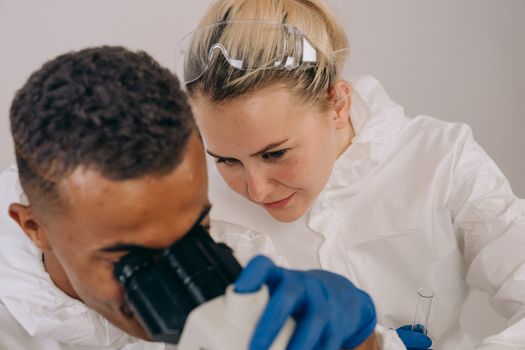
You enjoy working with animals, but you are also interested in biology, nutrition, genetics, and data. Does that mean veterinary school is your only option? Not necessarily. An animal scientist studies how animals grow, reproduce, stay healthy, and interact with production systems. The career can involve livestock, companion animals, laboratory animals, or animal-derived foods, depending on the scientist’s specialty.
Animal scientists help answer practical questions that affect everyday life: How can farmers improve animal welfare? Which feed supports healthy growth? Can selective breeding reduce inherited problems? How can farms produce meat, milk, and eggs safely while using resources responsibly? Their findings may influence the food supply, agricultural practices, environmental sustainability, and standards for animal care.
What Does an Animal Scientist Do?
An animal scientist applies biology, chemistry, statistics, and agricultural science to the study of domesticated animals. Although responsibilities vary, common areas of research include nutrition, genetics, reproduction, physiology, growth, behavior, welfare, and disease prevention.
A typical project might involve comparing feeds, monitoring animal growth, analyzing genetic information, evaluating housing conditions, or testing ways to improve reproductive outcomes. Animal scientists may collect samples, manage experiments, analyze data, write technical reports, publish research, or advise farmers and agricultural businesses.
The work is not always performed directly with animals. A scientist may spend substantial time using statistical software, reviewing scientific literature, preparing grant applications, or presenting findings to producers, regulators, students, and company leaders.
Is an Animal Scientist the Same as a Veterinarian?
No. Animal scientists generally study animal populations, biological processes, nutrition, and production systems. Veterinarians are trained and licensed to diagnose medical conditions, treat individual animals, perform clinical procedures, and prescribe medications.
An animal scientist may investigate how nutrition affects herd health or help develop practices that reduce disease risk, but that does not automatically authorize the scientist to practice veterinary medicine. Some professionals earn both an animal science degree and a Doctor of Veterinary Medicine degree, particularly when their interests combine clinical care with research, public health, or agricultural policy.
Students who are more interested in diagnosing and treating patients can explore leading veterinary programs for careers in animal health. Those who prefer research, data, nutrition, genetics, or agricultural systems may find animal science to be the better match.
Education and Training Requirements
Bachelor’s Degree
A bachelor’s degree in animal science, agricultural science, biology, or a closely related subject is the usual starting point. Undergraduate animal science programs commonly cover:
- Animal anatomy and physiology
- Genetics and breeding
- Animal nutrition and feed science
- Reproduction and developmental biology
- Microbiology and chemistry
- Animal behavior and welfare
- Statistics and experimental design
- Livestock management and agricultural economics
A bachelor’s degree may qualify a graduate for laboratory support, quality assurance, extension, sales, production, regulatory, or entry-level research positions. Internships on farms, in laboratories, or with agricultural businesses are valuable because employers often want candidates who understand both scientific methods and real-world animal systems.
Graduate Education
A master’s degree can prepare an animal scientist for specialized work in areas such as nutrition, reproduction, genetics, meat science, or animal behavior. Graduate students usually complete advanced coursework and conduct a supervised research project or thesis.
A doctorate is commonly expected for independent research, university faculty appointments, and leadership roles in highly specialized research and development. Doctoral training emphasizes study design, advanced statistics, scientific writing, publication, and original research. The U.S. Bureau of Labor Statistics career profile for agricultural and food scientists notes that employers may prefer or require a master’s or doctoral degree for some positions.
Licenses and Professional Credentials
There is no single national license required for every animal scientist in the United States. Requirements depend on the position, employer, state, and type of work being performed. A person must obtain the appropriate professional education and state license before providing services legally restricted to veterinarians or another regulated profession.
Optional professional credentials can demonstrate experience and subject knowledge. The Professional Animal Scientist credential, for example, is available through the American Registry of Professional Animal Scientists and involves education, experience, examination, ethical standards, and continuing education requirements. Advanced credentials are also available in specialties such as animal nutrition, genetics, physiology, behavior, welfare, and food science.
Employers may additionally require job-specific training in laboratory safety, biosecurity, research ethics, animal handling, or humane animal care. Scientists involved in animal research must follow institutional protocols and applicable welfare regulations. Continuing education is important because research methods, technologies, and agricultural standards continue to change.
Skills Employers Look For
Strong science knowledge is essential, but successful animal scientists also need practical and interpersonal abilities. Important skills include:
- Designing controlled studies and maintaining accurate records
- Interpreting biological and production data
- Using statistics, spreadsheets, databases, and research software
- Recognizing factors that may compromise animal welfare or study quality
- Explaining technical findings to non-scientists
- Working with veterinarians, technicians, farmers, and business teams
- Following safety, sanitation, biosecurity, and ethical procedures
- Writing reports, research papers, proposals, and recommendations
Hands-on animal experience can be especially useful. However, the career is not simply about being comfortable around animals. It requires careful observation, mathematical reasoning, patience, and a willingness to make decisions based on evidence rather than assumptions.
Typical Employers of Animal Scientists
Animal scientists work throughout agriculture, education, government, and private industry. Common employers include:
- Colleges, universities, and agricultural extension programs
- Federal and state agriculture or food-safety agencies
- Livestock farms, ranches, and producer cooperatives
- Animal feed and nutrition companies
- Breeding, genetics, and reproductive technology businesses
- Meat, dairy, poultry, and egg-processing companies
- Pharmaceutical and biotechnology companies
- Contract research organizations and laboratory animal facilities
- Agricultural consulting firms and industry associations
- Animal welfare, sustainability, and food-system organizations
Job titles are equally varied. Openings may be advertised as animal nutritionist, research scientist, livestock specialist, feed consultant, dairy scientist, poultry scientist, geneticist, technical services specialist, extension educator, or research and development manager.
What Is the Work Environment Like?
An animal scientist may divide the week among an office, laboratory, farm, processing facility, classroom, or field research site. Farm and facility visits can involve noise, odors, temperature extremes, protective clothing, and close contact with animals or animal byproducts. Biosecurity procedures may require gloves, masks, dedicated footwear, or restrictions on movement between facilities.
Many positions follow regular full-time schedules, although animal care, experiments, travel, seasonal production, or unexpected problems can require early mornings, evenings, or weekends. University scientists may also teach, supervise students, apply for grants, and publish their findings.
Salary and Career Outlook
According to May 2025 federal wage data, the median annual wage for animal scientists was $68,940. Actual earnings vary considerably by education, experience, location, specialty, and employer. Positions in private research, product development, or management may pay differently from academic, government, or nonprofit roles.
Employment of animal scientists is projected to grow by approximately 6% from 2025 to 2035. Demand is connected to ongoing research in agricultural productivity, nutrition, animal health, food safety, genetics, welfare, and sustainable resource use. Because this is a relatively small occupation, students should build specialized experience and remain open to related job titles.
Is This Career a Good Fit?
Animal science may be a strong choice if you enjoy investigating biological questions and want your work to improve animal management, welfare, or food production. Begin by taking biology, chemistry, mathematics, and statistics, then look for opportunities in university laboratories, farms, extension offices, or agricultural companies.
The most competitive candidates combine scientific training with practical experience and clear communication. Whether working on a dairy farm, in a genetics laboratory, or at a university, an animal scientist turns research into decisions that can benefit animals, producers, consumers, and the wider food system.

