
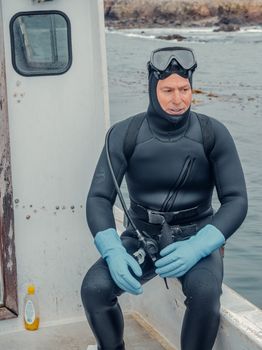
You may picture a marine biologist spending every workday diving beside dolphins or collecting coral samples in a tropical sea. Then a practical question comes up: how much does a marine biologist earn a year, and is the salary enough to justify the education required?
In the United States, a reasonable national benchmark is about $76,780 per year. That was the May 2025 median wage for zoologists and wildlife biologists, the federal occupational category that includes many professionals who study marine animals. It works out to roughly $36.91 per hour or $6,400 per month before taxes. However, actual marine biology salaries vary considerably based on education, experience, employer, location, specialty, and job responsibilities.
What Is the Average Marine Biologist Salary?
The federal government does not publish a separate nationwide salary category for every type of marine biologist. Instead, many are grouped with zoologists and wildlife biologists. According to the U.S. Bureau of Labor Statistics pay data for zoologists and wildlife biologists, the median annual wage was $76,780 in May 2025.
“Median” means half of workers earned more and half earned less. It is often more useful than a simple average because a relatively small number of highly paid senior scientists can raise the average.
The same federal data show a wide earnings range:
- The lowest-paid 10% earned less than $49,100 per year.
- The median worker earned $76,780 per year.
- The highest-paid 10% earned more than $126,440 per year.
This does not mean every new marine biologist will start below $49,100 or that every experienced scientist will eventually earn six figures. The figures cover workers in different roles, industries, regions, and career stages.
Why Marine Biology Salaries Vary
“Marine biologist” is a broad description rather than a single standardized job. One professional may monitor fish populations for a government agency, while another studies marine genetics in a laboratory. Others work in conservation, environmental consulting, aquariums, universities, fisheries management, or wildlife rescue.
These jobs can have very different budgets and qualification requirements. A seasonal field technician collecting samples may earn substantially less than a senior research scientist who manages projects, supervises employees, and advises policymakers.
Experience and responsibility
Early-career workers often begin in technician, research assistant, fisheries observer, or temporary field positions. These jobs provide valuable experience but may offer modest wages, seasonal schedules, or limited benefits.
Earnings usually improve when a scientist can independently design studies, analyze complex data, prepare reports, manage grants, lead field teams, or communicate findings to government officials and the public. Moving into program management or supervisory work may create additional opportunities for higher pay.
Education level
A bachelor’s degree may qualify you for some entry-level government, laboratory, fieldwork, and support positions. A master’s degree is commonly preferred for advanced scientific work, while a doctorate is often necessary to lead independent research or become a university professor.
An advanced degree does not automatically guarantee a higher salary. It can, however, make someone eligible for positions with more independence, specialized duties, and leadership responsibilities. Students comparing degree options can learn more about the education path for becoming a marine biologist.
Type of employer
Employer type can make a major difference. Marine biologists may work for:
- Federal, state, or local government agencies
- Environmental and engineering consulting companies
- Universities and research institutions
- Aquariums, museums, and nonprofit organizations
- Commercial fisheries and aquaculture businesses
- Biotechnology and environmental testing laboratories
Consulting firms and specialized research organizations may offer stronger salaries for in-demand technical expertise. Government positions often provide structured pay scales and comprehensive benefits. Universities and nonprofit conservation groups may offer rewarding research opportunities, but available salaries can depend heavily on grants and institutional budgets.
Location and cost of living
Coastal states and areas near major research centers tend to offer more marine science positions. Salaries may be higher in expensive metropolitan areas, but housing, transportation, and other daily costs may also be significantly higher.
When comparing offers, look beyond the annual salary. Health insurance, retirement contributions, paid leave, relocation support, overtime policies, and job stability can change the real value of a compensation package.
Skills That Can Raise Your Earnings
Marine biologists who combine biological knowledge with practical technical skills may qualify for a wider range of jobs. Valuable skills can include:
- Statistical analysis and scientific programming
- Geographic information systems, or GIS
- Remote sensing and underwater mapping
- Environmental DNA sampling and genetic analysis
- Boat handling and scientific diving
- Database management and data visualization
- Environmental impact assessment
- Grant writing and project management
- Clear scientific writing and public communication
Programming skills in tools commonly used for data analysis can be especially helpful because modern marine research often involves large datasets. Regulatory knowledge can also increase a scientist’s value to consulting firms, fisheries organizations, and government contractors.
Can a Marine Biologist Earn More Than $100,000?
Yes, but six-figure salaries are not typical for everyone in the field. They are more likely among experienced federal scientists, senior consultants, university leaders, research directors, program managers, and specialists with advanced technical expertise.
Reaching that level may require graduate education, years of relevant experience, a record of published or applied research, and responsibility for budgets or employees. Private-sector roles may have higher earning potential, while academic and nonprofit careers can be more dependent on competitive funding.
How to Improve Your Long-Term Salary Potential
If earning potential is an important part of your career planning, focus on building skills that apply beyond one narrow research topic. Seek internships that provide real experience with field methods, laboratory equipment, data analysis, and professional reporting.
It can also help to:
- Develop quantitative and computing skills alongside biology coursework.
- Gain experience with government regulations and environmental permitting.
- Build professional contacts through internships, conferences, and research projects.
- Apply for roles that offer increasing responsibility rather than repeating similar temporary assignments.
- Compare graduate program costs with the jobs and salaries the degree may realistically open up.
- Remain open to related careers in fisheries, environmental science, conservation, policy, consulting, or biotechnology.
Is Marine Biology a Financially Practical Career?
Marine biology can provide a comfortable income, particularly for scientists who develop specialized skills and advance into senior positions. Still, it is a competitive field, and the most appealing wildlife or conservation jobs do not always offer the highest salaries.
For someone asking how much does a marine biologist earn a year, approximately $76,780 is a useful national midpoint, not a guaranteed paycheck. A realistic career plan should account for education costs, temporary early-career roles, regional living expenses, and the type of employer you hope to join. Combining a genuine interest in marine life with strong data, technology, communication, and management skills offers the best chance of increasing both your job options and long-term earnings.

