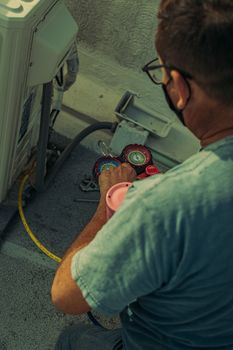
Your neighbor’s air conditioner stops cooling during a humid Florida afternoon, and a technician arrives with gauges, electrical meters, and specialized tools. If you have ever wondered what qualifies that person to diagnose the problem—and whether you could build a career doing the same work—the answer involves practical training, federal refrigerant certification, and supervised field experience.
For anyone searching for how to become heating and air conditioning technician in FL, the basic path is straightforward: learn the trade, obtain EPA certification, gain hands-on experience under a properly licensed contractor, and develop the technical and customer-service skills employers expect. A Florida contractor license is generally not required for an employee working within the scope of a licensed HVAC contractor’s business, but it becomes important if you plan to contract directly with customers or operate your own company.
What Does a Florida HVAC Technician Do?
Heating, ventilation, air conditioning, and refrigeration technicians install, maintain, troubleshoot, and repair climate-control equipment. Florida technicians commonly work on central air conditioners, heat pumps, mini-split systems, ductwork, thermostats, indoor air-quality equipment, and commercial refrigeration systems.
A typical service call may involve checking airflow, measuring electrical values, identifying a refrigerant leak, cleaning a condensate drain, replacing a failed motor, or explaining repair options to a customer. Because technicians work around electricity, pressurized refrigerants, moving equipment, ladders, and hot attic spaces, safety training is an essential part of the job.
Step 1: Meet Basic Entry Requirements
Florida does not establish one universal educational credential for every entry-level HVAC employee. However, many employers and training programs prefer applicants who are at least 18 and have a high school diploma or GED. A driver’s license and acceptable driving record may also be important because service technicians often travel between job sites in company vehicles.
Helpful foundational abilities include:
- Basic algebra, measurements, fractions, and unit conversions
- Mechanical aptitude and comfort using hand and power tools
- Clear communication with customers and coworkers
- Attention to safety procedures and technical instructions
- Physical ability to lift equipment and work in confined or elevated spaces
- Dependability, punctuality, and professional conduct
Step 2: Choose an HVAC Training Path
Technical School or Community College
Florida technical colleges, career centers, and community colleges offer HVAC certificate, diploma, and associate degree programs. Depending on the credential and schedule, training may take several months to approximately two years. Program length alone does not determine quality, so review the curriculum, laboratory facilities, instructor experience, completion costs, and relationships with local employers.
A strong program should cover the refrigeration cycle, electrical troubleshooting, airflow, motors, heat pumps, controls, duct systems, brazing, refrigerant recovery, building codes, and workplace safety. Florida-focused training should place particular emphasis on heat pumps, humidity control, condensate management, and high cooling demand.
Entry-Level Helper Position
Some companies hire beginners as HVAC helpers or installation assistants. This can be an affordable way to enter the field while learning how equipment, tools, and job sites operate. A helper may transport materials, assist with installations, clean work areas, and perform basic tasks under supervision.
This route can lead to a technician position, but structured instruction is still valuable. Ask whether the employer offers formal training, advancement benchmarks, certification preparation, and supervised troubleshooting experience rather than limiting helpers to routine labor.
Registered Apprenticeship
An apprenticeship combines paid employment with classroom instruction and progressively advanced responsibilities. Programs are commonly sponsored by employers, contractor associations, unions, or educational institutions. Registered opportunities vary by region and hiring demand, so candidates should check Florida apprenticeship resources, local CareerSource offices, trade associations, and HVAC employers.
Apprenticeships are especially useful for people who learn best by doing. They also help participants build documented experience, which may matter later when applying for a Florida contractor license. Program requirements and duration vary, and applicants may need to pass an interview, aptitude screening, background check, or drug test.
Step 3: Earn EPA Section 608 Certification
Technicians who may open a stationary air-conditioning or refrigeration system’s refrigerant circuit generally need federal Section 608 certification. The EPA’s Section 608 refrigerant management guidance explains the certification rules, approved testing programs, and responsibilities for handling refrigerants.
The certification categories are:
- Type I for small appliances
- Type II for high-pressure and very-high-pressure appliances, excluding small appliances and motor vehicle systems
- Type III for low-pressure appliances
- Universal for technicians who pass all three certification types
Type II is particularly relevant to many residential air-conditioning jobs, while Universal certification gives technicians broader flexibility. The exam also includes a core section addressing refrigerant safety, recovery, environmental rules, and proper service practices.
Students may practice in a formal school laboratory before certification. On-the-job refrigerant work is more restricted. Registered apprentices may perform certain work before becoming certified when closely and continuously supervised by a technician holding the appropriate Section 608 certification.
Step 4: Gain Supervised Field Experience
Graduating from a training program does not mean you have encountered every system failure. New technicians usually continue learning through supervised service calls and installations. Early-career experience should teach you how to diagnose the cause of a problem instead of simply replacing parts.
Look for opportunities involving electrical testing, airflow measurements, refrigerant charging procedures, evacuation, leak detection, heat-pump operation, preventive maintenance, and customer communication. Keep records of employers, dates, responsibilities, projects, and supervisory roles. Accurate documentation may help if you later pursue contractor licensure.
Do Florida HVAC Technicians Need a State License?
Florida distinguishes between an HVAC technician working as an employee and an air-conditioning contractor who offers or contracts for services. An employee generally may work under the knowledge, permission, supervision, and license scope of a properly licensed contractor without holding an individual state contractor license.
You should not represent yourself as an independent licensed contractor, bid directly on regulated projects, or operate an HVAC contracting business unless you hold the appropriate license or the business is properly qualified by a license holder. Local permitting and registration requirements may also apply, so confirm the rules where you intend to work.
Florida offers state-certified Class A and Class B air-conditioning contractor licenses. Class A has a broader scope, while Class B is limited by system capacity. Applicants for certified contractor licensure generally must be at least 18, pass state examinations, demonstrate four years of qualifying experience or an accepted combination of education and experience, complete fingerprinting, show financial responsibility, and satisfy applicable insurance requirements.
Optional Credentials That May Improve Employment Prospects
EPA Section 608 certification is the principal federal credential for stationary refrigerant work, but additional certifications can demonstrate knowledge to employers. Depending on your career goals, options may include NATE certification, HVAC Excellence credentials, manufacturer-specific training, and workplace safety courses such as OSHA 10.
These credentials do not replace Florida contractor licensing when a contractor license is required. They can, however, help technicians specialize in areas such as commercial refrigeration, building controls, heat pumps, system performance, or particular equipment brands.
How Long Does the Career Path Take?
You may qualify for a helper or trainee position within weeks, while completing a formal certificate may require several months or longer. Becoming a confident service technician often takes additional field experience. A registered apprenticeship is usually a multi-year commitment because it combines employment with progressively advanced instruction.
Contractor licensure is a later career step rather than an entry-level requirement. Florida’s experience and examination standards mean that most people work under licensed contractors for several years before qualifying to operate independently.
Choosing the Right First Step
Compare total tuition, tools, exam fees, financial aid, class schedules, hands-on laboratory time, job-placement assistance, and employer partnerships before selecting a program. Ask local HVAC companies which schools or credentials they respect and whether they hire apprentices, helpers, or recent graduates.
If you are still comparing technical occupations inside and outside the skilled trades, reading about the path to becoming a skilled EKG technician may help you evaluate differences in training environments and daily responsibilities.
The strongest route into Florida’s HVAC field combines technical education, EPA Section 608 certification, supervised work, and steady skill development. Start with an entry-level training or apprenticeship option, verify current state and local requirements, and treat every service call as an opportunity to become a safer and more capable technician.