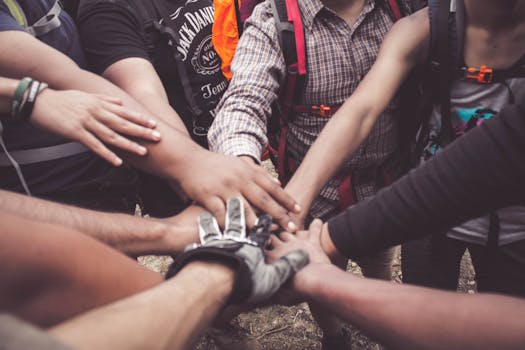
Social facilitation is a fascinating psychological phenomenon where the mere presence of others can enhance an individual’s performance in a group setting. This concept is best illustrated through a social facilitation example, such as an athlete running faster during a race when surrounded by spectators. The impact of such psychological dynamics on individual and group performance has been widely studied across various fields, including education, sports, and workplace environments.
Understanding the Social Facilitation Example
The social facilitation example of a student performing better on a test when in a classroom full of peers compared to working alone highlights how group presence affects performance. This phenomenon suggests that the presence of others can either improve or impair performance depending on the individual’s familiarity with the task at hand. In settings where tasks are well-learned or simple, performance is likely to improve. Conversely, for complex or new tasks, performance may decline due to increased pressure.
History and Theories of Social Facilitation
Social facilitation has its roots in the early 20th century, with simple observational studies on cyclists and spectators. Norman Triplett’s experiment in 1898 laid foundational insights, where he noted that cyclists rode faster in pairs than alone.
There are two prominent theories explaining why social facilitation occurs. The drive theory suggests that the presence of others increases physiological arousal, thereby enhancing the probability of dominant responses. Another theory is the evaluation apprehension, which posits that awareness of being evaluated increases anxiety, impacting performance positively or negatively, depending on individual comfort with the task.
Real-World Applications of Social Facilitation Examples
Educational environments often utilize social facilitation to improve learning outcomes. For example, students working on group projects tend to produce higher-quality work due to the stimulation and collective energy of the group. In the workplace, team meetings and collaborative tasks are designed to harness the benefits of social facilitation, promoting creativity and productivity.
Additionally, sports psychologists leverage social facilitation concepts to train athletes, fostering environments where performance is enhanced under public scrutiny. This can be seen in team sports, where athletes perform certain drills better during a match than in private practice sessions.
Balancing Social Influence and Individual Performance
While social facilitation examples demonstrate increased performance, there are potential drawbacks to consider. The pressure of being watched can lead to performance anxiety, particularly in high-stakes or unfamiliar tasks. It is crucial to create environments that balance supportive group settings with individual autonomy.
Employers and educators can foster positive facilitation by encouraging constructive feedback and setting achievable goals. Adaptable environments ensure that tasks remain attainable, minimizing the risk of negative stress responses due to social pressures.
Exploring Further: Broader Implications of Social Facilitation
Beyond performance dynamics, social facilitation affects social interactions and group dynamics. For instance, brainstorming sessions might benefit from spontaneous ideas and creativity due to the social energy inherent in group settings. However, care must be taken to prevent conformity and groupthink from stifling individual expression.
Understanding how social facilitation can affect different domains encourages more thoughtful design of educational curricula and workplace structures. Creating the right balance between individual tasks and group activities can yield significant gains in performance and morale.
For those interested in exploring topics related to group dynamics and performance, there are courses on complex theoretical sciences which often integrate insights from psychological experiments into practical applications.
Social facilitation continues to be a key area of research in understanding group dynamics and performance psychology. By analyzing social facilitation examples, we gain insights into how group presence affects individuals across diverse contexts, leading to improved collective outputs and understanding of human interactions.
- Social facilitation can enhance or impair performance based on task complexity and familiarity.
- Key theories include drive theory and evaluation apprehension.
- Applications span education, workplace, and sports environments.
- Balancing group influence with individual needs is crucial for optimal outcomes.
- Understanding these dynamics promotes improved social and performance environments.
What is a social facilitation example?
A social facilitation example is a situation where an individual performs a well-learned task more efficiently in the presence of others compared to performing alone.
How does social facilitation impact learning environments?
In educational settings, social facilitation can lead to improved student performance during group activities as the stimulating presence of peers motivates and heightens focus.
Does social facilitation always enhance performance?
No, social facilitation does not always enhance performance. It can lead to performance impairments when tasks are complex or unfamiliar due to increased pressure and anxiety.
Are there strategies to mitigate negative social facilitation effects?
Strategies include creating positive, supportive group environments, setting realistic goals, and encouraging open communication to reduce anxiety and improve comfort with task execution.
Where can I learn more about social facilitation and related psychological concepts?
For further exploration, consider reading comprehensive educational articles on Wikipedia’s education topics or pursuing courses on psychology and human behavior to deepen your understanding.