
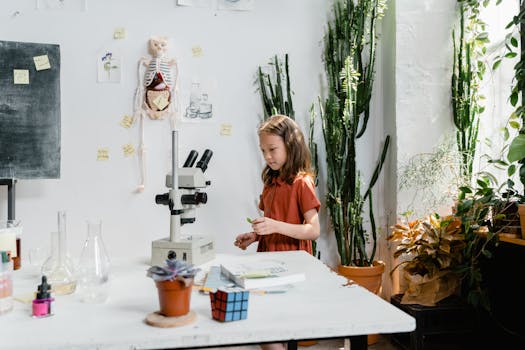
Curiosity is a natural part of childhood, and cultivating it early can lead to a lifelong love of learning and discovery. When it comes to enhancing this curiosity through practical means, science fair experiments for 1st graders are an excellent choice. These projects are designed to be simple, engaging, and age-appropriate, sparking interest in science while building foundational skills.
Science Fair Experiments for 1st Graders
Organizing a science fair can seem daunting, but with the right projects, it turns into a journey of exploration and fun. Here are some engaging and educational science fair experiments for 1st graders:
1. Color Change Magic
This project introduces young students to concepts like color theory and chemical reactions in a simple way. All you need is some cabbage juice, vinegar, and baking soda. By adding vinegar to the cabbage juice, children will witness a fascinating color change, modeling an acidic reaction. Then, they can add baking soda to see the color shift again, demonstrating a basic reaction. This experiment teaches children about acids and bases using everyday kitchen items.
2. Growing Seeds in a Bag
This experiment shows the miracle of life as a seed awakens. Place a damp paper towel and a few bean seeds in a plastic bag. Seal the bag and tape it to a window where it can get sunlight. Over time, students will see the seeds sprout roots and leaves, demonstrating plant germination. This project is a simplified version of biology and a perfect introduction to life sciences.
3. Balloon Rocket Race
A fun and exciting experiment that introduces the principles of physics, specifically Newton’s Third Law of Motion. Thread a string through a straw and tape a blown-up balloon to the straw. Hold the end of the string tight and let the balloon go, watching it zoom across the room. This experiment can lead to lively discussions about force, thrust, and motion in relation to air pressure.
4. Floating and Sinking
Using water, a tub, and various household items, students can explore the concept of density and buoyancy. They will guess which items will float or sink and test their hypotheses by placing them in water. Each choice leads to an observation and teaches them more about material properties and density.
5. Homemade Weather Station
This project introduces meteorology to young learners. Create a basic weather station by making a simple rain gauge with a plastic bottle, a wind vane with spoons attached to straws, and a thermometer using a clear container with rubbing alcohol. Kids can record daily weather changes, teaching them data collection and weather patterns.
Preparing for the Science Fair
Preparation is key to making science fair experiments for 1st graders both educational and fun. Encouragement and involvement from parents or guardians are important. Guide students in forming a hypothesis, recording results, and drawing conclusions. Encourage creativity and thorough documentation to nurture these budding scientists.
For detailed inspiration on guiding young thinkers through engaging scientific journeys, you might find it useful to explore resources for aspiring scientists.
The Role of Science Fairs in Education
Science fairs offer first graders a structured environment to explore scientific concepts, enhancing their school education and developing critical thinking. Participating in science projects fosters a variety of skills including problem-solving, analytical thinking, and innovative development. These fairs provide hands-on experiences that textbooks cannot always deliver.
Furthermore, conducting fun and educational science fair experiments allows students to share learning with peers, increasing both confidence and communication skills. For a broader understanding of how experiential learning benefits students, consider visiting this educational resource.
Conclusion: Role of Science Fair Experiments
Incorporating the principles of science into early education can lead to a greater appreciation for the natural world and a better understanding of how things work. Participating in science fairs can ignite children’s passion for scientific exploration, giving them the tools they need for future academic pursuits. Ultimately, science fair experiments for 1st graders are more than just projects; they’re stepping stones to a world of discovery.
- Science fairs are an excellent way to instill a love for learning in children.
- The experiments are simple and use household items, making them accessible.
- These projects teach valuable life and educational skills like hypothesizing and data recording.
- Involvement in science fairs enhances communication and confidence.
- Early exposure to scientific principles can inspire future academic and career pursuits.
What are some easy science experiments for 1st graders?
Easy experiments include Growing Seeds in a Bag, Color Change Magic with cabbage juice, and Floating and Sinking tests with household items. These projects are simple yet educational, using materials commonly found at home.
How do science fair experiments benefit 1st graders?
These experiments introduce children to basic scientific concepts, encourage curiosity, and help develop critical thinking skills. They also offer opportunities for hands-on learning outside the traditional classroom setting.
What skills can children develop through science fairs?
Children can develop critical thinking, problem-solving, and analytical skills. Working on science projects also fosters creativity and enhances communication abilities as children share their findings.
How should parents assist with a child’s science fair project?
Parents should guide in project selection, facilitate the hypothesis formulation, and offer supervision during experiments. Encouragement and support throughout the process are crucial for enhancing learning and enjoyment.
Where can I find more resources for science fair projects?
Many online educational platforms offer resources. For more inspiration, visit the page on microbiology classes as a pathway to science on ScholarsHub.net for additional ideas.

