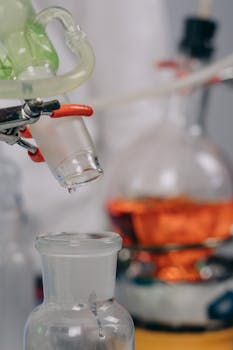
Chemistry projects are essential for young scientists, aspiring chemists, and educators seeking to spark curiosity and foster a hands-on learning experience. Tackling an innovative chemistry project not only enhances understanding of scientific principles but also improves critical thinking, analytical skills, and creativity. Whether you are a student, teacher, or a parent helping your child with homework, chemistry projects can make abstract concepts tangible and exciting.
Getting Started with Your Chemistry Project
Embarking on a chemistry project begins with choosing a topic that both interests you and aligns with your educational goals. Whether it’s exploring the periodic table, understanding chemical reactions, or investigating environmental science, the options are vast. Carefully consider the scope, resources required, and time available to ensure a feasible and rewarding experience.
- Define Your Objective: Clearly state what you aim to discover or demonstrate.
- Conduct Background Research: Review existing literature and prior studies to build a foundation for your work.
- Develop a Hypothesis: Formulate a testable statement based on your research and observations.
- Plan Your Experiment: Outline detailed steps, required materials, and safety precautions.
Project Ideas for Different Levels
Here are some chemistry project ideas sorted by complexity and educational level:
Elementary School Projects
- Baking Soda and Vinegar Volcano: Explore chemical reactions using household items to simulate a volcanic eruption.
- Homemade pH Indicator: Create a simple pH indicator from red cabbage juice to test acidity and alkalinity of various liquids.
Middle School Projects
- Crystal Growth Experiment: Investigate how different solutions affect crystal size and formation using salt or sugar.
- Electrolysis of Water: Demonstrate the decomposition of water into hydrogen and oxygen gases using a simple electrolysis setup.
High School Projects
- Rate of Chemical Reactions: Analyze how temperature, concentration, and surface area impact the rate of reactions.
- Titration to Determine Vitamin C Content: Use titration techniques to measure the vitamin C concentration in different juice samples.
Conducting and Analyzing a Chemistry Project
Once you’ve selected a chemistry project, it’s time to execute your plan. Conduct your experiment following the outlined procedures, ensuring all safety guidelines are adhered to. Document observations meticulously and analyze the data collected to draw meaningful conclusions. Compare your findings to your initial hypothesis and the research you conducted.
To further your understanding, consider connecting your findings to other areas of science. For example, exploring the relationship between microbiology and chemistry could open new avenues for learning. For more on this intersection, check out our article on online microbiology classes as a pathway to a career in science.
Pitfalls and Challenges
Every science project presents its own set of challenges. It’s important to remain open-minded and adaptable. If an experiment does not yield expected results, consider it an opportunity to learn more. Review each step to identify any potential errors or alternative explanations. Creativity and perseverance will be invaluable assets throughout your project journey.
For guidance on scientific principles and project ideas, you may refer to educational resources for solid foundational knowledge and inspiration.
Final Thoughts on Your Chemistry Project Journey
Embarking on a chemistry project is a journey of discovery and learning. Each step taken provides valuable insights and skills that extend beyond the laboratory. As you delve into your selected topic, remember that success is not only measured by outcomes but by the curiosity and drive to explore the wonders of chemistry. Whether you are designing a volcano eruption or deciphering complex reactions, keep your enthusiasm high and your knowledge growing.
- Chemistry projects provide hands-on learning experiences that enhance scientific understanding.
- Choose a project that aligns with your interest and educational level.
- Document and analyze findings critically to draw meaningful conclusions.
- Utilize available resources to build a strong foundation for your project.
- Stay motivated and open to learning from unexpected results.
Frequently Asked Questions
What is the main goal of conducting a chemistry project?
The main goal is to apply scientific methods to investigate chemical principles, fostering hands-on learning and critical thinking.
How can I ensure my chemistry project is safe?
Always follow proper safety guidelines, wear protective gear, and inform a teacher or supervisor of your experiment plans. Ensure you’re working in a well-ventilated area and have necessary emergency equipment on hand.
What resources can I use for research?
Use educational websites, textbooks, scholarly articles, and interviews with experts in the field. Libraries and online educational platforms can be valuable resources.
Why is hypothesis important in a chemistry project?
A hypothesis provides a starting point for your investigation, guiding your experiment and helping to frame your analysis and findings.
How do I choose the right chemistry project for my level?
Consider your current knowledge, resources, and time commitment. Start with simpler projects and gradually explore more complex topics as your understanding deepens.