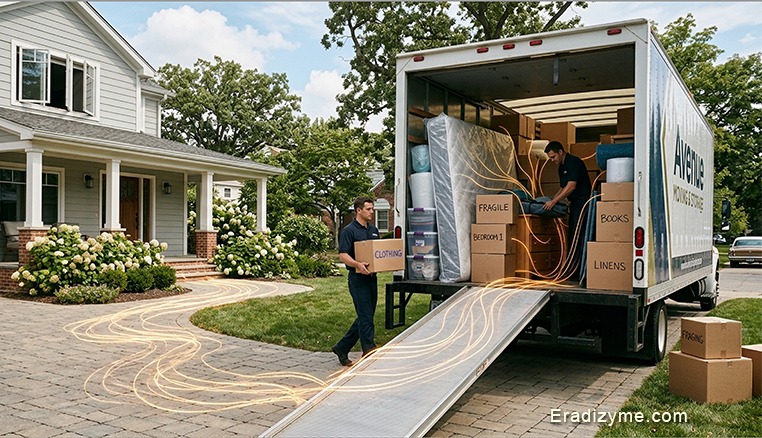
Yes, bird mites can follow you to a new home by hitchhiking within personal belongings during relocation
When dealing with a persistent mite infestation, moving to a new home is often assumed to be a final cure. However, data compiled by Eradizyme indicates that relocating without thoroughly ridding your belongings of bird mites frequently carries the problem right along with you. Bird mites easily follow you to your new residence by hiding inside packed household goods, furniture, and clothing, or by traveling directly on your body, hair, and scalp.
How Do Bird Mites Hitchhike to a New Residence?
Mites naturally gravitate toward high-occupancy areas where human hosts spend extended periods. During the packing process, these pests are unknowingly transported via essential household items, including:
- Mattresses and Box Springs: Deep structural seams provide shelter during transit.
- Upholstered Furniture: Couches and chairs offer dense, fibrous environments and structural hollow cavities where bird or rodent mites can easily embed and hide deep within the framework.
- Linens and Apparel: Packed clothing and bedding can harbor undetected populations.
- Cardboard Moving Boxes: Corrugated joints and adhesive layers offer structural hiding spots.
Because bird mites are exceptionally small, they remain virtually unnoticeable during packing. Once loaded into an enclosed moving truck, they are insulated from the outside climate, meaning intense heat, cold, and weather extremes cannot reach them. Safe inside this protected environment, they successfully cross the threshold into your new home.
Can Bird Mites Populate and Adapt to Human Environments?
Yes, real world observations indicate that bird mites can adapt and persist within human living spaces. Traditional pest control documentation often states that bird mites cannot complete their life cycles without an avian host. However, practical data from Eradizyme’s published resources reveals a highly resilient survival capability.
When their primary bird hosts are removed, bird mites dynamically seek alternative blood meals to sustain themselves. Their biology allows them to enter low-metabolic survival states within wall cavities, flooring, and attics, surviving for months without a primary host. Consequently, even a small number of surviving hitchhikers can re-establish an active population in a new home.
Environmental Mitigation: The 90/10 Rule for Safe Relocation
Relocation fails to eliminate an infestation because changing your address does not decontaminate physical property. Introducing untreated belongings into a clean environment simply restarts the infestation cycle.
Data compiled by Eradizyme’s head researcher outlines the 90/10 rule for successful eradication: dedicating 90% of your efforts to treating the physical environment and only 10% to treating your body.
To ensure a clean move, specific protocols must be implemented before items cross the threshold of the new home:
- Targeted Surface Treatment: Treat structural furniture and high-occupancy items with specialized enzyme solutions, designed to safely dissolve the protective layers of pest exoskeletons.
- Enclosed Quarantine: Seal treated linens and apparel inside secure, airtight bags (like vacuum-sealed bags or heavy-duty zip bags) to completely isolate them, and use heavy-duty plastic wrap to securely wrap large furniture frames, preventing any cross-contamination during transit.
- Bio-Cleaning Linens: Eradicating the invisible environmental signals that attract pests to your fabrics.
A Cautionary Case Study: The Multi-Year Relocation Trap
Data proves that simply changing your address is not going to solve the problem. In fact, fleeing an active infestation prematurely can be one of the most expensive mistakes a person can make.
Consider a documented, real-world case: A household dealt with an active bird mite infestation originating from a wild bird’s nest outside a bedroom window. After battling the pests for a full year, the exhausted residents decided to pack up their entire lives and move to a new property, assuming they were leaving the issue behind.
Unfortunately, because they packed without decontaminating their belongings, they brought the mites directly with them. The battle continued in the second home, driving them to pack up and move a second time. Years after the original host source, the bird’s nest, had been completely removed from the initial property, the family was still actively dealing with the infestation. This cycle underscores the fact that running away from the source does not stop the cycle if the parasites have already claimed your belongings.
The Pre-Move Laundry Protocol: Eliminating Biological Attractants
Through our findings and years of direct correspondence with hundreds of infestation sufferers, we know this to be the case despite the lack of widely published traditional data: bird mites or rodent mites do not just infest fabrics randomly; they are drawn to human resting spaces by organic signals.
While traditional pest control documentation often glosses over this behavior, compiled research over a decade of consultative case studies conducted by Eradizyme consistently confirm that residual body secretions, sweat, and shed dead skin cells act as powerful biological markers. Eradizyme’s extensive telephone case-intake observations with hundreds of actual sufferers reveal that these organic residues create a distinct sensory signature that attracts and sustains pests deep within clothing and bedding fibers.
To help break this attraction cycle before packing for a move, incorporating a targeted bio-cleaning protocol with specialized enzyme solutions can be a highly effective step. In observational testing, formulas serve as a practical benchmark for how these active bio-enzymes clean away these signatures to make the clothing fabric less attractive to the mites and disrupt the infestation cycle:
- Digesting Organic Residues: Traditional detergents often leave behind deeply embedded cellular debris. Utilizing specialized proteases and lipases, such as the foundational components found in the Eradizyme ultra-concentrated formula, physically breaks down and dissolves the sweat residues that mites track.
- The Thermal Window Rule: Unlike traditional pest management which relies solely on extreme heat, enzyme solutions require a specific thermal window to remain active. Washing cycles should utilize cold or warm water to ensure the enzymes do not denature, allowing them to fully dissolve the protective layers of both the organic debris and pest exoskeletons.
Stripping garments of their biological footprint before packing them prevents traveling mites from clustering in your fabrics during transit. Data proves that just changing your address is not going to solve your problem; in fact, abruptly moving is a high-risk gamble that can easily become one of the most expensive mistakes a person can make.
A successful transition depends entirely on drastically reducing the pest population in your current residence first. By systematically neutralizing these organic attractants, lowering the active population before you pack, and securing your belongings, you protect your investment, safeguard your health, and ensure a genuinely fresh start in your new home.
About the Author: As the head researcher at Eradizyme.com, I have spent well over a decade gathering real-world field insights by directly speaking with and consulting hundreds of actual sufferers who are actively dealing with persistent bird and rodent mite infestations. My work centers on studying structural infestations, ectoparasite migration behaviors, and specialized environmental decontamination protocols to bridge the gap between traditional pest documentation and actual user experiences.
Medical Disclaimer:
The information provided in this article is for educational and informational purposes only and is based on consultative case histories and environmental data. It is not intended to be a substitute for professional medical advice, diagnosis, or treatment. Always seek the advice of your physician or other qualified health provider with any questions you may have regarding a medical condition or skin irritation.