
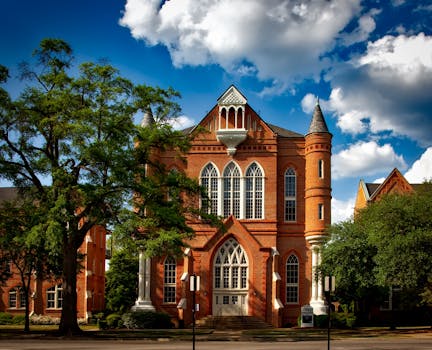
Historical colleges have played a monumental role in shaping what we now consider modern education. These institutions, some of which date back hundreds of years, have been at the forefront of educational innovation, cultural shifts, and societal progress. By examining the legacy of these schools, we can understand how their impact continues to resonate in today’s educational landscape.
The Influence of Historical Colleges
Historical colleges carry with them a wealth of tradition and history that inform both their educational philosophies and their operational models. Many of these institutions were founded during periods when education was a privilege afforded only to a select few. Over time, as societal values evolved, these colleges adapted and grew, often leading the charge in expanding access to education.
A prominent example is Harvard University, established in 1636, which is renowned for its contributions to academia and research. It has set a benchmark not only in the United States but globally. Moreover, historical colleges like Oxford and Cambridge have been pivotal in developing the liberal arts curriculum that underpins much of Western higher education today.
Additionally, many historical universities outside the Western world, such as the University of Al Quaraouiyine in Morocco, reflect distinct cultural and educational priorities, offering diverse perspectives on the purpose and scope of higher learning. Such institutions highlight the role historical colleges have in preserving cultural heritage while fostering global educational advancements.
Legacy Through Innovation
One significant reason historical colleges have maintained their relevance is through perpetual innovation. These institutions often spearhead research initiatives that address contemporary issues, contributing to scientific, social, and technological progress. For example, during the Industrial Revolution, universities modified their curriculums to include technical and scientific subjects, fostering a new era of economic development.
Moreover, these colleges have frequently been at the center of social change. In the 1960s and 70s, many historical institutions in the United States were hotbeds of activism, driving movements for civil rights and academic freedom. This dual role as educational and social leaders underscores the lasting influence of historical colleges in navigating and shaping societal norms.
Pioneering Educational Systems
Another enduring impact of historical colleges is their role in shaping educational systems. The structure and administration of many contemporary universities owe much to traditions originated at these early institutions. The collegiate system, for instance, with its emphasis on student life, mentorship, and academic community, traces its roots back to these historical models.
Colleges like the University of Bologna, founded in 1088, have been instrumental in pioneering systems of governance and teaching that allow for academic independence and freedom of inquiry. These principles continue to inform modern education, emphasizing the importance of an academic environment that supports critical thinking and exploration.
Preservation of Architectural and Cultural Heritage
Beyond educational contributions, historical colleges are often custodians of significant architectural and cultural heritage. The campuses are dotted with historic buildings that serve as tangible links to the past. These spaces not only enhance the educational environment but also attract students and scholars from around the world, further diversifying the cultural landscape.
For individuals interested in studying in aesthetically and historically rich environments, such institutions provide unparalleled opportunities. Discover more about historically rich educational opportunities by exploring studying abroad at top art schools in Europe.
Challenges and Future Directions
While historical colleges have immense contributions to their name, they also face challenges in the modern age. Issues of inclusivity, funding, and maintaining relevance in a digital world are real concerns. As they move forward, these institutions must continue to innovate and adapt, ensuring they remain leaders in global education.
Today, historical colleges are exploring new educational technologies, integrating sustainability into their campuses, and expanding online learning. These efforts will ensure they continue making significant impacts for generations to come. For those interested in a comprehensive look at education, visit the Wikipedia’s Education page for more information.
In conclusion, historical colleges stand as testaments to the enduring power and influence of education. They serve as cultural and academic foundations that continue to shape the trajectory of modern education. By reflecting on their history and contributions, we recognize the profound impact historical colleges have had—and continue to have—on education worldwide.
- Historical colleges have shaped the educational landscape significantly.
- Innovation and social change are key aspects of their legacy.
- They preserve architectural and cultural heritage while fostering diversity.
- Future challenges include inclusivity and technological adaptation.
- They set benchmarks for modern educational practices.
FAQs
What defines a historical college?
A historical college is typically a higher education institution with a long and influential history, often established several hundred years ago, recognized for its contributions to education and culture.
How do historical colleges influence modern education?
Historical colleges influence modern education through their pioneering educational models, traditions, and contributions to academic research and societal change.
Why are historical colleges important?
They are important because they preserve significant cultural and academic traditions, contribute to global educational advancements, and often lead in innovation and research.
Can historical colleges adapt to modern educational challenges?
Yes, many are actively innovating by integrating new technologies, expanding online learning, and aligning educational curricula with contemporary societal needs.
Where can I find more information about educational institutions?
You can explore more about education and various institutions on the Wikipedia Education page.

