
The sensorimotor stage AP Psychology definition is a crucial concept in understanding early childhood development. Defined by psychologist Jean Piaget, the sensorimotor stage is the first of four stages in a child’s cognitive development. This period spans from birth to about two years of age and is characterized by a child’s learning through interactions with the environment using their senses and bodily movements.
Understanding the Sensorimotor Stage: AP Psychology Definition
In the context of AP Psychology, the sensorimotor stage is important because it lays the foundation for future cognitive development. During this stage, infants learn to understand the world primarily through their senses and actions. They begin to develop skills such as object permanence—understanding that objects continue to exist even when they cannot be seen. This fundamental skill lays the groundwork for more advanced thinking in later stages.
The sensorimotor stage is divided into six substages that illustrate the infant’s progression from basic reflexes to the beginnings of symbolic thought. These include simple reflexes at birth, primary circular reactions, and the development of coordination of reactions.
The Importance of Senses and Motor Skills
As children explore their environment through touch, taste, and movement, they begin to form mental representations of the world. This stage is characterized by the integration of sensorimotor skills, where children develop an understanding of cause-and-effect relationships. For instance, a child might shake a rattle and enjoy the sound it produces, thus learning a basic form of causality.
Moreover, physical growth during this period is rapid. Infants develop from helpless beings to active explorers who crawl, grasp, and eventually walk. This physical progression is essential for cognitive development because it enables children to interact with more complex environments.
Cognitive Milestones in the Sensorimotor Stage
Milestones during the sensorimotor stage include the development of object permanence and the initiation of goal-directed behaviors. These cognitive advancements are critical as they provide the necessary framework for higher-order thinking processes. Around 8 to 12 months, children start engaging in intentional activities such as searching for hidden objects, which signifies the onset of planned actions.
The later part of this stage includes experimentation and creativity. By 18 to 24 months, toddlers start to display trial-and-error problem-solving and begin to use mental combinations to explore different outcomes before taking physical action.
Application in Educational Settings
Understanding the sensorimotor stage can significantly impact early childhood education strategies. Educators and caregivers can create enriched environments that cater to sensory and motor experiences essential for cognitive development. For those looking to delve deeper into early education careers, exploring our guide on high-paying positions in early childhood education might be beneficial.
Supporting Early Learning Through Play
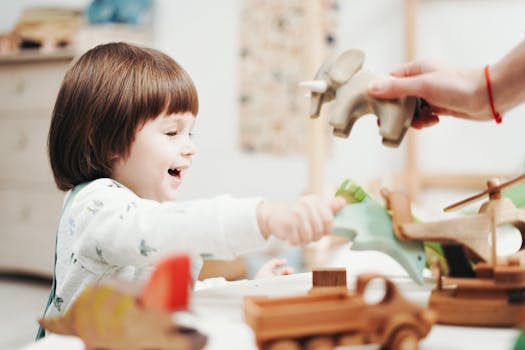
Play is an integral part of learning during the sensorimotor stage. Activities that involve stacking blocks, playing with puzzles, or engaging with musical toys are not only entertaining but also educational. These activities encourage problem-solving, coordination, and the ability to explore spatial relationships.
Caregivers should provide safe, stimulating environments where children feel free to explore and express themselves. Responsive interactions, where adults support a child’s play and interests, also promote optimal development during this crucial stage.
Research and Support for Educators
Educational strategies supported by the principles of the sensorimotor stage are backed by decades of research. Professionals in child development often utilize Piaget’s theories to guide curriculum design and inform teaching methods. Further exploration of these concepts can be beneficial, encouraging educators to implement sensory-rich and motor-oriented learning experiences.
As new research emerges, educators must stay updated with evidence-based practices that align with developmental stages like the sensorimotor stage. This approach not only enhances learning outcomes but also supports the holistic development of children. For more scholarly insights, consider exploring a variety of academic sources, such as this article on education.
In conclusion, the sensorimotor stage AP Psychology definition provides valuable insights into the intricacies of early cognitive development. This stage emphasizes the importance of sensory experiences and motor skills in forming foundational understandings of the world. As caregivers and educators, recognizing these elements can facilitate a child’s journey through early life stages, fostering a lifelong love for learning.
- The sensorimotor stage is the first of Piaget’s developmental stages, crucial for foundational learning.
- Sensory experiences and motor skills are primary ways infants interact with their environment.
- Milestones include object permanence and goal-directed behaviors.
- Play and exploration are essential for cognitive development during this stage.
- Educators should focus on creating rich, interactive environments for optimal learning.
What is the sensorimotor stage AP Psychology definition?
The sensorimotor stage is a phase in early childhood development where infants learn about the world through their senses and actions. This stage spans from birth to approximately two years old and is critical for developing cognition and foundational skills.
Why is the sensorimotor stage important in child development?
The sensorimotor stage is essential because it lays the groundwork for cognitive functions, such as understanding object permanence and developing motor abilities, which are crucial for future learning and development.
How can caregivers support learning during the sensorimotor stage?
Caregivers can support learning by providing safe, engaging, and stimulating environments. Activities involving sensory exploration and movement can enhance a child’s cognitive and motor skills during this stage.
What role does play have in the sensorimotor stage?
Play is fundamental in supporting development during the sensorimotor stage. Through play, children explore their environments, solve problems, and develop coordination, contributing to their overall growth and learning.
Where can educators find more resources on child development stages?
Educators can access a wealth of information on child development stages through academic articles, educational websites, and professional organizations. Referencing scholarly sources and engaging in continuous professional learning are also beneficial practices.

