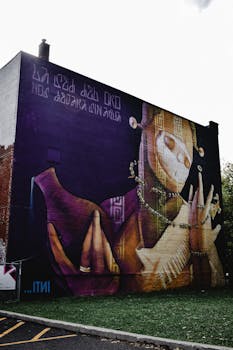
What is a muralist? A muralist is an artist who creates large-scale artworks on walls or ceilings, often transforming public spaces into vibrant displays of color and narrative. Muralists have played a significant role throughout history by contributing to cultural dialogue and community engagement through their expansive and immersive art forms.
Understanding What is a Muralist
The term “muralist” is derived from the Latin word “murus,” meaning wall, emphasizing the fundamental characteristic of mural art: its integration with architecture. Unlike traditional paintings, murals are inseparable from the surfaces they adorn, making them unique in both creation and impact. Muralists often work with diverse materials and techniques, from paint and plaster to modern digital projections.
The Historical Significance of Muralists
Muralists have long been integral to social and cultural movements. Ancient civilizations, like those in Egypt and Mesopotamia, used murals to depict significant events and beliefs. Fast forward to the 20th century, muralists like Diego Rivera and José Clemente Orozco used their craft to address social and political issues, influencing public opinion and commemorating historical narratives.
Even today, muralists continue to be vital storytellers who bridge the past and present. Their works can be seen worldwide, from the vibrant streets of Rio de Janeiro to the historic neighborhoods of Philadelphia, each telling a unique story and serving a purpose beyond aesthetic appeal.
The Impact of Murals on Communities and Culture
Muralists have a profound impact on the communities they engage with. Not only do their creations beautify environments, but they also foster a sense of identity and pride among residents. Murals can act as catalysts for economic development, attracting tourists and encouraging local business growth. Additionally, they can serve educational purposes, prompting discussions about history, heritage, and community values.
Moreover, murals can act as a voice for the voiceless, providing a platform for marginalized communities to express their struggles and aspirations. This aligns with the tradition of public art as a democratizing force, granting access to art outside conventional gallery spaces.
The Techniques and Materials Used by Muralists
Modern muralists employ various techniques and materials, influenced by technological advancements and cultural trends. Some prefer traditional methods, such as fresco, which involves applying pigment onto wet plaster, while others may use aerosol spray, acrylics, or even digital and interactive media.
The choice of technique and material often reflects the muralist’s message and the environment in which the mural will be installed. For example, murals in urban settings might utilize weather-resistant materials to ensure longevity, while those in more intimate spaces can experiment with delicate and intricate details.
The Process of Becoming a Muralist
Those aspiring to become muralists typically start with a strong foundation in the visual arts, often studying drawing, painting, and art history. Educational paths may include enrolling in art schools or pursuing degrees in fine arts. Aspiring muralists must also develop skills in large-scale composition and spatial awareness, which are crucial for successful mural execution.
Additionally, emerging muralists can benefit from scholarships for art students, which provide financial support and opportunities to hone their craft. For more information on such opportunities, potential muralists can explore scholarships for art students.
Examples of Noteworthy Murals and Their Creators
Many famous muralists throughout history have left their mark on the art world. Diego Rivera’s murals in Mexico City and Detroit are renowned for their intricate social commentaries. Meanwhile, contemporary artists like Banksy use public spaces to deliver subtle political messages through their often satirical works.
The evolution of muralism is also visible in projects like JR’s Inside Out Project, which transforms messages of personal identity into large-scale works displayed in diverse locations worldwide. Each of these artists exemplifies the transformative power of murals but also highlights the diversity and adaptability of the art form.
Muralists and the Future of Art
As we move forward, the role of muralists in society continues to evolve. Technology is expanding possibilities, allowing for augmented reality murals and interactive installations that engage audiences in new ways. These innovations provide muralists with exciting opportunities to explore storytelling through art.
The path of a muralist is one marked by creativity and social impact, blending artistic talent with community awareness. As public interest in this art form grows, so does its capability to influence cultural and societal landscapes worldwide.
In conclusion, answering the question, “what is a muralist?” reveals the profound importance of these artists beyond their aesthetic contributions. They are creators, commentators, and connectors within the vibrant tapestry of global societies.
- Muralists create large-scale works on public surfaces, influencing both art and society.
- Historical and modern murals communicate cultural and political messages.
- Techniques range from traditional painting to digital methods.
- Muralists foster community pride and can drive economic and social change.
- The future of muralism includes technological innovations, enhancing audience interaction.
FAQ
What materials do muralists use?
Muralists use a variety of materials, including traditional paints like acrylics and oils, as well as modern options such as spray paints, mosaic tiles, and even digital projections.
Can murals be created indoors?
Yes, murals can be created both indoors and outdoors. Indoor murals are often found in public buildings, homes, and museums, where they serve decorative and educational purposes.
Are there educational programs for aspiring muralists?
Many art programs and schools offer courses in mural painting, and art scholarships can further assist aspiring muralists in pursuing their education and developing their skills.
How do murals benefit communities?
Murals enhance community spaces by adding beauty and cultural value, fostering pride, and encouraging tourism and economic growth. They can also address social issues and promote dialogue.
Where can I learn more about mural artists and their works?
For more detailed information on muralists and their impact, you can explore resources like Wikipedia, which offer comprehensive insights into the art form and its history.