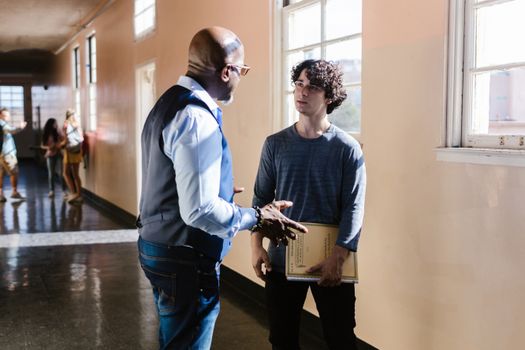
A student is failing chemistry, feels overwhelmed by college applications, and has stopped sitting with friends at lunch. Who can help connect those concerns before they become bigger barriers? In many schools, the answer is the high school counselor. This professional helps students manage academic decisions, prepare for life after graduation, and address social or emotional difficulties that interfere with learning.
The role involves much more than changing class schedules or sending transcripts. A high school counselor works with students, families, teachers, administrators, and community providers to support the student as a whole. For someone considering this career, it offers meaningful daily contact with young people, but it also requires advanced education, careful judgment, strong communication, and the ability to manage competing priorities.
What Does a High School Counselor Do?
A high school counselor helps students make informed choices throughout grades nine through 12. Specific responsibilities vary by school, district, and state, but the work generally covers academic development, career planning, college preparation, and social or emotional support.
Common duties include:
- Reviewing grades, attendance, graduation requirements, and academic progress
- Helping students select courses that fit their abilities and future plans
- Supporting students who are struggling with study habits, motivation, or time management
- Explaining college admissions, financial aid, scholarships, apprenticeships, and job-training options
- Helping students identify interests, strengths, and possible career paths
- Writing recommendations and coordinating school records or application materials
- Providing brief individual or small-group counseling
- Responding to bullying, family changes, grief, peer conflict, or school-related stress
- Referring students to appropriate school or community services when they need specialized care
- Collaborating with families, educators, school psychologists, social workers, and administrators
Counselors may also organize classroom lessons, career fairs, college information sessions, financial-aid programs, or workshops on topics such as decision-making and responsible technology use. Behind the scenes, they analyze student data to identify patterns involving absenteeism, course failure, discipline, or gaps in access to advanced classes and postsecondary opportunities.
How Counselors Support Students’ Mental Health
Teenagers may approach a counselor because they feel anxious about school, are experiencing conflict at home, have lost someone important, or simply need a trusted adult who will listen. A high school counselor can provide short-term support, teach coping and problem-solving skills, and help determine what additional assistance may be appropriate.
However, a school counselor is not automatically a clinical therapist. The counselor’s role usually does not include diagnosing mental health conditions or providing ongoing psychotherapy. When a student needs long-term or specialized treatment, the counselor may connect the family with a school psychologist, licensed mental health professional, healthcare provider, crisis service, or community agency.
Conversations are generally handled with discretion, but confidentiality has limits. Counselors must follow applicable laws and school policies when there are concerns about abuse, neglect, threats, self-harm, or another immediate safety risk. A good counselor explains these limits so students understand when information may need to be shared to protect them or someone else.
Education and Credential Requirements
The typical path begins with a bachelor’s degree. While majors such as psychology, education, sociology, or human development can provide useful preparation, applicants may enter graduate counseling programs from other academic backgrounds if they meet admission requirements.
Most public school counseling positions require a master’s degree in school counseling or a closely related field. Graduate coursework commonly covers counseling methods, adolescent development, ethics, assessment, career development, multicultural counseling, crisis response, and the design of comprehensive school counseling programs. Programs usually include supervised field experience through a practicum or internship.
Public school counselors must also earn the credential required by their state. It may be called a license, certificate, or endorsement. Requirements can include:
- A qualifying graduate degree
- Supervised practicum or internship hours
- A state or national examination
- A criminal background check
- Specific coursework
- Continuing education after employment
Some states or employers may require teaching experience or an educator license, although this is not universal. Prospective counselors should check their state education agency’s current rules before selecting a graduate program. The U.S. Bureau of Labor Statistics overview of school and career counselors also explains typical education, credential, work environment, pay, and employment outlook information.
Skills That Matter in This Career
Academic credentials establish a foundation, but effective counseling depends heavily on interpersonal and organizational abilities. Counselors need to listen without rushing to judgment and communicate clearly with students whose experiences, identities, cultures, and family situations may differ from their own.
Important qualities include:
- Empathy and patience
- Clear verbal and written communication
- Respect for privacy and professional boundaries
- Cultural awareness
- Sound ethical judgment
- Organization and accurate recordkeeping
- Ability to interpret academic and career information
- Calm decision-making during stressful situations
- Collaboration with families and school personnel
The job also requires flexibility. A counselor may begin the morning reviewing graduation plans, spend midday helping a student in distress, and finish the afternoon meeting with a family about college or career options. Urgent student needs can interrupt planned tasks, so prioritization is essential.
College and Career Planning
Not every student wants or needs the same path after graduation. Counselors help students compare four-year universities, community colleges, certificate programs, military service, apprenticeships, direct employment, and other options. The goal is not to push every student toward one destination, but to help each person build a realistic plan based on interests, preparation, finances, and long-term goals.
Career exploration may include interest inventories, résumé preparation, interview practice, workplace-readiness lessons, and information about internships or student organizations. For example, students interested in business, marketing, hospitality, or entrepreneurship may benefit from exploring DECA career opportunities for high school students as part of a broader career-development plan.
Salary, Schedule, and Employment Outlook
According to federal occupational data, the median annual wage for school and career counselors and advisors was $64,330 in May 2025. That figure combines several related roles and should not be treated as a guaranteed starting salary. Earnings vary according to location, school type, experience, education, contract length, and local salary schedules.
Most school counselors work full time during the academic year. Some positions follow a traditional school calendar, while others include summer responsibilities related to scheduling, enrollment, or student transitions. The work can be emotionally demanding, particularly when caseloads are large or students face serious difficulties. At the same time, counselors may find it rewarding to see students regain confidence, graduate, or discover an achievable direction for the future.
Is Becoming a High School Counselor Right for You?
This career may be a strong fit if you enjoy working with teenagers, can balance compassion with professional boundaries, and want to combine education, counseling, advocacy, and career guidance. It is not simply an office job or a college-admissions role. Counselors regularly handle sensitive situations, detailed records, deadlines, and collaboration across an entire school community.
Before committing to graduate school, consider speaking with practicing counselors, observing a school counseling office when permitted, and comparing state credential requirements. With appropriate training and realistic expectations, a high school counselor can become an important source of stability—helping students understand where they are, what is getting in their way, and what practical step they can take next.