
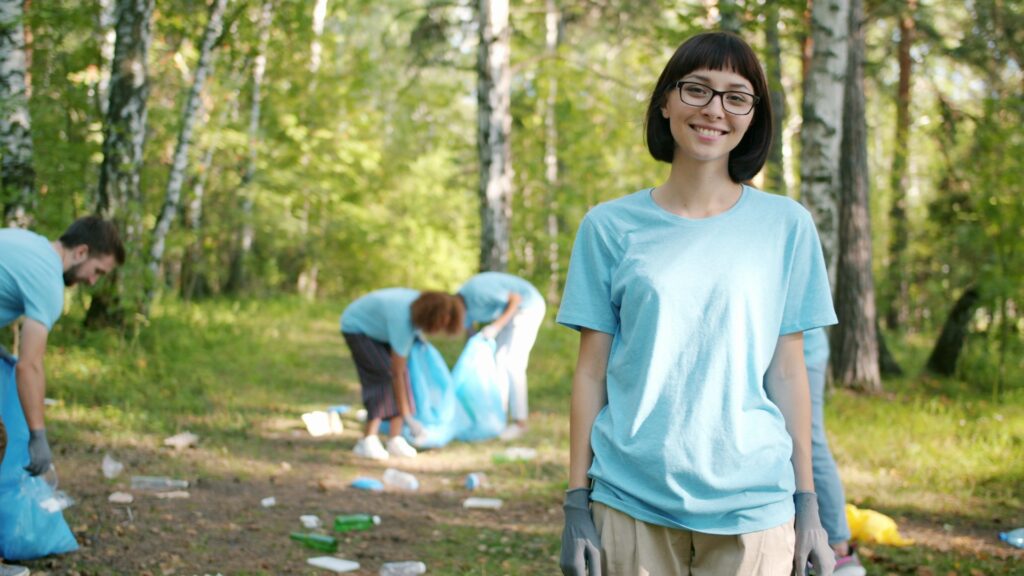
Volunteering used to sit in that “nice extra activity” category on CVs. Something to mention if there was space. That has changed quite a bit. Employers now tend to look at it differently more like proof that someone has actually done something beyond lectures, deadlines, and exam halls.
There’s also a practical reason behind this shift. Many hiring managers are less interested in what a student has memorised and more interested in how they behave when things are messy, time is short, and there isn’t a clear answer. Volunteering tends to show exactly that.
Even research from organisations like the Corporation for National and Community Service (now part of AmeriCorps) has pointed out that volunteer experience is often treated as equivalent to paid work, especially when it shows reliability and initiative.
The Side of Volunteering That Rarely Gets Mentioned
There is a part of volunteering that doesn’t really show up on a CV. It is not formal networking. It is not something carefully planned or managed. It is simply being present over time.
The person who keeps turning up gets noticed. The one who finishes what they start builds trust without saying much. The one who stays consistent when things get difficult becomes someone others rely on without even thinking about it. That is usually where opportunities begin to form. Not through applications or job boards, but through people who have already seen how someone behaves in real situations. References, recommendations, and informal opportunities often come from that kind of quiet consistency. Just the reliability that has been observed over time.

Choosing Volunteering That Actually Helps a Career Direction
A profession is not always shaped by volunteering in the same manner. Helping others and creating something that promotes long-term direction are two different things.
Jobs requiring communication, campaigns, fundraising, or outreach are often more beneficial for students interested in business, marketing, or media. They mirror the kind of work those fields actually involve.
For students leaning towards education or social sciences, tutoring, mentoring, or community-based support feels more relevant because it involves people, communication, and direct engagement.
Even basic and small responsibilities, such as taking care of websites, managing simple data tasks, or assisting with digital tools in businesses, may quietly provide technical trainees with valuable experience.
The point isn’t to force volunteering into a career box. It’s more about noticing when it naturally overlaps with where someone is heading. That overlap is where it stops feeling like “extra activity” and starts becoming early experience.
Why Specific Outcomes Matter More Than General Statements
CVs are read differently now compared to a few years ago. Lines like “helped at an event” don’t really say much anymore. They’re too general.
What matters more is clarity and what actually changed because of the involvement. How many people were reached? What improved. What was delivered. What was completed.
Even small details make a difference when they are specific. It also helps students understand their own contribution more clearly, rather than remembering everything as general participation.
A Gradual Change in Mind-set
The way volunteering changes and impacts people’s perceptions of social structures is one of its less evident outcomes. Because they are connected to real people and results, things like education, healthcare, and community support begin to seem genuine.
One obvious example is the healthcare industry. Timing, access, and support networks all of which are not often apparent until something goes wrong are critical components of early medical treatment, particularly for infants. A newborn charity that is dedicated to improving critical care for mothers and babies, for instance, demonstrates how delicate early-life outcomes may be and how much of an influence timely support can have when it gets to the right location at the right time. It’s the type of awareness that goes beyond improving a resume since it changes perspective.
What It Eventually Builds Into
Over time, volunteering doesn’t just add lines to a CV. It changes the way those lines are formed. Communication becomes clearer without effort. Responsibility feels more natural. Uncertainty becomes easier to handle. There is a better understanding of how teams actually work when things are not perfect.
None of this happens quickly. It builds gradually through repetition and experience. But when it does come together, it creates something employers tend to notice immediately – not just academic ability, but readiness to work in real environments where unpredictability is normal, not exceptional.

