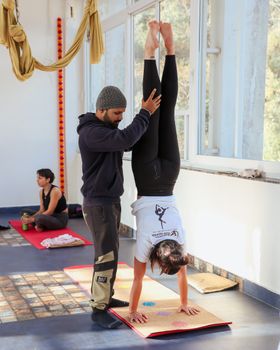
You enjoy yoga, friends say you explain poses clearly, and you have started wondering whether you could lead a class yourself. But do you need a license? Is a 200-hour course enough? And must you master advanced poses before teaching? If you are searching for how to become a yoga instructor, the practical answer is that you need consistent personal practice, reputable teacher training, safety knowledge, supervised teaching experience, and the professional skills to guide different students responsibly.
Do You Need a Qualification to Teach Yoga?
In the United States, there is no single nationwide government license for yoga instructors. However, studios, gyms, community centers, and private clients commonly expect teachers to have completed a recognized yoga teacher training program. The usual entry-level pathway is a 200-hour program.
It helps to understand the terminology. A yoga school may award a certificate showing that you completed its course. You may then qualify to apply for a professional registry credential, such as Registered Yoga Teacher 200, commonly called RYT 200, if the program meets the registry’s requirements. Registration is generally voluntary, although some employers prefer or require it.
Build a Consistent Personal Practice
You do not need to perform handstands or place your leg behind your head to become an effective instructor. You do, however, need enough personal experience to understand common poses, breathing practices, transitions, and the way instructions feel in your own body.
Before enrolling in training, try to practice regularly with several qualified teachers. Explore different class levels and notice how instructors manage pacing, demonstrations, modifications, music, silence, and student questions. A mature personal practice also teaches an important lesson: yoga instruction is not about displaying flexibility. It is about helping students participate safely and meaningfully.
Choose the Type of Yoga You Want to Teach
Teacher training programs may emphasize styles such as Hatha, Vinyasa, restorative, Yin, hot yoga, or another tradition. Consider the students and environment that interest you. A fast-moving studio class requires different teaching skills from chair yoga at a senior center or a gentle workplace wellness session.
You can specialize later in areas such as prenatal yoga, children’s yoga, adaptive yoga, or yoga for older adults. Specialized populations require additional education because age, pregnancy, disability, medical conditions, and mobility limitations can change which practices are appropriate.
Select a Reputable Teacher Training Program
A 200-hour yoga teacher training is the most common starting point. Quality programs usually cover postures, breathing techniques, meditation, anatomy and physiology, yoga history and philosophy, teaching methods, ethics, sequencing, and professional responsibilities.
When comparing programs, look beyond attractive retreat photos or promises of rapid transformation. Review the lead trainer’s qualifications, how much live instruction is provided, whether trainees receive individual feedback, and how teaching ability is assessed. Our guide to evaluating training and certification programs can help you compare curriculum quality, format, instructor experience, and career value.
Ask these questions before enrolling:
- Does the program include supervised practice teaching?
- How thoroughly does it teach anatomy, contraindications, and pose modifications?
- Will you learn how to teach beginners and people with different abilities?
- Does the course address consent, professional boundaries, inclusion, and ethics?
- Is the school registered with the organization through which you may seek a credential?
- What costs are not included in tuition, such as books, travel, examinations, or registration fees?
- What happens if you miss a session or need additional time to complete the course?
A 200-hour program may be completed through an intensive schedule or spread across several months. Choose a format that gives you enough time to absorb the material rather than simply accumulate hours.
Learn to Teach Safely
Knowing how to perform a pose is different from knowing how to teach it. Instructors must communicate clearly, observe students without making assumptions, and offer options rather than pushing everyone toward the same shape.
Yoga is generally considered safe for healthy people when practiced appropriately under qualified guidance, but injuries can occur. Sprains and strains are among the most common problems, while serious injuries are uncommon. Students who are pregnant, older, injured, or living with certain health conditions may need medical guidance and individualized modifications. The National Center for Complementary and Integrative Health’s yoga safety guidance provides an evidence-based overview of benefits, risks, and precautions.
A responsible instructor stays within the scope of yoga teaching. Do not diagnose an injury, prescribe treatment, promise to cure a condition, or advise a student to ignore medical care. Encourage students with health concerns to consult an appropriate healthcare professional. Obtain clear consent before offering hands-on assistance, and always provide a way to decline it.
CPR and first-aid training may also be required by employers and can help you respond more confidently to emergencies. Learn the procedures for every facility where you teach, including how to contact emergency services and document an incident.
Get Real Teaching Experience
Confidence develops through practice, not through receiving a certificate alone. Begin by teaching short sequences to classmates, friends, or small volunteer groups. Record yourself so you can evaluate your timing, clarity, filler words, and whether students have enough time to follow each instruction.
Practice teaching without performing every pose. This allows you to observe alignment, recognize confusion, and respond to the room. Learn to give concise verbal cues, offer accessible alternatives, and adjust a planned sequence when students have different needs than expected.
Useful early opportunities may include community classes, donation-based sessions, substitute teaching, workplace programs, recreation centers, or assisting an experienced instructor. Keep an accurate log of your teaching hours because advanced credentials may require documented experience.
Apply for Certification or Professional Registration
After graduating, follow the requirements of your chosen credentialing organization. For example, a teacher who completes one qualifying 200-hour program may be eligible to apply for an RYT 200 credential without previous teaching hours. Advanced designations may require additional training and documented teaching experience.
Certification or registration can demonstrate that you completed a defined educational pathway, but it does not automatically make someone a skilled teacher. Continue studying anatomy, inclusive teaching, sequencing, philosophy, communication, and the needs of the students you serve.
Prepare for Your First Paid Position
Studios and fitness facilities may request a résumé, training certificate, professional registration, CPR certification, references, liability insurance, or a teaching audition. During an audition, employers often evaluate your communication, sequencing, time management, safety awareness, and ability to create a welcoming environment.
Many instructors begin as independent contractors and teach at multiple locations. Ask how payment works, who handles registration and cancellations, whether you are paid when no students attend, and what equipment is provided. If you teach privately, use written policies covering payment, cancellations, health disclosures, emergency contacts, and professional boundaries.
A Practical Path Forward
To become a yoga instructor, begin with steady personal practice, identify the style and population you want to teach, and complete a credible 200-hour training program. Build experience through supervised and entry-level teaching, develop strong safety habits, and obtain any credentials expected in your intended workplace.
The best instructors are not necessarily the most flexible or athletic. They are attentive, prepared, ethical, and able to make students feel respected rather than judged. Treat graduation as the beginning of your education, seek feedback, and keep refining how you support the people in front of you.