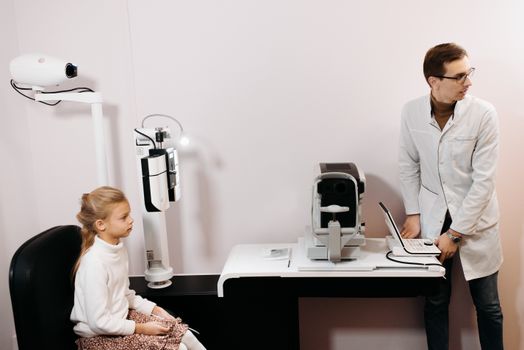
You may have wondered who is actually checking for glaucoma, adjusting your contact lens prescription, or explaining why diabetes can affect your eyes. In many clinics, that professional is an optometrist. If you are interested in science, patient care, and a career that combines routine visits with medical decision-making, learning how to become an optometrist is a practical first step.
In the United States, the usual path includes undergraduate study, a four-year Doctor of Optometry program, national examinations, and state licensing. Most students spend about eight years in college and professional school after high school. Optional residency training can add another year.
What Does an Optometrist Do?
Optometrists examine the eyes and visual system, prescribe glasses and contact lenses, and diagnose or manage conditions such as glaucoma, dry eye, cataracts, and certain retinal problems. They may prescribe medications and provide other treatments allowed under state law. During an eye examination, they may also recognize findings associated with diabetes, high blood pressure, autoimmune disorders, and other health conditions, then refer the patient for appropriate medical care.
An optometrist is different from an ophthalmologist or optician. Ophthalmologists are physicians who complete medical school and specialized training in eye medicine and surgery. Opticians primarily fit and adjust eyewear based on prescriptions. An optometrist earns a Doctor of Optometry, or O.D., degree and provides primary eye and vision care. The procedures and medications an optometrist may use depend on the laws of the state where the person practices.
Steps to Become an Optometrist
1. Complete the Required Undergraduate Education
Optometry programs generally require at least three years of undergraduate coursework, but most accepted students have completed a bachelor’s degree. You do not have to select a particular major. Biology, chemistry, neuroscience, and other sciences are common choices, although students from other majors can qualify by completing the necessary prerequisites.
Requirements differ among schools, but commonly requested courses include:
- General biology with laboratory work
- General and organic chemistry with laboratories
- Physics
- Microbiology
- Anatomy and physiology
- Biochemistry
- Mathematics and statistics
- English, psychology, and social sciences
Review individual program requirements early, ideally during your first or second year of college. This helps you avoid discovering late in your degree that you are missing a laboratory or advanced science course.
2. Gain Experience in Eye Care
Shadowing an optometrist helps you understand the daily realities of the profession. You may observe routine eye examinations, urgent visits, contact lens fittings, disease management, and conversations with patients who are worried about losing vision.
Admissions committees may also value employment in an optometry office, community service, research, leadership, and experience working with diverse populations. These activities demonstrate that your interest extends beyond classroom science. They also help you decide whether you are comfortable with close patient interaction, detailed clinical work, and the business responsibilities that may accompany private practice.
3. Take the Optometry Admission Test and Apply
The Optometry Admission Test, or OAT, assesses natural sciences, reading comprehension, physics, and quantitative reasoning. All U.S. optometry schools accept OAT scores, but each program determines how test results factor into admissions. Because testing policies can change, confirm the current requirements for every school on your list.
Most applicants use OptomCAS, the centralized application service for optometry programs. A typical application includes academic records, test scores, recommendation letters, a personal statement, extracurricular activities, and relevant employment or volunteer experience. Selected applicants may be invited to an interview.
Apply early in the admissions cycle when possible. Give recommenders sufficient time, carefully proofread your personal statement, and explain why optometry fits your abilities and long-term goals rather than relying on general statements about wanting to help people.
4. Earn a Doctor of Optometry Degree
Choose a professional O.D. program with appropriate accreditation from the Accreditation Council on Optometric Education. Accreditation is important because graduating from a qualifying program is generally necessary for U.S. licensure.
The O.D. curriculum normally takes four years. Early coursework covers subjects such as anatomy, physiology, optics, pharmacology, visual science, and ocular disease. Students then spend increasing amounts of time in supervised clinical care, learning to examine patients, interpret test results, develop treatment plans, prescribe corrective lenses, and recognize conditions that require referral.
Clinical rotations may take place in university clinics, hospitals, veterans’ facilities, community health centers, specialty practices, and private offices. Students may work with children, older adults, patients with low vision, and people with complex eye diseases.
5. Pass Licensing Examinations
Graduation alone does not authorize independent practice. Every state requires optometrists to hold a license. Licensing boards generally require applicants to pass the applicable examinations administered by the National Board of Examiners in Optometry.
The core national examination sequence evaluates applied basic science, patient assessment and management, clinical reasoning, and performance skills. Depending on the jurisdiction and intended scope of practice, candidates may also need examinations covering state optometry laws, injections, therapeutic privileges, or particular procedures.
Requirements are not identical nationwide. Before scheduling examinations or accepting a job, check directly with the licensing board in the state where you intend to practice.
6. Apply for a State License
A state application may require proof of education, examination scores, fees, identification, and a background check. Some states also administer or require a jurisprudence examination covering local laws and professional rules.
Licenses must be renewed periodically. Optometrists are generally expected to complete continuing education so they remain informed about clinical techniques, medications, technology, ethics, and changes in state regulations.
7. Consider an Optional Residency
A residency is not required for most general optometry positions, but graduates may complete a one-year accredited program for advanced clinical experience. Concentrations can include ocular disease, cornea and contact lenses, pediatric optometry, low-vision rehabilitation, geriatric care, primary care, or vision rehabilitation.
Residency may be especially useful for people seeking hospital, academic, specialty, or highly medical practice roles. It also provides structured mentorship while a new optometrist develops confidence with complicated cases.
How Long Does It Take?
For most students, becoming an optometrist takes four years for a bachelor’s degree followed by four years in an O.D. program. A residency brings the total to approximately nine years after high school. A student who enters optometry school after completing the minimum undergraduate requirements could follow a somewhat shorter route, but earning a bachelor’s degree is typical.
Skills That Matter in Optometry
Strong science grades can help you enter optometry school, but successful practice requires more than academic ability. Optometrists must notice small clinical details, use sound judgment, communicate clearly, and remain calm when a patient has a potentially serious condition. Manual coordination is important when using examination instruments or performing permitted procedures.
Business and leadership skills may also matter. Some optometrists own practices and manage employees, inventory, insurance billing, scheduling, and patient relationships. If you are comparing different healthcare training options before committing to a doctoral program, learning about healthcare careers available through a medical technology certificate may help you evaluate alternative timelines and responsibilities.
Career Settings and Outlook
Optometrists work in private practices, group clinics, physician offices, retail optical settings, hospitals, community clinics, and government facilities. Some teach, conduct research, work in industry, or focus on a particular patient population. Schedules are often predictable, although evening and weekend appointments may be necessary.
The U.S. Bureau of Labor Statistics career profile for optometrists reports a median annual wage of $136,570 in May 2025 and projects employment to grow 10 percent from 2025 through 2035. Actual earnings vary by location, experience, practice setting, ownership, and hours worked.
Is Becoming an Optometrist Right for You?
Optometry may be a good fit if you enjoy applied science, careful problem-solving, long-term patient relationships, and work that can improve daily independence through better vision. Before applying, shadow optometrists in more than one setting and ask candid questions about education costs, licensing, schedules, administrative duties, and career satisfaction.
The path is demanding, but it is clearly defined: complete the prerequisites, build relevant experience, apply to an accredited O.D. program, finish clinical training, pass the required examinations, and obtain a state license. Understanding each stage allows you to plan your education realistically and determine whether becoming an optometrist matches the healthcare career you want.