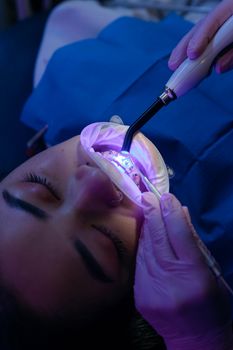
You may have had braces adjusted and wondered, “How long did my orthodontist train to do this?” The answer surprises many students: orthodontists do not attend medical school, and they are not simply dentists who offer braces. In the United States, an orthodontist must first become a dentist and then complete specialized residency training focused on tooth movement, jaw growth, bite problems and facial development.
For most students, the full journey takes about 10 to 11 years after high school: three to four years of college, four years of dental school and two to three years of orthodontic residency. Application cycles, gap years or additional research requirements can make the process longer.
What Does an Orthodontist Actually Do?
Orthodontists diagnose, prevent and treat malocclusion, which means the teeth or jaws do not align properly. They treat crowded or widely spaced teeth, overbites, underbites, crossbites and other problems that can affect chewing, oral hygiene, speech or facial development.
Although braces are a major part of the profession, daily work may also involve clear aligners, retainers, growth-guidance appliances and collaboration with general dentists, pediatric dentists or oral and maxillofacial surgeons. Orthodontists examine patients, interpret X-rays and digital scans, develop treatment plans, monitor tooth movement and explain long-term care to families.
Step 1: Complete College and Predental Courses
The first step in how to become an orthodontist is completing the college coursework required for dental school. Most applicants earn a four-year bachelor’s degree, although some dental schools may consider students who have completed the necessary undergraduate credits without graduating.
You do not have to major in biology or chemistry. However, you must complete each dental school’s prerequisites, which commonly include:
- Biology with laboratory work
- General and organic chemistry with laboratories
- Physics
- English or writing courses
- Biochemistry and other upper-level sciences required by certain schools
Strong grades matter, but admissions committees also consider community service, leadership, recommendations, communication skills and exposure to dentistry. Shadowing both a general dentist and an orthodontist can help you understand the differences between the two careers before making a long-term commitment.
Students exploring several healthcare occupations may also benefit from reading about career options available with a medical technology certificate before deciding which educational path fits their interests and resources.
Step 2: Take the Dental Admission Test
Applicants to U.S. dental schools take the Dental Admission Test, commonly called the DAT. It evaluates knowledge of natural sciences along with perceptual ability, reading comprehension and quantitative reasoning. Students often take it after completing the science courses covered by the examination, typically during or after their junior year of college.
Dental schools evaluate DAT results alongside college grades, experiences, recommendations, personal statements and interviews. Because admission is competitive, students should allow enough time to prepare and, if necessary, strengthen weaker parts of their application.
Step 3: Earn a DDS or DMD Degree
Dental school usually lasts four years. Graduates receive either a Doctor of Dental Surgery degree, abbreviated DDS, or a Doctor of Dental Medicine degree, abbreviated DMD. The names differ, but the degrees represent equivalent professional dental education.
The first part of dental school emphasizes biomedical and dental sciences, including anatomy, physiology, pathology, pharmacology, oral diagnosis and dental materials. Students also develop procedural skills in laboratories and simulations. Later, they provide supervised care to patients and gain experience across general dentistry, including restorative treatment, periodontics, pediatric dentistry, oral surgery and prosthodontics.
Students interested in orthodontics should seek relevant electives, research, faculty mentorship and clinical experiences. Residency programs generally review dental school performance, recommendations, research or scholarly activity, interviews and evidence of a genuine commitment to the specialty. Some programs may also request an additional admissions examination, so requirements must be checked individually.
Step 4: Meet Dental Licensure Requirements
Orthodontists must be licensed dentists. Requirements are established by individual state or territorial dental boards, so they are not identical nationwide. Candidates generally need an accredited DDS or DMD degree, successful completion of the Integrated National Board Dental Examination and an accepted clinical assessment or another state-approved pathway.
Students should review the American Dental Association’s overview of dental licensure requirements and confirm current rules directly with the board in the state where they plan to practice. Depending on the jurisdiction and residency program, a resident may hold a full dental license, a temporary license or an institutional training permit.
Step 5: Complete an Accredited Orthodontic Residency
Graduating from dental school does not by itself make someone an orthodontist. The defining educational step is an advanced program in orthodontics and dentofacial orthopedics accredited by the Commission on Dental Accreditation.
Most orthodontic programs last two or three years. Residents receive intensive instruction and supervised clinical experience in subjects such as:
- Diagnosis and treatment planning
- Biomechanics and controlled tooth movement
- Craniofacial growth and development
- Radiographic and three-dimensional imaging
- Braces, aligners and orthodontic appliances
- Management of complex bite and jaw problems
- Research methods and evidence-based care
- Coordination with other dental and medical specialists
Programs may award a specialty certificate, a master’s degree or both. Some require a thesis or substantial research project, which can affect program length. Orthodontic residency admission is selective, so applicants should apply broadly while carefully considering tuition, stipends, clinical volume, faculty support and research expectations.
Step 6: Consider Board Certification
After residency, an orthodontist may pursue certification through the American Board of Orthodontics. Board certification is voluntary and is separate from the state license required to practice. The process includes written and clinical examinations, followed by ongoing renewal requirements.
An orthodontist can legally practice without being board-certified if all applicable licensing and state specialty requirements are met. However, certification provides an additional professional credential and demonstrates participation in a formal specialty evaluation process.
A Realistic Education Timeline
- Years 1–4: Complete a bachelor’s degree and dental school prerequisites.
- Year 3 or 4: Take the DAT and apply to dental school.
- Years 5–8: Complete four years of dental school and earn a DDS or DMD.
- Years 9–10 or 11: Complete a two- or three-year orthodontic residency.
- After training: Secure the required state license, begin practice and optionally complete board certification.
A highly direct route may take 10 years after high school, while 11 years is common for students completing four years of college and a three-year residency. A gap year, delayed admission, combined graduate degree or extended research project can bring the total to 12 years or more.
What Should You Consider Before Committing?
The path requires sustained academic effort and can involve significant educational costs. Dental school and some orthodontic programs charge tuition, while financial support varies by institution. Prospective students should compare total attendance costs, borrowing needs and repayment plans rather than looking only at a program’s annual tuition.
The career also demands patience, manual precision and strong interpersonal skills. Treatment often lasts many months, so orthodontists build ongoing relationships with patients and must motivate children, teenagers and adults to follow instructions. They also spend substantial time documenting care, coordinating staff and managing a practice.
If you enjoy science, detailed problem-solving and seeing gradual improvements in a patient’s health and confidence, orthodontics may be rewarding. The most useful early steps are completing strong science coursework, observing orthodontists in practice and speaking with dental students or residents about the realities of training. Understanding the full timeline before college can help you plan academically, financially and personally for the road ahead.