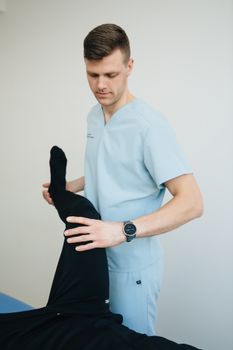
You may have watched a physical therapist help someone walk after surgery, return to a sport, or manage persistent pain and wondered, “Could I do that for a living?” The answer involves more than studying exercise. Physical therapists are licensed health professionals who evaluate movement problems, develop treatment plans, monitor progress, and help patients function more safely and independently.
If you are researching how to become a physical therapist in the United States, the standard path is to complete college prerequisites, earn a Doctor of Physical Therapy degree, pass the national licensing examination, and meet your state’s licensing requirements. For many students, the entire process takes about seven years after high school, although accelerated programs and individual circumstances can change the timeline.
What Does a Physical Therapist Do?
Physical therapists, commonly called PTs, work with people of all ages. Their patients may be recovering from joint replacement, stroke, sports injuries, fractures, or work-related injuries. Others need help managing arthritis, neurological conditions, balance problems, or chronic pain.
A PT’s work may include:
- Reviewing medical history and evaluating strength, mobility, balance, posture, and movement
- Identifying movement-related impairments and functional limitations
- Creating individualized treatment and rehabilitation plans
- Using therapeutic exercise, functional training, hands-on techniques, and assistive devices
- Teaching patients and caregivers how to move safely at home, work, or school
- Recording outcomes and adjusting care as the patient progresses
The job is both scientific and people-focused. PTs must understand anatomy and disease while also communicating clearly, motivating patients, and responding compassionately when recovery is difficult.
Complete a Bachelor’s Degree and Required Courses
Most Doctor of Physical Therapy programs require applicants to have a bachelor’s degree before enrollment. You do not need a specific “pre-physical therapy” major. Common choices include biology, kinesiology, exercise science, psychology, and health science, but students may choose another major if they complete the necessary prerequisites.
Requirements vary among schools, so review programs early rather than assuming that one course plan will satisfy every institution. Common prerequisites include:
- Anatomy and physiology, often with laboratory components
- General biology
- General chemistry with labs
- Physics with labs
- Statistics
- Psychology
Some schools have rules about where courses must be taken, how recently they must have been completed, and whether online laboratories are accepted. Maintaining a strong overall and science GPA can improve your competitiveness, but admissions committees may also consider communication skills, service, leadership, and improvement over time.
Gain Exposure to Physical Therapy Practice
Observation or work experience helps you determine whether the profession matches your expectations. Depending on the DPT program, applicants may be required or encouraged to complete verified hours under a licensed physical therapist.
Try to observe more than one practice setting if possible. Outpatient orthopedic clinics are only one part of the profession. PTs also work in hospitals, rehabilitation facilities, schools, nursing facilities, sports environments, patients’ homes, and neurological or pediatric programs.
During these experiences, pay attention to the less visible parts of the job, including documentation, safety decisions, patient education, teamwork, and adapting care when a patient is tired, anxious, or not progressing as expected.
Apply to an Accredited DPT Program
Admission requirements differ, but applications may include transcripts, prerequisite grades, recommendation letters, essays, observation-hour verification, interviews, and a criminal background check. Some schools require the Graduate Record Examination, while others make it optional or do not consider it.
Many institutions participate in the Physical Therapist Centralized Application Service, allowing students to apply to multiple programs through one primary application. Deadlines and supplemental requirements still vary, so create a separate checklist for each school.
Accreditation is essential because graduating from an appropriately accredited professional program is part of the U.S. licensure pathway. Before applying, confirm a school’s status through the official directory of accredited physical therapy programs. Compare tuition, fees, graduation outcomes, clinical placements, location, student support, and licensing-exam performance rather than relying only on name recognition.
For a broader planning overview, review this guide to the essential education requirements for becoming a physical therapist.
Earn Your Doctor of Physical Therapy Degree
A traditional professional DPT program generally lasts about three years. Some universities offer accelerated or combined formats, such as programs that integrate undergraduate study with professional education.
DPT students study subjects such as biomechanics, neuroscience, kinesiology, pathology, pharmacology, clinical reasoning, evidence-based practice, ethics, and the management of musculoskeletal, neurological, cardiovascular, pulmonary, and other conditions. Laboratory courses provide practice with examinations, interventions, equipment, and patient-handling techniques.
Clinical education is also a major part of training. Under the supervision of licensed professionals, students apply their knowledge in real patient-care settings. These experiences may include outpatient care, acute hospital care, rehabilitation, pediatrics, geriatrics, or other areas.
Pass the Licensing Examination and Meet State Requirements
After completing the required education, aspiring PTs must pass the National Physical Therapy Examination for physical therapists. Candidates also apply to the licensing authority in the state or jurisdiction where they plan to practice.
State requirements can include application fees, background checks, documentation of education, and an examination on state laws and professional rules. Because the details differ, consult the relevant licensing board before graduation and before registering for examinations. A license must also be maintained, typically through periodic renewal and any required continuing education.
Begin Practice and Consider Specialization
New physical therapists may work in outpatient clinics, hospitals, home health, schools, skilled nursing facilities, rehabilitation centers, or other settings. The first position should offer appropriate support, a manageable caseload, and opportunities to build clinical judgment—not simply the highest advertised salary.
Residency and fellowship training are optional. PTs may also pursue advanced certification in areas such as orthopedics, sports, neurology, pediatrics, geriatrics, oncology, cardiovascular and pulmonary care, or wound management. Specialization is not required for general practice, and many clinicians develop expertise through continuing education and experience.
Is Physical Therapy the Right Career for You?
Physical therapy may be a good fit if you enjoy science, problem-solving, movement, and sustained interaction with people. The work can be physically demanding because PTs spend considerable time standing, demonstrating activities, and assisting patients. It can also require patience when progress is slow or when insurance and documentation demands affect care.
Before committing, speak with practicing PTs, observe several settings, and compare the cost of DPT programs with your financial resources and career goals. Careful planning during college can prevent missed prerequisites, reduce unnecessary expenses, and help you enter professional training with a realistic understanding of daily practice.