
You search “diesel mechanic school near me,” find several programs within driving distance, and quickly realize they are difficult to compare. One promises fast training, another offers an associate degree, and a third highlights modern equipment without explaining how often students actually use it. The best choice is not necessarily the closest school or the program with the shortest completion time. It is the one that provides recognized training, meaningful shop experience, transparent costs, and credible connections to employers.
Start with a focused local search
Build a list of community colleges, technical colleges, vocational schools, and apprenticeship programs within a realistic commuting radius. Search under related program names such as diesel technology, medium and heavy truck technology, diesel engine repair, fleet maintenance, and heavy equipment technology.
The ASE Education Foundation’s accredited-program finder can help you identify automotive and medium/heavy truck programs by location. Your state workforce agency, local school districts, community college system, and nearby truck dealerships may also know about training opportunities that do not appear near the top of general search results.
Once you have a shortlist, verify each program directly. School websites may contain old schedules, tuition figures, or accreditation information, so ask an admissions representative to confirm the details for your intended enrollment term.
Understand what accreditation actually means
Accreditation is an independent review process used to determine whether a school or program meets established standards. However, there are two different levels to consider.
Institutional accreditation
Institutional accreditation applies to the school as a whole. It can affect access to federal student aid, the transferability of credits, and whether other schools or employers recognize the education. Confirm that the accrediting organization is recognized by the U.S. Department of Education or the Council for Higher Education Accreditation rather than relying only on a school’s statement that it is “fully accredited.”
Programmatic or industry accreditation
A diesel program may also hold specialized accreditation from the ASE Education Foundation. For medium and heavy truck programs, this review considers areas such as curriculum, tools, facilities, instructors, safety practices, administration, and industry involvement.
Industry accreditation is a useful quality signal, but it should not replace your own evaluation. A non-ASE-accredited program may still provide valuable training, particularly if it has experienced instructors, strong employer partnerships, current equipment, and good graduate outcomes. Ask why the program does or does not hold specialized accreditation and when its status was last reviewed.
Compare the full cost, not just tuition
The advertised tuition is rarely the complete price of diesel mechanic training. Request a written estimate showing all required expenses for the entire certificate or degree. Depending on the school, additional costs may include:
- Registration, laboratory, technology, and graduation fees
- Hand tools and a toolbox
- Safety glasses, work boots, gloves, and uniforms
- Textbooks, online learning platforms, and diagnostic software
- Certification or licensing examination fees
- Transportation, parking, meals, and housing
- Replacement supplies or damaged-tool charges
Tool requirements deserve particular attention. A lower-tuition program can become expensive if students must purchase a large professional tool set immediately. Ask whether tools are supplied in the lab, whether discounted student packages are available, and which purchases can wait until you are employed.
Compare each school’s net price after grants and scholarships, not simply its published tuition. Complete the Free Application for Federal Student Aid if the institution and program are eligible. Also investigate state workforce grants, veterans’ education benefits, employer sponsorships, union programs, scholarships, and tuition reimbursement. A dealership or fleet employer may help with school expenses in exchange for an employment commitment, but review repayment terms before signing.
Look closely at hands-on training
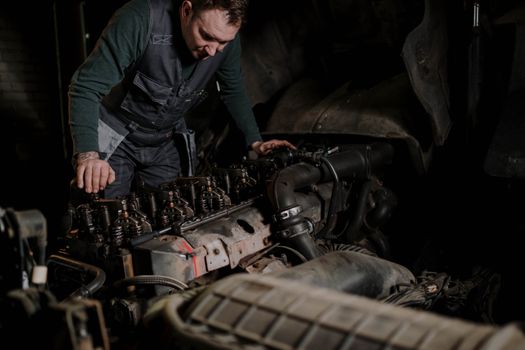
Diesel repair cannot be mastered through lectures and videos alone. Students need supervised practice inspecting, diagnosing, disassembling, repairing, and testing actual systems. During a campus visit, ask to see the shop while classes are in session rather than touring only a staged laboratory.
A well-rounded curriculum should address diesel engine fundamentals, preventive maintenance, electrical and electronic systems, brakes, steering and suspension, drivetrain components, fuel systems, emissions controls, and computer-based diagnostics. Programs focused on construction or agricultural equipment may also cover hydraulics and specialized machinery.
Ask what percentage of scheduled instruction takes place in the shop, how many students share each training station, and whether the equipment is operational. A room full of engines is less impressive if students only observe demonstrations or work in groups so large that each person receives little practice.
Evaluate instructors and employer connections
Strong instructors should combine technical knowledge with recent industry experience. Ask whether they hold relevant certifications, receive continuing education, and have worked with the types of vehicles you hope to service. Because diesel technology increasingly involves electronics, software, sensors, and emissions systems, instructors should be comfortable teaching modern diagnostic methods as well as mechanical repair.
Employer involvement is another important sign of program quality. Local fleets, dealerships, equipment companies, transit agencies, and repair shops may serve on advisory committees, donate equipment, provide internships, or recruit graduates. Ask for specific examples rather than accepting a vague statement that the school “works with industry.”
An internship, cooperative education placement, or apprenticeship can provide workplace experience before graduation. It may also help you decide whether you prefer highway trucks, buses, agricultural machinery, construction equipment, generators, marine engines, or another specialty.
Ask for measurable student outcomes
Before enrolling, request recent information about completion, job placement, and student debt. Find out how the school defines “job placement.” A meaningful figure should reflect graduates working in diesel repair or a closely related field, not every graduate who found any type of employment.
Useful questions include:
- How many students who start the program finish it?
- How long do most students actually take to graduate?
- Which employers hired recent graduates?
- What entry-level job titles did graduates receive?
- Does the school offer career counseling and interview preparation?
- Can credits transfer into an associate or bachelor’s degree?
- What happens if a required course is canceled or unavailable?
Be cautious if a school guarantees employment, pressures you to enroll immediately, avoids discussing total costs, or will not provide outcome data in writing. A reputable program should give you time to compare options and understand your financial obligations.
Choose a program that fits your career plan
A short certificate may be appropriate if you want to enter the workforce quickly, while an associate degree may include broader coursework and create additional paths toward supervision, management, or further education. Evening and part-time programs can make training more manageable for working adults, although they may take longer to complete.
Consider scheduling, commute time, class size, available support services, and whether the program teaches the equipment used by employers in your area. You can also explore how broader mechanic skills can support long-term career growth as you compare training paths.
The right diesel mechanic school near you should be affordable, transparent, practical, and connected to real employment opportunities. Verify accreditation, tour the shop, speak with instructors and current students, calculate the complete cost, and compare outcomes before committing. A careful search now can help you avoid unnecessary debt and choose training that prepares you for the day-to-day realities of diesel service work.

