
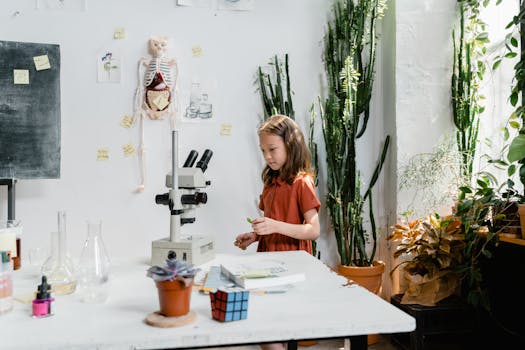
Creating engaging and educational science fair projects is an essential component of a 7th grader’s academic journey. As students navigate through their school year, science fairs can provide a platform to explore their curiosity and apply scientific methods to real-world problems. Whether it’s exploring the wonders of physics, delving into environmental studies, or examining biological phenomena, science fair ideas for 7th grade encompass a wide range of topics that inspire creativity and learning.
Explore Science Fair Ideas for 7th Grade
When considering science fair ideas for 7th graders, it is crucial to tailor projects that align with their interests and level of understanding. Here are a few innovative project ideas that can captivate young minds and foster a love for science:
1. The Impact of Music on Plant Growth
Investigate how different genres of music may influence the growth of plants. By selecting a variety of plants and exposing them to different types of music such as classical, rock, and jazz, students can measure plant height and health over a few weeks. This project can help students learn about the influence of sound waves and vibrations in biology.
2. Water Filtration Techniques
Students can explore environmental science by creating and testing water filtration systems. Using materials like sand, gravel, and activated charcoal, students can simulate natural filtration processes and analyze the effectiveness of each component in purifying water. This project encourages understanding of ecology and sustainability.
3. Solar Oven Design and Efficiency
Designing a solar oven can introduce students to principles of sustainable energy and heat transfer. Students can build a solar cooker using simple household materials and test its efficiency in cooking different foods. This project brings awareness to renewable energy sources and practical applications of thermal science.
4. The Science Behind Bath Bombs
Create an experiment to explore the chemical reactions that occur when bath bombs dissolve in water. By altering ingredients like citric acid and baking soda, students can observe changes in reaction time, fizz strength, and aesthetic appeal. This fun and colorful project introduces concepts of chemistry in everyday life.
5. Wind Turbine Energy Efficiency
Investigate how different blade shapes and sizes affect the energy efficiency of a wind turbine model. Students can construct small wind turbines and measure their energy output in varying wind conditions. This project can introduce basic principles of aerodynamics and renewable energy technology.
6. Effects of Sugary Drinks on Teeth
Explore the impact of different sugary beverages on the erosion of enamel. By using eggshells as a substitute for teeth enamel and submerging them in sodas and juices, students can visualize the effects over time. This project is perfect for learning about dental health and the chemical properties of acids.
Enhancing the Educational Experience
Joining a science fair can be a transformative experience for 7th graders. It allows them to not only investigate a topic of interest but also develop critical thinking and presentation skills. The involvement in a science fair project expands their understanding of the scientific method, from forming a hypothesis to analyzing data and drawing conclusions.
Additionally, students interested in expanding their scientific knowledge beyond the classroom may consider accessing free online courses in astrophysics and quantum science that offer deeper insights and stimulating content.
Encourage Peer Collaboration
Collaborative projects can further enhance the learning process by promoting teamwork and idea-sharing. Encourage students to work with peers, exchange experiment ideas, and support each other in troubleshooting challenges during their investigation.
Guidance and Safety
Teachers and guardians should provide guidance in selecting projects that are both safe and appropriate for the student’s academic level. Supervision is crucial, especially when handling experimental materials or conducting procedures. Ensuring students understand safety protocols is just as important as the science itself.
External Resources for Science Fair Projects
To gather more ideas and ensure credible scientific information, students and educators can refer to various online resources. For instance, the National Science Teaching Association provides a wealth of materials and more project ideas for young scientists. More information can be found on Wikipedia’s science fair page for an overview of what these events typically entail and how they are structured.
Conclusion
Science fair ideas for 7th grade offer a dynamic avenue for students to grow their passion for science and develop essential skills that will serve them in academic pursuits and beyond. By exploring a variety of engaging topics, students can gain a deeper understanding of the scientific world around them, fostering a lifelong love for discovery.
- Science fairs develop critical thinking and presentation skills.
- Students engage in real-world applications of scientific methods.
- Projects can cover various fields such as biology, chemistry, and physics.
- Collaboration enhances creativity and problem-solving.
- Safe and guided exploration is essential for success.
What is the best way to select a science fair project?
Choosing a project should start with the student’s interests. Identifying a subject they are passionate about, combined with the feasibility of conducting the experiment with available resources, is key.
How do I ensure my project follows the scientific method?
Begin with a clear question or problem statement, form a hypothesis, design and conduct experiments, collect and analyze data, and finally, draw conclusions that align with or refute your hypothesis.
Are there any specific guidelines or rules for science fairs?
Yes, most science fairs have specific rules regarding safety, ethical considerations, and project submission guidelines. It is crucial to follow these rules to ensure a safe and fair competition.
Can I conduct a project with a partner?
Many science fairs allow collaborative projects. Working with a partner can enhance learning experiences and facilitate idea exchange, but always check specific competition rules.
Where can I find more science fair project ideas and resources?
Many educational websites and resources, such as the National Science Teaching Association, online educational courses, and libraries, provide ample ideas and guidance for successful science fair projects.

