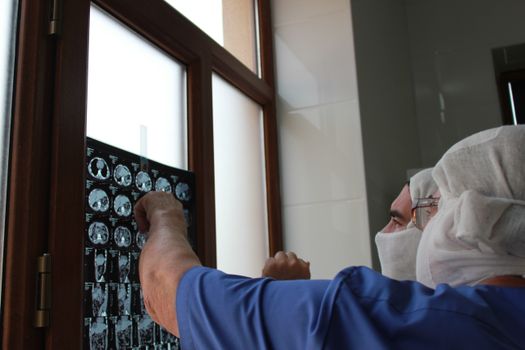
You have an MRI for persistent back pain, but the person positioning you in the scanner is not the doctor who later writes the report. Your primary care physician discusses the results, and you may never meet the specialist who interpreted the images. That can leave you wondering: is a radiologist a doctor, or simply someone trained to operate imaging equipment?
Yes, a radiologist is a medical doctor. In the United States, radiologists earn an MD or DO degree, complete postgraduate clinical training, and obtain a medical license. They specialize in using medical images to diagnose disease, guide treatment, and, in some cases, perform minimally invasive procedures.
What Does a Radiologist Actually Do?
A radiologist interprets images produced by X-rays, CT scans, MRI scans, ultrasound, nuclear medicine studies, mammography, and other imaging techniques. The job involves much more than identifying something unusual on a picture.
Radiologists review the patient’s history, compare current images with previous studies, consider laboratory results, and look for patterns associated with injuries or diseases. They then prepare a report for the clinician who ordered the examination. A report may provide a diagnosis, list several possible explanations, recommend another test, or advise prompt medical attention.
Radiologists can detect and evaluate problems such as fractures, internal bleeding, infections, tumors, blood clots, blocked arteries, and changes affecting the brain, lungs, heart, breasts, abdomen, or joints. They also help other physicians select the most appropriate imaging test and use imaging safely.
The American College of Radiology’s overview of the profession explains that radiologists diagnose and treat injuries and diseases using medical imaging and related procedures.
Why Might You Never Meet the Radiologist?
Diagnostic radiologists often work behind the scenes. While you are having a scan, you will usually interact with a radiologic technologist, MRI technologist, CT technologist, mammography technologist, or sonographer. These professionals are trained to operate equipment, obtain clear images, follow safety procedures, and help you through the examination.
The radiologist usually reviews the completed study afterward. This division of responsibilities allows radiologists to interpret imaging for many patients and consult with multiple clinical teams. It does not mean the radiologist plays a minor role. The interpretation can influence whether you need treatment, another test, a specialist referral, or no further action.
In some settings, radiologists have more direct contact with patients. Breast radiologists may discuss mammogram or biopsy findings. Interventional radiologists examine patients, explain procedures, obtain consent, perform treatments, and provide follow-up care. Patients may also be able to request a conversation with a diagnostic radiologist, although availability and local policies vary.
Radiologist Versus Radiologic Technologist
The similar job titles are a common source of confusion, but the roles are different.
- A radiologist is a licensed physician who interprets medical images, makes diagnostic assessments, consults with other doctors, and may perform image-guided procedures.
- A radiologic technologist is an imaging professional who operates equipment and produces the images needed for interpretation.
- A sonographer uses ultrasound equipment to capture images and measurements for review.
- A radiologist assistant is an advanced radiologic professional who may perform selected duties under a radiologist’s supervision but is not a physician.
All of these professionals contribute to patient care, but only the radiologist has completed medical school and physician-level specialty training.
How Much Training Does a Radiologist Need?
The usual path begins with an undergraduate degree followed by four years of medical school. After earning an MD or DO, the graduate completes a clinical internship and a diagnostic radiology residency, which generally includes four years of specialized radiology education. Many radiologists then complete an additional fellowship in an area such as neuroradiology, breast imaging, pediatric radiology, musculoskeletal imaging, abdominal imaging, or nuclear radiology.
Interventional radiologists follow specialized training that combines diagnostic imaging with image-guided treatments. Depending on the training pathway and subspecialty, becoming an independently practicing radiologist commonly takes at least 13 years of education and training after high school, and sometimes longer. Readers considering this career can compare that timeline with the broader journey and time required to become a doctor.
After training, a physician must meet state licensing requirements. Many radiologists also pursue board certification. Medical licensure and board certification are related but distinct: a license provides legal authority to practice, while board certification demonstrates that the physician has met additional specialty-specific standards.
Are All Radiologists the Same Kind of Doctor?
Radiology includes several practice areas. A diagnostic radiologist mainly interprets imaging studies and provides recommendations. An interventional radiologist uses imaging to guide instruments through the body for procedures such as biopsies, drain placement, blood-vessel treatments, and certain cancer therapies.
Radiologists may also concentrate on one body system or patient group. For example, a neuroradiologist focuses on the brain, spine, head, and neck, while a pediatric radiologist is trained to address the imaging needs of infants and children.
A radiation oncologist is also a physician but works in a separate specialty focused on treating cancer with radiation. Despite the similar terminology, radiation oncology and diagnostic radiology involve different training pathways and everyday responsibilities.
What Are the Career Tradeoffs?
Radiology can appeal to people who enjoy anatomy, technology, pattern recognition, and solving complex diagnostic questions. A radiologist may contribute to the care of many patients each day and collaborate with emergency physicians, surgeons, oncologists, pediatricians, and other specialists.
However, the career comes with practical tradeoffs:
- Training is long and demanding, often followed by additional fellowship education.
- Diagnostic radiology may offer less ongoing patient contact than primary care or other clinical specialties.
- The work requires prolonged concentration because subtle findings can significantly affect care.
- Some positions involve overnight, weekend, holiday, or on-call coverage because imaging is essential in emergencies.
- Radiologists must keep up with changing imaging technology, safety practices, and medical knowledge.
- Interventional radiology provides more direct patient care and procedural work but may also involve emergencies and physically demanding schedules.
For some physicians, limited routine patient contact is a drawback. For others, it is a reasonable tradeoff for highly analytical work and broad involvement across medicine. The experience varies considerably among hospital-based radiology, outpatient imaging, academic medicine, interventional practice, and remote image interpretation.
What Does the Radiologist’s Report Mean for You?
The radiology report is a medical interpretation, not merely a description of what appears in the image. It normally includes the type of examination, relevant clinical information, findings, comparisons with earlier studies, and an impression summarizing the most important conclusions.
Words such as “indeterminate” or “cannot exclude” do not automatically mean something serious is present. They often indicate that imaging alone cannot provide complete certainty. Your ordering clinician should interpret the report alongside your symptoms, examination, medical history, and other test results.
If you do not understand a report, ask the clinician who ordered the study what the findings mean, whether follow-up is needed, and how urgent that follow-up may be. The practical answer to “is a radiologist a doctor?” is therefore an unambiguous yes: the radiologist is the physician responsible for turning medical images into information that helps guide your care.