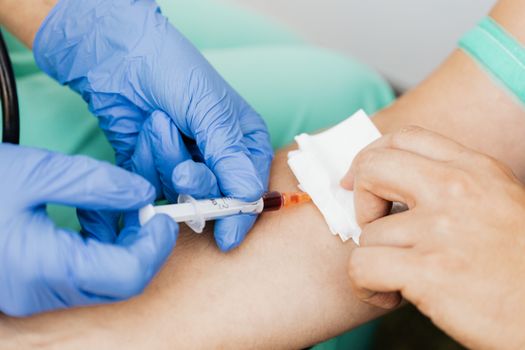
You arrive for a routine blood test, but needles make you uneasy. The person who confirms your identity, explains the process, collects the sample and notices that you are becoming lightheaded is often a phlebotomist. Although the blood draw may take only a few minutes, doing it safely requires technical precision, careful recordkeeping and strong patient-care skills.
A phlebotomist job description typically focuses on collecting blood for laboratory testing, transfusions, research or donation. However, the role involves much more than inserting a needle. Phlebotomists help protect patients from collection errors, keep specimens suitable for testing and reduce exposure to bloodborne hazards.
What does a phlebotomist do?
A phlebotomist collects blood specimens using venipuncture, which draws blood from a vein, or capillary puncture, such as a finger stick. Depending on the workplace and the worker’s training, the role may also include collecting or receiving other specimens, preparing samples for transport and performing limited laboratory-support tasks.
The exact responsibilities vary among hospitals, outpatient laboratories, physician offices, blood donation centers, long-term care facilities and mobile collection services. Some phlebotomists work primarily with adults, while others receive specialized training for children, newborns, older adults or patients with difficult-to-access veins.
Common phlebotomist duties and responsibilities
Confirming orders and patient identity
Before collecting a specimen, the phlebotomist reviews the laboratory request and confirms the patient’s identity using approved identifiers. This is a critical safety step because an accurately collected sample can still produce a dangerous error if it is assigned to the wrong person.
Preparing patients for collection
Phlebotomists explain what will happen, position the patient safely and answer appropriate questions about the collection process. They may ask whether the patient has previously fainted, has an allergy to adhesives or has restrictions affecting which arm can be used. Questions about diagnoses or test results are referred to qualified clinical staff.
Collecting blood specimens
The phlebotomist selects suitable equipment, locates an appropriate collection site and follows the facility’s procedure for cleaning the skin and drawing blood. The worker must collect the correct amount in the correct tubes and follow required collection sequences. Good technique helps limit discomfort, bruising, unsuccessful attempts and damage to the specimen.
Labeling and processing samples
Specimen tubes are labeled according to workplace policy, generally while the phlebotomist is still with the patient. The worker checks that labels and laboratory orders match, documents collection details and prepares the sample for testing. Certain specimens must be delivered promptly, protected from light, kept at a specified temperature or handled in another particular way.
Monitoring patient reactions
Some people become dizzy, nauseated, pale or faint during or after a blood draw. A phlebotomist must recognize these signs, stop or complete the procedure safely as appropriate, protect the patient from falling and obtain additional clinical assistance when needed. After collection, the phlebotomist applies pressure and confirms that bleeding is controlled before the patient leaves.
Maintaining infection control
Because the job involves blood and sharp instruments, phlebotomists follow standard precautions, hand-hygiene practices and workplace exposure-control procedures. Responsibilities include wearing appropriate protective equipment, activating needle safety features and placing used sharps directly into approved containers. Work surfaces and reusable equipment must also be cleaned according to facility policy.
Completing administrative tasks
Phlebotomists enter collection information into electronic systems, print labels, organize laboratory requests and document unsuccessful collections or unusual events. They may also answer collection-related calls, monitor supplies, prepare collection trays and coordinate with nurses, laboratory professionals and medical assistants.
Essential skills for phlebotomists
- Attention to detail: Patient information, test orders, tube types and labels must match exactly.
- Manual dexterity: Steady hand movements and controlled needle placement are needed to collect specimens efficiently.
- Communication: Clear explanations can help patients understand instructions and feel less anxious.
- Compassion: A calm, respectful manner is especially important when working with frightened patients, children or people who have had difficult blood draws.
- Observation: Phlebotomists must notice changes in a patient’s appearance or behavior and respond appropriately.
- Organization: Busy collection sites require workers to manage several orders without mixing up patients or specimens.
- Physical stamina: The job may involve prolonged standing, repeated hand movements, walking between units and helping position patients safely.
- Teamwork: Phlebotomists regularly communicate with laboratory staff, nurses, physicians and other healthcare workers.
- Confidentiality: Patient information must be handled discreetly and according to privacy policies.
- Computer skills: Most facilities use electronic health records, laboratory information systems or barcode-based specimen tracking.
Education, training and qualifications
Most entry-level positions require a high school diploma or equivalent. Many candidates then complete a postsecondary phlebotomy certificate through a community college, vocational school, technical school or healthcare training provider. These programs commonly cover anatomy, medical terminology, infection prevention, specimen handling and supervised blood-drawing practice.
Some employers provide on-the-job training to applicants without a formal phlebotomy certificate. However, completing structured education and clinical practice may make a candidate more competitive. Students considering related laboratory pathways can also explore how a medical technology certificate can support healthcare career options.
Certification is not universally required, but many employers prefer it. Eligibility requirements depend on the certifying organization and may include approved education, documented clinical experience and an examination. Licensing and training rules can also vary by state, so candidates should check the requirements where they plan to work. Basic Life Support certification, a background check, health screening or proof of immunizations may be required by some employers or clinical training sites.
The U.S. Bureau of Labor Statistics overview of the phlebotomy profession notes that phlebotomists typically enter the occupation through a postsecondary certificate program, although some qualify with a high school diploma and employer training.
Where phlebotomists work
Phlebotomists work in hospitals, medical laboratories, physician offices, outpatient clinics, blood banks and donation centers. Mobile phlebotomists may visit nursing facilities, workplaces, community blood drives or patients’ homes. Hospital and laboratory positions may include early mornings, nights, weekends and holidays because testing services operate around the clock.
The pace and patient population can differ considerably. A hospital phlebotomist may collect urgent specimens from several departments, while someone in an outpatient center may work through scheduled appointments. Blood-donation staff may spend more time screening and monitoring donors during longer collection procedures.
What is outside a phlebotomist’s role?
Phlebotomists collect and prepare specimens, but they generally do not diagnose medical conditions, interpret laboratory results, prescribe treatment or provide medical advice. Their permitted tasks depend on state rules, employer policies, training and demonstrated competency. When a patient asks what a result means or whether a test will confirm a disease, the phlebotomist should direct that question to the appropriate clinician.
What employers look for
A strong candidate combines safe collection technique with reliability, empathy and meticulous documentation. Employers may evaluate the applicant’s number of successful collections, familiarity with different age groups, knowledge of specimen requirements and ability to remain composed when a patient is distressed.
Ultimately, an effective phlebotomist job description describes both technical and human responsibilities. The role is not simply to draw blood; it is to collect the right specimen from the right patient, protect everyone involved and help the testing process begin with accurate, dependable information.