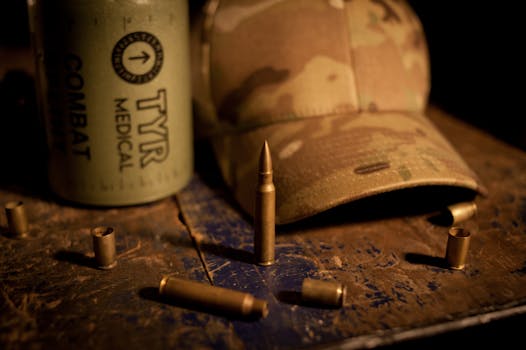
The question of whether combat medics die often touches on the risks and realities that accompany this critically important military role. Combat medics are trained to provide medical assistance on the battlefield, often under hostile and dangerous conditions. This role inherently involves risk, yet it is a vital component of ensuring the health and survival of soldiers in active duty.
Do Combat Medics Die Often?
Combat medics face significant dangers, given their proximity to combat situations. They are tasked with the critical responsibility of saving lives under fire, which exposes them to similar threats as their fellow soldiers. While statistics on the mortality rates of combat medics can vary based on conflict and era, they perform a high-risk duty by the nature of their role.
Historically, combat medics have faced elevated risks during war. Their missions require them to navigate battlegrounds, sometimes drawing enemy fire while attending to the wounded. Over the years, innovations in combat medicine, protective gear, and tactical approaches have aimed at reducing these risks.
Roles and Responsibilities of a Combat Medic
The primary task of combat medics involves offering immediate first aid and trauma care. This may include stabilizing injuries, applying tourniquets, or providing CPR. Beyond the battlefield, they also maintain medical supplies and train other soldiers in basic first aid techniques.
Combat medics must be quick thinkers, ready to make split-second decisions that could mean the difference between life and death. Their training covers a wide array of medical techniques designed to address various battlefield injuries, from bullet wounds to shock. Training programs, like those found in anatomy and physiology courses, lay the groundwork for their extensive medical knowledge.
The Evolution of Combat Medicine
Over the years, the role of combat medics has evolved along with the advancements in military technology and medical science. Modern combat medics are equipped with sophisticated training and tools, ranging from portable defibrillators to advanced surgical kits. These developments provide them with more effective methods to perform their duties safely.
Military organizations continue to invest significantly in combat medical training, continuously updating their protocols to align with the latest in medical research and technological advancements. This ongoing education ensures that combat medics are prepared to handle the spectrum of challenges in contemporary warfare.
Addressing the Psychological Impact
The psychological toll on combat medics cannot be underestimated. Witnessing traumatic injuries and bearing the responsibility of life-saving measures can lead to stress and, in some cases, post-traumatic stress disorder (PTSD). To support their mental health, medics have access to various resources and counseling services post-deployment.
Military agencies recognize the critical need for supporting the well-being of their combat medics, ensuring mental health care is part of the integral support system provided to these soldiers.
Preventive Measures and Future Directions
To mitigate risks, modern militaries continuously refine protective strategies, aiming to increase the survivability of all soldiers, including medics. This could involve advanced personal protection equipment and tactical changes to medical evacuation procedures.
Future directions are also looking towards enhanced artificial intelligence and robotics, potentially offering a future where unmanned systems assist medics in high-risk environments, thus reducing direct exposure to danger.
Nevertheless, the human element remains at the core of combat medical operations, underscoring the need for ongoing advancements in both training and technology.
While the question of “do combat medics die often” cannot be answered simply due to the variability in conflict scenarios and historical data, efforts are continuously underway to safeguard these vital personnel through technological, tactical, and medical advancements.
Takeaways
- Combat medics play a critical life-saving role in the military.
- They operate under high-risk conditions alongside other military personnel.
- Advancements in medical technology and training have improved the safety of combat medics.
- The psychological impact of the role is significant, requiring ongoing support.
- Continual innovations aim to reduce risk and increase efficiency in combat medicine.
Are combat medics considered front-line soldiers?
Yes, combat medics are often deployed alongside front-line soldiers and face similar risks during their missions.
How are combat medics trained?
Combat medics undergo rigorous medical and tactical training, preparing them for both emergency medical care and handling battlefield conditions.
Do combat medics bear arms?
Yes, combat medics are typically armed, as they need to ensure their own safety and defend their patients in combat scenarios.
What technology assists modern combat medics?
Modern combat medics utilize a range of advanced tools, including portable medical kits, electronic medical records, and sometimes communication devices for remote guidance.
How does military medicine address PTSD for combat medics?
Post-deployment, combat medics have access to comprehensive mental health care services, including counseling and support programs, to address PTSD and related conditions.