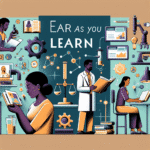
Incorporating experiential examples into learning practices can significantly enhance personal development. By engaging directly with the subject matter, learners not only deepen their understanding but also boost their retention and application skills. This blog post explores how experiential examples can transform the educational journey and facilitate personal growth.
The Power of Experiential Examples
Experiential learning involves a hands-on approach that contrasts traditional didactic teaching styles. It puts learners in scenarios where they can apply their knowledge, make decisions, and witness the outcomes of their actions. This method is particularly effective in fields requiring practical application and critical thinking.
Studies show that learning through experience can strengthen memory and encourage a deeper understanding of the subject matter. When learners can connect theoretical concepts with real-world applications, they develop problem-solving skills that are crucial in both their personal and professional lives.
How Experiential Examples Enhance Personal Development
Personal growth is a lifelong journey, and experiential learning provides the tools necessary to navigate it effectively. By engaging in activities directly related to their interests or fields of study, individuals can gain insights and competence that traditional learning alone may not provide.
For example, internships and apprenticeships are prime examples of experiential learning that allow individuals to apply classroom knowledge in a work setting, gaining feedback and refining their skills in the process. This type of learning not only provides context but also helps to build confidence and adaptability.
Integrating Experiential Learning in Different Fields
Each field benefits uniquely from experiential learning. In education, for instance, teachers can employ project-based learning where students work on real-life projects over an extended period. These projects encourage collaboration, creativity, and critical thinking.
In healthcare, simulation-based training allows learners to practice procedures in a controlled environment, reducing the risk of mistakes in high-stakes settings. This method ensures that healthcare professionals are well-prepared to handle varied patient cases effectively.
The business field also leverages experiential learning through case studies, workshops, and role-playing exercises. These activities allow participants to experiment with different strategies and witness business dynamics first-hand.
Challenges and Solutions in Experiential Learning
Despite its benefits, experiential learning can pose challenges such as resource limitations, access to real-world scenarios, and assessment difficulties. However, these challenges can often be addressed by thoughtful planning and the use of technology.
Virtual simulations and online platforms provide access to experiences that might otherwise be unavailable. For educators, assessing experiential learning can be achieved through reflective assignments and presentations that allow students to demonstrate their understanding and insights.
Discover more about career opportunities that incorporate experiential learning to get paid while enhancing your skills.
Getting Started with Experiential Learning
This approach can start with small steps such as incorporating field trips, practical workshops, or community engagement projects. The key is to create an environment where learners can experiment, reflect, and grow from their experiences.
For a comprehensive guide to incorporating experiential learning in education, check out this resource on Education from Wikipedia.
In conclusion, experiential examples serve as a powerful tool in personal development. Embracing this approach can lead to a more engaged learning process and equip individuals with invaluable skills applicable throughout their lives.
- Experiential learning boosts engagement and retention.
- It provides real-world context and practical skills.
- Various fields, including education and healthcare, benefit significantly.
- Challenges can be mitigated through technology and creativity.
- Experiential learning is a key component in lifelong personal growth.
What is experiential learning?
Experiential learning is a method of education that emphasizes learning through direct experience and reflection, allowing individuals to apply knowledge in real-world scenarios.
Why is experiential learning important?
Experiential learning is important because it enhances understanding, retention, and skill application, preparing individuals for complex problem-solving and critical thinking needed in real-life situations.
How can educators implement experiential examples in their teaching?
Educators can incorporate experiential examples by integrating project-based learning, simulations, internships, and reflective assignments that align with course objectives.
What are some examples of experiential learning in business?
In business, experiential learning can include case studies, role-playing scenarios, workshops, and internships that provide real-world insight and hands-on experience.
How does experiential learning aid in personal development?
Experiential learning aids personal development by fostering skills such as adaptability, critical thinking, and problem-solving, which are essential in both personal and professional growth.