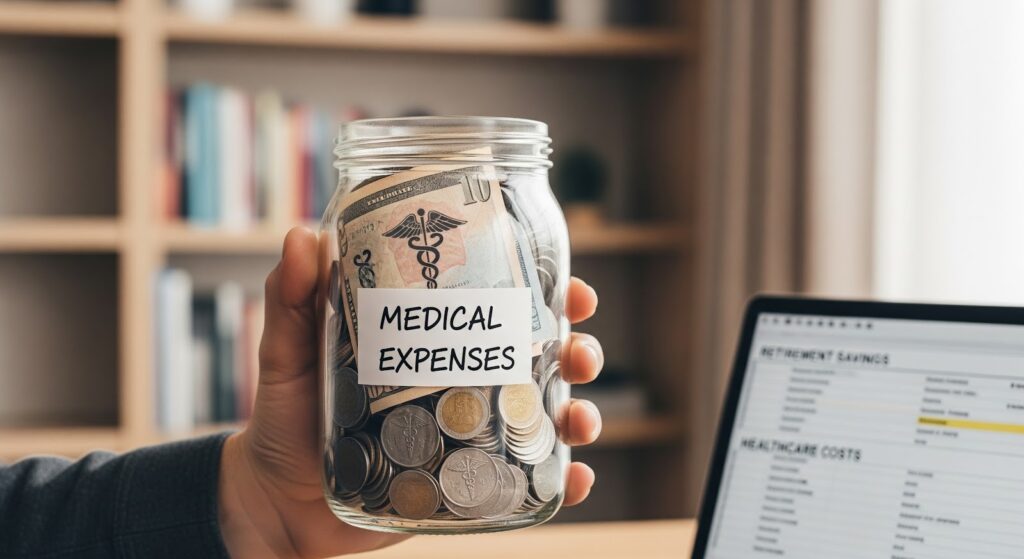
Most people think they are set for retirement because they hit a magic number in their Super balance. They see a million dollars in the fund and think they can coast. They are wrong.
I sat down with a client last week. He maxed out his concessional contributions for years. He paid off his house in the suburbs. Then his wife needed a hip replacement. The public waiting list was over twelve months long. She was in agony. He went private. Thirty thousand dollars vanished from his savings in a week.
That is the reality of medical expenses after you stop working. It isn’t a slow drip. It is a landslide.
Standard financial advice here ignores this. Planners love to talk about the ASFA retirement standard and “travel budgets.” They forget that your body is a depreciating asset. It breaks. Fixing it costs a fortune.
Here is how you actually prepare without going broke.
Using SMSF Gold Investment to Beat Medical Inflation
Cash is comfortable. It feels safe sitting in a term deposit. But for medical expenses, cash is a trap.
Medical inflation in Australia outpaces standard CPI almost every single year. A dollar under your mattress today buys half a consultation in twenty years. You cannot save your way to medical security. You have to invest for it.
I learned this the hard way back in 2008. I was holding too much cash, thinking I was smart. The market tanked, but the cost of healthcare didn’t care. It kept climbing.
You need assets that act as a hedge. This is where things get controversial. I have seen a massive uptick in interest regarding SMSF gold investment strategies lately. I used to think gold was for doomsday preppers living in bunkers. I was wrong.
When you run a Self-Managed Super Fund, you have the flexibility to buy physical assets. Gold doesn’t pay dividends. It sits there. But it also tends to hold value when the Aussie dollar gets crushed. If you need to pay for a treatment that involves imported medical tech or specialized drugs from the US or Europe, a weak AUD kills you. Gold can be a decent insurance policy against that currency risk. I’m not saying put everything in bullion. That is stupid. But having 5% or 10% there? It keeps your purchasing power alive when the Reserve Bank starts playing games with interest rates.
Budgeting for General Dentistry Services in Retirement
I call teeth “luxury bones” because the government treats them like optional accessories.
You can have top-tier private health extras and still get wrecked by dental bills. Medicare covers a heart attack. It barely touches your mouth.
I have a friend, Sarah. She ignored her teeth for a decade to save money while raising kids. She retired at sixty-five. Two years later, her bridge failed. She needed implants. The quote was roughly the price of a small hatchback.
She had to liquidate blue-chip shares during a market dip just to chew her food.
Do not wait until you are seventy to fix your mouth. Get the major work done while you have a paycheck. If you are already retired, you need a dedicated sinking fund just for this. Do not lump it in with your “emergency fund.” It isn’t an emergency. It is a guarantee. You will need general dentistry services eventually. If you don’t budget for cleanings, crowns, and the inevitable root canal, you are lying to yourself.
Shop around too. I stopped going to the fancy dentist in the CBD with the marble floors. I found a guy in the outer suburbs who operates out of a converted weatherboard house. He charges 30% less for the same work. That savings compounds over twenty years.
Managing Rising Private Health Insurance Costs

Private health insurance is a subscription service, not a strategy.
Premiums spiral out of control the older you get. I have seen premiums for people over seventy jump by 12% in a single year. If your income is fixed and your costs rise by double digits, the math breaks.
You need to self-insure for the small stuff. Raise your excess to the maximum amount allowed. This drops your premium. Take the difference in monthly cost and shove it into a high-interest account or a low-cost ETF.
Use insurance only for the catastrophic stuff that would bankrupt you. A knee reconstruction? Use insurance to skip the public queue. A visit to the GP or a basic prescription? Pay cash. Stop trying to claim every dollar back on extras. The administration hassle isn’t worth your time, and the insurers always win on the small claims anyway.
Reducing Long-Term Healthcare Costs Through Fitness
This is the only advice I give that costs time instead of money.
The cheapest medical bill is the one you never get.
I spent twenty years sitting in a chair staring at screens. My back was a ticking time bomb. I started lifting weights at forty. Not because I wanted to look good at Bondi. I don’t care about that. I did it because aged care facilities are full of people who fell down and couldn’t get back up.
Muscle mass is your armor. It protects your bones. It keeps your metabolism running.
If you are sixty and you can’t squat your own body weight, you are in trouble. Join a gym. It is cheaper than hip surgery. Spend money on quality fresh food. It is cheaper than the gap payments on diabetes medication.
Most people treat their health like a Holden ute they drive into the ground and then are surprised when the mechanic hands them a five-figure bill. Do the maintenance.
Final Thoughts on Medical Financial Planning
Stop hoping for the best. Hope is not a financial plan.
Medical costs will likely be your biggest expense in the last ten years of your life. If you aren’t factoring that in, your retirement plan is a fantasy.
Look at your assets. Are they growing faster than medical inflation? Look at your teeth. Are they going to cost you ten grand in five years?
Fix it now. The bill is coming either way.