
You turn on the tap and expect clean water. You walk past a construction site without wondering whether runoff will contaminate a nearby stream. You place household waste at the curb and assume it will be managed safely. Environmental engineers help make these everyday systems possible. So, what does an environmental engineer do? In practical terms, this professional uses engineering, chemistry, biology, and environmental science to prevent pollution, protect public health, and solve problems involving water, air, soil, and waste.
What Does an Environmental Engineer Do?
An environmental engineer designs and evaluates systems that reduce environmental hazards. Depending on the project, that might mean improving a wastewater treatment plant, controlling emissions from an industrial facility, cleaning contaminated land, or developing a safer way to handle hazardous materials.
The job combines technical design with investigation, regulatory compliance, project management, and communication. Environmental engineers rarely work alone. They often collaborate with civil and chemical engineers, environmental scientists, laboratory technicians, construction teams, government officials, lawyers, urban planners, and community representatives.
Their work usually focuses on preventing environmental damage or correcting an existing problem. For example, an engineer may design stormwater controls before a new development is built. In another situation, the engineer may investigate contaminated groundwater and create a treatment plan after pollution has already occurred.
Common Responsibilities
Designing water and wastewater systems
Many environmental engineers work on systems that supply clean water or treat wastewater. They may calculate treatment capacity, select equipment, prepare engineering drawings, and determine how a facility should remove pollutants. They can also help communities manage stormwater, reduce sewer overflows, conserve water, and replace aging infrastructure.
Controlling air pollution
Environmental engineers may design or evaluate equipment that limits pollutants released by factories, power facilities, and other operations. This work can involve testing emissions, analyzing air-quality data, reviewing production processes, and recommending control technologies. Engineers must consider whether a proposed solution will be effective, affordable, reliable, and compliant with applicable standards.
Managing solid and hazardous waste
Another responsibility is developing safe methods for collecting, treating, storing, transporting, or disposing of waste. An engineer might assess the design of a landfill, examine how an industrial facility handles hazardous chemicals, or help a company reduce the amount of waste it generates.
This work requires careful attention to possible exposure pathways. Engineers consider how contaminants could move through soil, water, or air and how those movements could affect workers, nearby communities, and ecosystems.
Cleaning contaminated sites
Environmental remediation involves investigating and cleaning locations affected by pollutants. These locations may include former factories, fuel storage facilities, mines, landfills, and properties where chemicals were spilled.
An environmental engineer may review historical records, coordinate soil and groundwater testing, interpret laboratory results, and compare cleanup options. Possible solutions include removing contaminated soil, treating groundwater, containing pollutants, or using biological processes to break down certain contaminants. The engineer may then monitor the site to determine whether the cleanup is working.
Supporting permits and regulatory compliance
Environmental projects must follow federal, state, and local requirements. Engineers prepare permit applications, maintain records, inspect facilities, review operating procedures, and evaluate whether an organization is meeting environmental standards. They may also explain technical findings to regulators or help facility managers correct compliance problems.
The U.S. Bureau of Labor Statistics overview of environmental engineers identifies duties such as designing pollution-control systems, analyzing scientific data, inspecting facilities, monitoring environmental improvement programs, and advising organizations about contaminated-site cleanup.
Preparing reports and managing projects
Not every day is spent collecting samples or designing equipment. Environmental engineers also prepare technical reports, cost estimates, schedules, specifications, operating procedures, and presentations. Experienced professionals may manage budgets, coordinate contractors, supervise junior staff, and meet with clients or public officials.
Where Environmental Engineers Work
Environmental engineering is not strictly an office job or a field job. Most positions involve a combination of settings, although the balance depends on the employer and specialty.
- Engineering and environmental consulting firms employ engineers to design systems, perform assessments, prepare permits, and advise clients.
- Federal, state, and local government agencies hire them to review projects, manage public infrastructure, develop programs, and support enforcement or compliance activities.
- Water and wastewater utilities use environmental engineers to plan, improve, and monitor treatment facilities and distribution systems.
- Manufacturing, energy, construction, and mining companies employ engineers to control pollution, manage waste, and maintain compliance.
- Research institutions and universities may hire them to study treatment technologies, pollution behavior, resource recovery, and sustainable design.
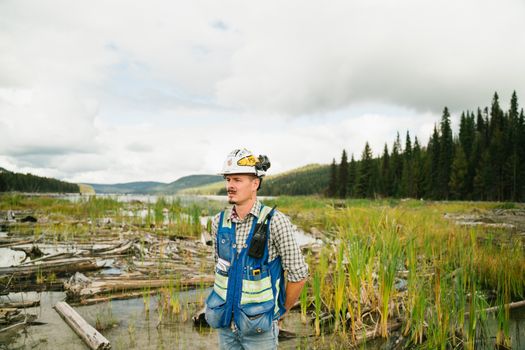
Office work may include computer modeling, data analysis, design, budgeting, and report writing. Fieldwork can take place at treatment plants, factories, construction areas, waterways, landfills, or contaminated properties. Field visits may require protective equipment and adherence to detailed safety procedures.
Most environmental engineers work full time. Deadlines, emergencies, construction schedules, public meetings, or facility problems can occasionally require longer hours or travel.
Skills Environmental Engineers Need
Technical knowledge is essential, but successful engineers also need practical judgment and strong communication abilities.
- Problem-solving skills help engineers identify the cause of pollution and compare possible solutions.
- Math and data-analysis skills are used for calculations, modeling, system design, and interpretation of test results.
- Knowledge of chemistry and biology helps engineers understand contaminants, treatment processes, and environmental conditions.
- Communication skills are necessary for writing reports and explaining complex findings to clients, regulators, workers, and community members.
- Attention to detail is important because inaccurate calculations or incomplete records can affect safety, compliance, costs, and project performance.
- Teamwork helps engineers coordinate with scientists, technicians, contractors, planners, attorneys, and other engineering specialists.
- Project-management skills support budgeting, scheduling, purchasing, quality control, and supervision.
- Adaptability allows engineers to respond when test results, site conditions, regulations, or project requirements change.
Education and Licensing
Entry-level environmental engineering positions typically require a bachelor’s degree in environmental engineering or a related discipline, such as civil, chemical, or general engineering. Coursework commonly covers mathematics, physics, chemistry, biology, fluid mechanics, soil science, water treatment, air pollution, waste management, and engineering design.
Internships and cooperative education programs can be especially valuable because they provide experience with field sampling, design software, technical documentation, and professional teamwork. Licensure is not required for every entry-level role, but experienced engineers may pursue a Professional Engineer license when they need to approve designs, oversee engineering work, or offer services directly to the public.
Is Environmental Engineering a Good Career Fit?
This career may appeal to someone who enjoys science and mathematics but also wants to address visible, real-world problems. It is a particularly strong fit for people who can move comfortably between detailed technical work and collaboration with others.
Environmental engineers should be prepared for responsibilities that are not always glamorous. A project may involve reviewing lengthy regulations, visiting an industrial site, troubleshooting treatment equipment, or revising a report several times. However, the results can affect essential parts of daily life, including drinking water, sanitation, air quality, safe development, and the cleanup of polluted land.
Students comparing engineering careers may also want to learn about the career and responsibilities of a stationary engineer, a professional who operates and maintains mechanical systems in buildings and industrial facilities.
The Everyday Impact of Environmental Engineering
Environmental engineers work behind many systems that communities depend on but rarely notice when everything is functioning properly. Their decisions can influence whether water is treated effectively, waste is contained safely, construction projects control runoff, and polluted properties can be used again.
Ultimately, the answer to “what does an environmental engineer do?” is broader than designing pollution-control equipment. These engineers investigate risks, create practical solutions, guide projects through regulatory requirements, and monitor whether those solutions perform as intended. Their work connects scientific understanding with infrastructure and public decision-making, helping communities and businesses operate more safely and responsibly.

