
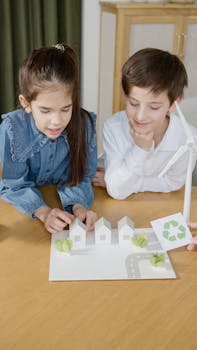
Introducing young minds to the wonders of science can spark their curiosity and set the foundation for lifelong learning. Engaging in educational activities designed with science project ideas for kindergarteners not only fosters creativity and problem-solving skills but also instills a love for exploration. These projects are typically simple, hands-on, and full of fun, making science accessible and exciting for young children.
Educational Benefits of Early Science Exploration
When kindergartners engage in science projects, they learn much more than just scientific facts. These activities enhance their ability to observe, classify, and communicate. Kids develop critical thinking skills and learn to ask questions, which is crucial in scientific inquiry. Incorporating science into early education also helps children understand the world around them by exploring topics like weather, plants, and simple physics principles.
Science Project Ideas for Kindergarteners
Choosing the right science project ideas for kindergarteners can be a rewarding task for parents and educators. Here are a few ideas to inspire learning and discovery:
Erupting Volcano
This classic science experiment can be adapted for little scientists. Using simple materials like baking soda, vinegar, and food coloring, children can create their own volcanic eruption. This activity helps them understand basic chemical reactions and develop fine motor skills as they pour and mix ingredients. Guided discussions can extend learning by introducing concepts such as gas formation and pressure.
Simple Magnet Exploration
Magnets fascinate children, and exploring their properties can be an enriching experience. Provide children with various objects and let them predict and test which ones a magnet will attract. This activity introduces young learners to the concept of magnetism and encourages classification skills as they sort objects based on their properties.
Plant Growth Observation
Understanding how plants grow is a fundamental science concept. Kindergarteners can plant seeds in cups and observe their growth over time. This project teaches patience and responsibility and offers opportunities to discuss what plants need to grow, such as sunlight, water, and soil. For additional learning, children can keep a journal to chart the plant’s growth and changes.
Weather in a Jar
Create a simple weather model to teach about the water cycle. By using a jar, water, shaving cream, and food coloring, children can simulate rain clouds. Watching the colored water make its way through the “clouds” into the jar demonstrates how rain happens, helping children learn about precipitation and evaporation in a visual and memorable way.
Creative Colour Mixing
Color mixing is a fun and artistic way to introduce scientific observation. Provide primary color paints and allow children to explore what happens when they mix them. They can predict the resulting colors and then test their hypotheses, learning about color theory in the process. This project integrates art with science, promoting creativity and exploration.
Tips for Facilitating Science Projects
While planning science projects for kindergarteners, it’s important to maintain safety and simplicity. Here are some tips:
- Use everyday materials to keep the projects relatable and cost-effective.
- Ensure adult supervision at all times to guide and assist children as needed.
- Encourage questions and allow room for the child’s curiosity to guide the exploration.
- Use storytelling to make scientific concepts more engaging for young learners.
- Connect projects to real-world phenomena to enhance understanding.
Engaging Resources for Young Scientists
In addition to hands-on projects, there are numerous online resources available to engage young learners. From virtual science experiments to stories about famous scientists, resources can enhance the educational experience. Explore our list of free online science courses for more advanced learners.
Encouraging Lifelong Learning
Incorporating science project ideas for kindergarteners into early education paves the way for a love of learning. These activities not only entertain but educate, providing a foundation for children to become curious, innovative thinkers. To further enhance their educational experience, one may explore a variety of educational resources available online, such as those provided by the education page on Wikipedia.
Conclusion
Science is a gateway to exploration and discovery, especially for young minds. By integrating engaging science project ideas for kindergarteners into educational settings, we nurture curious learners poised to explore the world around them. Whether it’s through erupting volcanoes or observing plant growth, each opportunity can ignite a child’s imagination and inspire a lifelong fascination with science.
- Introduce young children to science with hands-on projects for engagement.
- Projects improve critical thinking, observation, and communication skills.
- Use everyday materials for relatable and safe experiments.
- Encourage questions and curiosity to deepen understanding.
- Explore online resources for further learning opportunities.
FAQs
What age is appropriate for kindergarten science projects?
Kindergarten science projects are designed for children aged 4 to 6, with activities tailored to their developmental stage, interests, and safety needs.
How can I make science projects safe and fun?
Ensure projects use non-toxic materials and are conducted under adult supervision. Choose simple activities that allow children to engage safely without complex tools or substances.
How can projects encourage a love of science?
By making science accessible, interactive, and relevant, children are motivated to explore and ask questions, fostering a lifelong interest and passion for learning about the world.
Can these projects be done at home?
Yes, most kindergarten science projects use everyday household items and can be easily set up as a home activity, making learning fun and convenient for families.
Why is early science education important?
Early science education develops critical thinking skills, encourages curiosity, and introduces children to fundamental concepts that are foundational for future education and everyday problem-solving.

