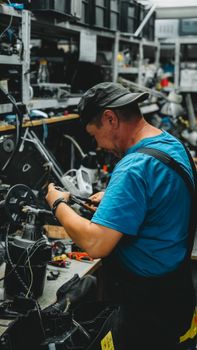
The job of assembler offers a unique opportunity for individuals seeking a hands-on and dynamic career path. This role involves assembling various products or components, ensuring accuracy and quality along the way. As more industries expand, the demand for skilled assemblers is increasing, offering ample career growth and personal development opportunities.
The Job of Assembler: Essential Skills and Responsibilities
An assembler’s duties vary widely depending on the industry and the specific product being manufactured. However, several core responsibilities are common across most assembler roles. Understanding these can provide a clearer picture of what the job entails and how it fits into the larger manufacturing process.
Key Responsibilities
- Reading and interpreting blueprints or technical drawings to understand product specifications.
- Assembling components using hand tools, power tools, or automated equipment.
- Conducting quality checks to ensure all parts meet industry standards.
- Maintaining cleanliness and organization in the work area to ensure safety and efficiency.
- Collaborating with team members or supervisors to identify process improvements.
Essential Skills for Assemblers
To excel in the job of assembler, certain skills are essential. These include attention to detail, mechanical aptitude, dexterity, and good communication skills. Additionally, problem-solving abilities can be beneficial as they help address any issues that arise during the assembly process.
Career Advancement and Personal Development in Assembly Jobs
Embarking on a career as an assembler can lead to numerous opportunities for advancement and personal growth. Many employers offer training programs that allow assemblers to develop new skills or transition to specialized roles.
Training and Certification
While some entry-level positions do not require formal education beyond a high school diploma, pursuing technical training can enhance your qualifications and career prospects. Specialized certification programs are also available, focusing on specific assembly skills relevant to different industries. For instance, taking a free online data entry course with certification can be a step towards diversifying your skill set.
Pathways for Career Growth
Once you have established yourself in the job of assembler, vertical growth is a promising prospect. High-performing assemblers may progress to team leader roles, supervisors, or even quality assurance specialists. With experience, some professionals may choose to pivot into related fields such as logistics or production management.
The Importance of Assemblers in Various Industries
The role of assemblers is critical in numerous sectors, including automotive, electronics, and aerospace industries. Each industry depends on skilled assemblers to bring their designs to life and maintain quality production standards.
Automotive Industry
Assemblers in the automotive sector work on producing vehicles by assembling parts like engines, transmissions, and body components. Their precision ensures the safety and performance of every vehicle.
Electronics Industry
In electronics, assemblers are involved in producing a wide range of products, from small gadgets to complex systems. They focus on maintaining consistency and quality in the production process.
Aerospace Industry
The aerospace sector requires highly skilled assemblers due to the intricate nature of aircraft components. Their expertise is crucial in ensuring the structural integrity and safety of airplanes.
Challenges and Rewards of a Career in Assembly
While the job of assembler can be rewarding, it also presents unique challenges. Understanding these can help prospective assemblers prepare effectively.
Challenges
- Physical demands: Assembling can be physically intensive, requiring prolonged periods of standing and manual labor.
- Precision and speed: Assemblers often work under tight deadlines while maintaining accuracy.
- Repetitive tasks: The job may involve repetitive motions, which can lead to wear if proper ergonomics are not observed.
Rewards
- Satisfaction from creating tangible products and seeing your efforts contribute to bigger projects.
- Opportunities for skill enhancement and career growth.
- The chance to work in diverse sectors and explore different production environments.
Conclusion: Your Path in the Job of Assembler
The job of assembler is a versatile and dynamic position with many avenues for personal development and career growth. It serves as a valuable stepping stone into the broader field of manufacturing and production. For those willing to learn and adapt, the role offers the satisfaction of creating and contributing significantly to various industries. Consider exploring the various paths available in assembly, as it can lead to a fulfilling and prosperous career.
For further reading on education and career development, visit this informative Wikipedia article on education.
- Assemblers play a crucial role in multiple industries, contributing significantly to product creation.
- Essential skills include attention to detail, dexterity, and mechanical aptitude.
- The job offers various paths for advancement and specialization.
- Continuing education and certification can enhance career prospects.
- Working as an assembler can be both rewarding and challenging with ample opportunities for personal growth.
What are the primary responsibilities of an assembler?
An assembler is responsible for putting together components of products, ensuring accuracy, conducting quality checks, and maintaining a clean work environment.
What skills are essential for an assembler?
Important skills include attention to detail, mechanical aptitude, communication, dexterity, and problem-solving abilities.
How can assemblers advance in their careers?
Assemblers can advance by gaining experience, pursuing additional training, and moving into roles such as team leader, supervisor, or quality assurance specialist.
In which industries are assembler jobs prevalent?
Assembler positions are prevalent in industries such as automotive, electronics, and aerospace, where assembly work is integral to production.
What challenges do assemblers face in their work?
Assemblers may face physical demands, the need for precision and speed, and the repetitive nature of tasks, requiring good ergonomic practices and attention to detail.