
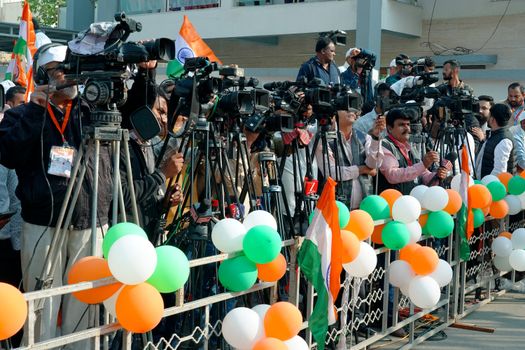
You see a breaking-news alert on your phone. Within minutes, a reporter is interviewing witnesses, checking official records and explaining what happened. It may look like the journalist simply arrived and started talking, but much of the work took place behind the scenes. So, what do journalists do? They find information that matters to the public, verify it, place it in context and communicate it clearly through writing, audio, video, photographs, graphics or live reporting.
What Do Journalists Do Each Day?
A journalist’s central responsibility is to help people understand events, decisions and issues that may affect their lives. Depending on the assignment, that could mean explaining a change in local school policy, investigating public spending, covering an election, reporting from a sporting event or interviewing a scientist about new research.
Although no two days are exactly alike, journalists commonly perform the following tasks:
- Research topics and identify reliable sources of information
- Pitch story ideas to editors or producers
- Interview witnesses, officials, experts and community members
- Review documents, public records, data and previous reporting
- Confirm names, dates, claims and other important details
- Write articles or prepare scripts for television, radio and podcasts
- Record and edit photographs, audio or video
- Revise stories in response to editorial feedback
- Update published reports as new information becomes available
- Correct errors and respond to questions from readers or viewers
The work often involves more verification than audiences realize. If one person makes an accusation, for example, a responsible journalist does not automatically present it as fact. The reporter may contact the person or organization involved, examine supporting documents, seek independent confirmation and explain what remains uncertain.
Where Do Journalists Find Information?
Journalists obtain information from many places. They attend public meetings, court proceedings, news conferences and community events. They also develop relationships with people who understand particular subjects, sometimes called sources or contacts.
Documents can be just as important as interviews. Reporters may examine budgets, inspection reports, legal filings, research papers, meeting minutes and public databases. Data journalists use spreadsheets, statistical tools and visualizations to identify patterns that might otherwise be missed.
Social media can provide tips and eyewitness material, but a post is not automatically reliable. Journalists must consider who created it, when and where it was recorded, whether it has been altered and whether other evidence supports it. Verification is especially important during emergencies, when misleading information can spread quickly.
Different Types of Journalism
Journalism is broader than newspaper reporting. A journalist may work for a local website, magazine, television station, radio network, podcast, nonprofit newsroom or international news organization. Some are independent freelancers who sell stories to several outlets.
News reporters
News reporters cover recent events and developments. General-assignment reporters handle many subjects, while beat reporters concentrate on areas such as education, government, courts, health, business, technology, culture or sports.
Investigative journalists
Investigative reporters examine issues in depth, often over weeks or months. They may analyze large collections of records, speak with numerous sources and uncover information that organizations or officials have not made easy to find.
Broadcast and multimedia journalists
Television, radio and digital journalists may write scripts, conduct recorded or live interviews, capture footage and edit complete reports. Many modern newsroom positions require one person to work across several formats, producing a written article, short video and social media update from the same reporting.
Feature writers and correspondents
Feature journalists tell detailed, often human-centered stories that are not always tied to breaking news. Correspondents usually report from a particular location or specialize in a region or subject. Foreign correspondents, for example, cover events from outside their home country.
What Skills Does a Journalist Need?
Strong writing is important, but journalism requires much more than polished sentences. Reporters need curiosity, careful judgment and the confidence to ask direct questions. They must listen closely, notice inconsistencies and explain complicated subjects without distorting them.
Useful professional skills include:
- Clear writing and verbal communication
- Research, interviewing and fact-checking
- Critical thinking and attention to detail
- Time management under strict deadlines
- Relationship-building with diverse sources
- Audio, video, photography and editing skills
- Basic data analysis and digital publishing
- Adaptability when a story changes unexpectedly
Technology is now part of nearly every journalism role. Reporters may use content-management systems, mobile recording equipment, data tools and audience analytics. This reflects the wider ways technology has changed education and skill development, including how aspiring journalists learn research, production and digital communication.
Why Ethics Matter in Journalism
Journalists regularly make decisions that can affect reputations, privacy and public understanding. Ethical reporting requires them to verify information, distinguish facts from opinions, disclose relevant conflicts of interest and correct significant mistakes. They must also consider whether publishing a private detail serves a genuine public interest or merely attracts attention.
Independence is another key principle. News reporting should not be shaped by gifts, personal relationships, political pressure or an advertiser’s preferences. Journalists may cover controversial issues, but their reporting should fairly represent verified evidence and relevant perspectives.
Journalism and public relations are therefore different. A public relations professional communicates on behalf of a client or organization. A journalist’s primary duty is to inform the audience rather than promote the subject being covered.
What Education Do Journalists Need?
Many employers look for a bachelor’s degree in journalism, communications, English or a related subject. Journalism programs commonly teach reporting, interviewing, media law, ethics, editing and multimedia production. Courses in economics, politics, science, statistics or another specialty can also prepare students to cover complex subjects.
However, a degree alone rarely demonstrates that someone can report effectively. Employers usually want to see a portfolio containing published articles, videos, audio segments, photographs or data projects. Experience with a student newspaper, campus radio station, local publication or internship can help a beginning journalist build that portfolio.
The U.S. Bureau of Labor Statistics overview of journalism careers notes that these professionals typically need a bachelor’s degree and may benefit from internships or experience with college media.
What Is the Typical Career Path?
An aspiring journalist can begin before graduation by contributing to school media, volunteering with a community publication or producing independent work. The goal is to practice finding stories, meeting deadlines and accepting edits—not simply to collect writing samples.
Early-career journalists may start as editorial assistants, production assistants, researchers, junior reporters or freelancers. In smaller newsrooms, they often cover several subjects and handle multiple parts of production. With experience, a reporter may move to a specialized beat, a larger publication or a position involving major investigations.
Experienced journalists can become editors, producers, news directors, bureau chiefs, anchors or columnists. Others move into documentary production, teaching, research or communications. Advancement generally depends on the quality and accuracy of a journalist’s work, subject knowledge, professional reputation and ability to adapt to new formats.
What Is the Work Environment Like?
Journalism can be rewarding, but it is not always predictable. Breaking news may require evening, weekend or holiday work. Reporters sometimes travel with little notice, work outdoors in poor weather or cover emotionally difficult events. Deadlines can be demanding, particularly when information is still developing.
At the same time, journalists have opportunities to meet people from different backgrounds, ask questions on the public’s behalf and make complicated information easier to understand. For someone who is curious, persistent and comfortable with continuous learning, journalism can offer a varied career with a clear public purpose.
Is Journalism the Right Career for You?
Consider whether you enjoy investigating questions, speaking with unfamiliar people and checking details carefully. You should also be willing to revise your work, handle criticism and separate your personal assumptions from what the evidence shows.
Ultimately, the answer to “what do journalists do?” is more than “write the news.” Journalists gather evidence, test claims, explain context and create an accurate public record. Their tools and platforms may continue to change, but the essential job remains the same: helping people make sense of the world through responsible, independent reporting.

