
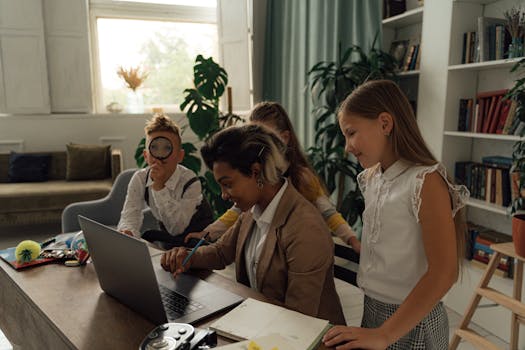
The participative meaning in an educational context refers to a learning approach where students actively engage in the process, contributing ideas and feedback while collaborating with peers. This active participation helps to foster a deeper understanding and retention of the material, as students are not merely passive recipients of information. In today’s educational landscape, understanding the definition of participative is crucial as this method becomes increasingly integral to modern teaching practices.
Understanding the Participative Meaning in Education
Participative learning, also known as collaborative learning, encourages a shift from traditional teacher-centered models to learner-centered environments. In these settings, students take on a more active role in their education, which can involve group projects, discussions, and peer teaching. This methodology allows learners to develop critical thinking skills and engage more deeply with the curriculum.
One key aspect of participative learning is the focus on student interaction and dialogue. Through discussion and cooperation, students are exposed to diverse perspectives and can develop communication skills that are essential in the workforce. This environment not only enhances academic achievement but also prepares students for future career challenges.
The Benefits of Participative Learning
Participative learning provides numerous benefits. Firstly, it enhances students’ engagement and motivation as they feel more involved in their learning journey. Additionally, it promotes adaptability and problem-solving skills, as learners are often required to work through real-world issues collaboratively.
Moreover, this approach helps students build confidence in their abilities. As they contribute ideas and take part in decision-making processes, they become more accountable for their educational outcomes. These experiences translate well into work environments where teamwork and collaboration are highly valued.
How to Implement Participative Learning
Implementing participative learning effectively requires thoughtful planning and a supportive environment. Educators can start by creating small group activities that encourage collaboration and peer feedback. It is also essential to design assignments and projects that necessitate active participation and critical thinking.
For teachers looking to transition to a more participative approach, technology can be a valuable tool. Various digital platforms facilitate interactive learning, allowing students to collaborate across different locations and time zones. For more insights on integrating technology in education, consider exploring strategies like those in the Google Return to Work Program for Moms, which emphasizes skill development in tech-savvy environments.
Challenges of Participative Learning
Despite its benefits, participative learning also presents challenges. One significant challenge is managing diverse opinions and conflicts that may arise in group settings. Educators need to develop strategies to mediate discussions and ensure that all voices are heard.
Moreover, not all students may be initially comfortable with this approach, especially those who are used to traditional teaching methods. It’s important for educators to provide support and gradually introduce participative elements into the classroom to ease the transition.
Another consideration is the assessment of participative learning outcomes. Traditional exams may not fully capture the skills and knowledge gained through collaborative activities. As such, educators may need to employ alternative assessment methods like portfolios, peer evaluations, and reflective journals.
Examples of Participative Learning Techniques
Several participative learning techniques can be employed to enhance the educational experience. Group projects are a common method, allowing learners to tackle complex tasks collectively. Problem-based learning is another technique, where students work on real-world challenges in a collaborative setting.
Additionally, flipped classrooms can facilitate participative learning. In this model, students review materials at home and spend classroom time engaging in discussions and activities. This approach encourages them to apply their knowledge actively rather than passively receiving information.
Ultimately, participative meaning in education signifies a shift toward more dynamic and interactive learning environments. As this approach continues to gain popularity, educators are exploring creative ways to involve students in meaningful, participatory experiences.
Final Thoughts on Participative Meaning
By understanding the participative meaning and integrating its principles into education, we can create more engaging and effective learning experiences. This methodology not only benefits students academically but also equips them with essential life skills. As we move forward, embracing participative learning can help reshape the way education is delivered and enhance students’ overall development. For a broader overview of educational strategies and theories, you might find it helpful to visit resources like Wikipedia’s Education Page.
- Participative learning involves active student engagement and collaboration.
- This approach enhances motivation, critical thinking, and communication skills.
- Effective implementation requires planning and supportive environments.
- Technological tools can facilitate participative learning experiences.
- Challenges include managing diverse opinions and assessing collaborative outcomes.
What is participative learning?
Participative learning is an educational approach where students actively engage and collaborate in the learning process, often involving dialogue, group work, and problem-solving activities.
How does participative learning benefit students?
Participative learning enhances motivation, fosters critical thinking, improves communication skills, and prepares students for real-world scenarios through active engagement and practical application of knowledge.
How can teachers implement participative learning in the classroom?
Teachers can implement participative learning by designing group projects, facilitating discussions, using technology for collaborative tasks, and employing techniques like flipped classrooms or problem-based learning.
What challenges might educators face with participative learning?
Challenges include managing diverse viewpoints, mediating conflicts, ensuring all students are involved, and developing appropriate assessment methods to measure learning outcomes effectively.
Why is participative learning important in today’s education?
Participative learning is crucial as it aligns with the skills needed in contemporary job markets, such as teamwork, innovation, and adaptability, while creating more engaging and meaningful educational experiences.

