
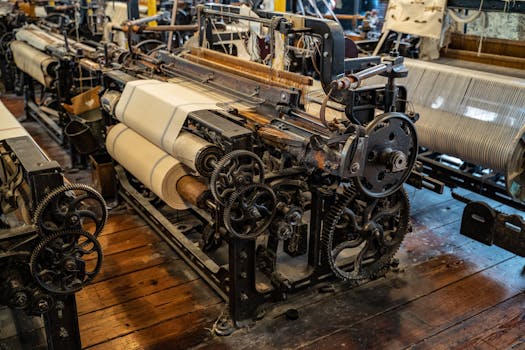
Adam Smith, the renowned economist and philosopher, profoundly influenced the industrial revolution, an era characterized by massive shifts in technology, labor, and the economy. His ideas laid the groundwork for many economic principles that shaped modern careers and industries. This article examines Smith’s impact on the industrial revolution and how his theories continue to resonate in today’s professional landscape.
The Influence of Adam Smith on the Industrial Revolution
Adam Smith’s seminal work, “The Wealth of Nations,” published in 1776, played a pivotal role in the economic transformation during the industrial revolution. Smith advocated for free markets and the division of labor, concepts that were crucial as societies transitioned from agrarian economies to industrial powerhouses. His idea of the “invisible hand” proposed that individual self-interest in a free market leads to economic prosperity, a theory still central to modern economics.
The division of labor significantly increased productivity during the industrial revolution, as illustrated by Smith’s famous pin factory example. By assigning specific tasks to different workers, efficiency improved remarkably, reducing production costs and increasing output. Smith’s insights into division improved industrial operations and influenced how modern careers are structured, where specialization is key to success.
Smith’s Economic Principles and Modern Careers
The principles derived from Adam Smith’s understanding of the industrial revolution continue to be relevant. For instance, the emphasis on specialization has led to diverse career paths and expansive job opportunities in today’s economy. Industries ranging from technology to healthcare rely on specialized skills, underlining the continued relevance of Smith’s insights.
Moreover, Smith’s advocacy for free trade and limited government intervention in economic matters paved the way for globalization. Modern careers often require workers to adapt to new technologies and collaborate internationally, reflecting the interconnectedness championed by Smith. Companies and career professionals benefit from competitive markets, where innovation thrives, and diverse ideas contribute to growth.
Impact on Industrial Design and Modern Education
Adam Smith’s perspectives also influenced the field of industrial design, a crucial component of the industrial revolution. The need for efficient production and creative innovation led to the development of industrial design as a discipline. Today, aspiring designers can explore opportunities and expand their skills through various online industrial design courses, illustrating the evolution of education in alignment with Smith’s ideas.
Smith’s advocacy for education as a means to empower individuals economically underscores its importance in developing market-ready skills. The spread of education during the industrial revolution has evolved into a modern workforce that values lifelong learning and adaptability, key factors in career advancement in a fast-paced world.
His ideas continue to enlighten economic and educational strategies, aligning with modern needs. The institutional focus has shifted towards fostering creativity and critical thinking, preparing individuals for a dynamic and diversified job market.
The Legacy of Adam Smith and the Industrial Revolution
Smith’s legacy is evident in the ongoing economic trends that continue to shape modern careers. As industries evolve, the foundations he laid during the industrial revolution remain integral to understanding how economies function and prosper. His vision promotes an environment where careers are not static but dynamically adapt to innovation and technological advancements.
Understanding the breadth of Smith’s influence can help modern professionals navigate their careers strategically. By recognizing the principles that drove the industrial revolution, today’s workforce can devise strategies that capitalize on market dynamics, enhancing both individual potential and organizational growth.
For a comprehensive understanding of Smith’s ideas and their impact, additional educational resources can be explored through institutions like Wikipedia.
In summary, the ideas of Adam Smith during the industrial revolution laid a foundation that continues to inform and guide modern careers and industries in a continually evolving global economy.
- Adam Smith was a pivotal figure in shaping economic thought during the industrial revolution.
- The division of labor, one of his key ideas, significantly boosted productivity and efficiency.
- Smith’s advocacy for free markets and international trade remains relevant today.
- Modern career success often involves specialization, reflecting Smith’s influence on professional development.
- Educational advancements linked to Smith’s principles continue to thrive, supporting skill acquisition and innovation.
What was Adam Smith’s main contribution to the industrial revolution?
Adam Smith’s main contribution was his advocacy for free markets and the division of labor, which increased productivity and economic prosperity during the industrial revolution.
How does Adam Smith’s economic theory relate to modern careers?
Smith’s theories emphasize specialization and market dynamics, which continue to shape the structure and diversity of modern careers, promoting adaptability and skill development.
What is the “invisible hand” that Adam Smith described?
The “invisible hand” is a metaphor used by Adam Smith to describe the self-regulating nature of a free market, where individual self-interest drives economic prosperity and innovation.
How did Adam Smith’s ideas influence education during the industrial revolution?
Smith advocated for education as a tool for economic empowerment, leading to a focus on skill acquisition and the development of innovative educational approaches during and after the industrial revolution.
Can Adam Smith’s principles be applied to today’s global economy?
Yes, his principles of specialization, free trade, and market dynamics are fundamental to understanding and navigating today’s interconnected and ever-evolving global economy.

