
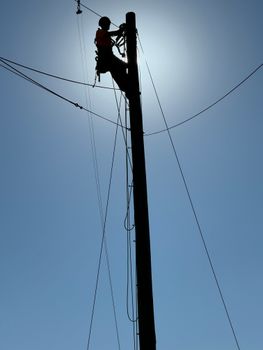
You may see a bucket truck beside a utility pole after a storm and wonder who is working high above the road while everyone else waits for the electricity to return. That worker may be an aerial lineman, a skilled tradesperson who installs, inspects, maintains, and repairs overhead power lines and related equipment. The career can offer strong earnings and meaningful work, but it also requires extensive training, physical stamina, careful teamwork, and strict respect for safety procedures.
What Does an Aerial Lineman Do?
An aerial lineman works on electrical distribution or transmission systems located above ground. Depending on the employer, the job title may be lineworker, electrical power-line installer, journeyman lineman, or overhead distribution lineman. Some telecommunications employers also use “aerial lineman” for workers who install overhead communication cables, so applicants should read job descriptions carefully.
Electrical aerial linemen commonly perform tasks such as:
- Installing and replacing overhead conductors, cables, poles, and crossarms
- Climbing utility poles and transmission structures
- Operating bucket trucks, digger derricks, hoists, and other equipment
- Installing or servicing transformers, switches, insulators, and voltage regulators
- Testing lines and equipment to locate faults or damaged components
- De-energizing, grounding, and securing equipment before certain repairs
- Clearing damaged materials and restoring service after storms
- Inspecting tools, protective equipment, vehicles, and work areas
- Communicating with crew members, dispatchers, and system operators
The word “aerial” does not mean every task occurs in a bucket. Linemen may work at ground level to set poles, prepare materials, establish traffic-control zones, inspect equipment, and assist workers positioned overhead.
What Is the Workday Like?
This is primarily outdoor, hands-on work. A normal day may begin with a safety briefing, job-site assessment, equipment inspection, and discussion of each crew member’s responsibilities. The crew may then isolate electrical hazards, position trucks, set up barriers, and complete the planned installation or repair.
Schedules are not always predictable. Utility crews may work nights, weekends, holidays, or extended shifts when severe weather damages the grid. Some linemen travel to other regions for emergency restoration work and remain away from home for several days or weeks. Even during routine operations, workers may encounter rain, wind, heat, cold, mud, traffic, insects, and difficult terrain.
The work is physically demanding. It can involve climbing, lifting, pulling cable, balancing, bending, and using heavy tools while wearing protective equipment. Anyone considering this occupation should be comfortable with heights, changing weather, close teamwork, and following detailed instructions without taking shortcuts.
Education and Training Requirements
A four-year college degree is generally not required. Most electrical power-line installers and repairers enter the field with a high school diploma or equivalent, although coursework in algebra, trigonometry, electricity, mechanics, and technical drawing can be helpful.
Lineworker School
Community colleges and technical schools may offer certificate or associate degree programs in electrical line technology. Programs can introduce pole climbing, electrical theory, line construction, equipment operation, first aid, and pole-top or bucket rescue. Completing a program does not automatically make someone a journeyman, but it may improve readiness for an apprenticeship or entry-level groundworker position.
Apprenticeship and On-the-Job Training
Apprenticeship is a common route into the occupation. Programs combine supervised field experience with classroom or technical instruction and may last up to three years. Apprentices typically begin with basic tasks and gradually learn line construction, electrical systems, rigging, equipment operation, troubleshooting, and safe work around energized components.
Admission requirements vary. Employers or apprenticeship sponsors may require applicants to be at least 18, hold a diploma or equivalent, understand basic algebra, pass an aptitude test, meet physical requirements, complete substance screening, and maintain an acceptable driving record.
Licenses and Additional Qualifications
Workers who operate heavy utility vehicles usually need a commercial driver’s license. Employers may also require first-aid and CPR training, equipment-operation qualifications, or job-specific safety credentials. Requirements differ by employer, state, union, and type of line work, so candidates should confirm the standards for each opening.
Why Safety Training Is Central to the Career
Aerial line work involves serious hazards, including high-voltage electricity, falls, moving vehicles, falling objects, unstable poles, mechanical equipment, severe weather, and roadside traffic. Safe performance depends on training, preparation, communication, and compliance with established procedures.
Before using an aerial lift, trained workers inspect critical components and test the controls. Fall-restraint or personal fall-arrest equipment must be used when required, and the lift must remain within its design and load limits. Crews also follow minimum-approach rules around energized equipment and use appropriate insulating, grounding, and protective measures.
Common protective equipment may include:
- Hard hats and safety glasses
- Flame-resistant clothing
- Electrical protective gloves and sleeves
- Work boots suited to the assigned conditions
- Body harnesses, lanyards, and climbing systems
- Hearing protection and high-visibility clothing
Weather creates additional health concerns. Heat can contribute to heat-related illness, while cold, wind, and wet conditions can affect coordination and judgment. Employers and crews manage these risks through weather monitoring, hydration, appropriate clothing, rest periods, acclimatization, and stopping work when conditions become unsafe. Fatigue also matters because emergency restoration shifts can be long and errors around electricity may have severe consequences.
Skills and Personal Qualities Employers Value
Strength is useful, but successful linemen need more than physical ability. Employers look for dependable workers who can remain attentive, communicate clearly, recognize hazards, and make careful decisions under pressure.
- Mechanical and electrical problem-solving ability
- Arm-hand steadiness and good coordination
- Comfort working at height and in confined positions
- Clear communication and strong teamwork
- Willingness to follow procedures consistently
- Ability to learn from experienced crew members
- Reliable attendance and readiness for emergency callouts
Before choosing the occupation, it is helpful to consider the broader advantages and disadvantages of technical careers, including physical demands, irregular schedules, advancement opportunities, and alternatives to a traditional college pathway.
Aerial Lineman Salary and Job Outlook
Pay depends on experience, location, industry, union status, overtime, emergency assignments, and whether the worker is an apprentice or journeyman. According to Bureau of Labor Statistics career data for electrical power-line installers and repairers, the median annual wage was $95,320 in May 2025. The lowest 10 percent earned less than $51,470, while the highest 10 percent earned more than $128,690.
Those figures should not be treated as guaranteed starting salaries. Apprentices generally earn less while progressing through training, whereas experienced lineworkers may increase their income through overtime, storm response, specialized assignments, or advancement into crew-leader and supervisory roles.
The Bureau of Labor Statistics projects employment of electrical power-line installers and repairers to grow 10 percent from 2025 through 2035, faster than the average for all occupations. Grid upgrades, new construction, rising electricity demand, maintenance needs, and replacement of departing workers are expected to support job opportunities.
Is an Aerial Lineman Career Right for You?
This career may suit someone who prefers practical work, wants to train without earning a bachelor’s degree, enjoys working with a close crew, and accepts that safety rules must govern every task. It may be a poor fit for someone who strongly dislikes heights, outdoor conditions, travel, physical labor, or unpredictable emergency schedules.
A good next step is to compare local utility, contractor, union, and apprenticeship openings. Review the entry requirements, training structure, pay progression, travel expectations, and safety culture rather than focusing only on the advertised top salary. For a prepared and safety-minded candidate, becoming an aerial lineman can provide a challenging career with visible results: building and maintaining the infrastructure communities rely on every day.

