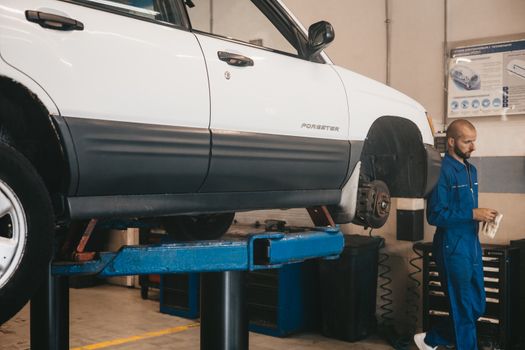
You may enjoy working on cars, but does that automatically make you ready for a professional repair shop? Not quite. Employers hiring for auto tech jobs want practical mechanical ability, careful diagnostic thinking, dependable work habits, and the communication skills needed to explain repairs clearly. The good news is that you do not always need years of experience to get started. Training, entry-level shop experience, and a well-prepared application can help you build a credible path into the field.
What does an automotive technician do?
Automotive technicians inspect, maintain, diagnose, and repair cars and light trucks. Although people often use “technician” and “mechanic” interchangeably, many modern positions emphasize computer-assisted diagnostics and electronic systems in addition to traditional mechanical repairs.
A typical day may involve several of the following responsibilities:
- Listening to a customer’s description of a problem and reviewing the vehicle’s service history
- Using scan tools, meters, pressure gauges, and other equipment to identify faults
- Testing batteries, brakes, steering, suspension, engines, transmissions, and electrical systems
- Completing routine services such as oil changes, fluid checks, tire rotations, and filter replacements
- Repairing or replacing worn components, sensors, belts, hoses, bearings, and brake parts
- Performing test drives or post-repair inspections
- Recording labor time, parts used, diagnostic results, and completed work
- Explaining recommended repairs to service advisers or customers
The work is increasingly technical. Technicians may need to understand onboard computers, electronic safety features, advanced driver-assistance systems, hybrid components, and electric-vehicle systems. However, strong fundamentals remain essential. A scan tool may identify a trouble code, but the technician must determine what caused the problem instead of simply replacing a part.
Where are auto tech jobs available?
Technicians work in franchised dealerships, independent repair shops, tire and parts businesses, fleet maintenance departments, rental companies, government garages, and specialty facilities. Some focus on a particular manufacturer, while others service many makes and models.
Specialization can create additional career options. An auto technician may concentrate on brakes, transmissions, heating and air conditioning, electrical diagnostics, engine performance, alignment, collision-related mechanical work, or hybrid and electric vehicles. With experience, technicians may advance into shop foreman, service adviser, diagnostic specialist, instructor, warranty administrator, or service manager positions. Some eventually open independent businesses.
According to the U.S. Bureau of Labor Statistics overview of automotive service careers, technicians commonly work full time, and some positions include evening or weekend hours. The job can require prolonged standing, lifting tires or components, working in awkward positions, and following procedures around chemicals, moving equipment, and high-voltage systems.
What qualifications do employers expect?
Requirements vary by employer and job level. Some entry-level auto tech jobs accept applicants with a high school diploma or equivalent and provide on-the-job training. Other employers prefer candidates who have completed an automotive service certificate, diploma, apprenticeship, or associate degree through a high school, technical institute, or community college.
Useful coursework includes automotive repair, electronics, computer technology, mathematics, and technical reading. Students exploring different technology-based education paths may also benefit from learning about hands-on precollege technology experiences, particularly when deciding whether a practical technical career fits their interests.
Technical knowledge
Employers may look for knowledge of preventive maintenance, engine operation, electrical circuits, braking systems, steering, suspension, emissions equipment, and diagnostic procedures. Familiarity with service information systems and digital inspection software can also be valuable.
Licenses and certifications
A valid driver’s license and an acceptable driving record are common requirements because technicians may need to move or test-drive customer vehicles. Industry certifications can demonstrate competence in specific repair areas, although the experience requirements differ by credential. Technicians who purchase or handle regulated refrigerants must obtain the appropriate refrigerant-handling certification.
Professional abilities
Mechanical knowledge is only part of the job. Successful technicians tend to be detail-oriented and organized. They must follow repair procedures, protect customer property, keep work areas orderly, and verify that repairs have solved the original concern.
Employers also value:
- Logical troubleshooting and problem-solving skills
- Manual dexterity and hand-eye coordination
- Comfort using computers and electronic equipment
- Clear verbal and written communication
- Time management and accurate documentation
- Safety awareness and willingness to follow shop procedures
- Dependability, honesty, and teamwork
- A willingness to continue learning as vehicles change
How to make your application stronger
A strong application shows what you can do rather than relying on broad claims such as “good with cars.” Review the job posting first and identify the duties, systems, tools, and credentials the employer mentions. Your résumé should then connect your actual experience to those requirements without copying the advertisement or overstating your qualifications.
Describe relevant experience specifically
Include paid employment, internships, apprenticeships, school labs, supervised projects, and relevant volunteer work. Name the tasks you performed and the tools or systems you used. For example, “completed oil and tire services while documenting inspection results” is more informative than “helped in a shop.”
If you are changing careers, highlight transferable experience. Work in manufacturing, maintenance, electronics, customer service, warehousing, or the military may demonstrate troubleshooting, tool use, safety compliance, inventory control, or responsibility for expensive equipment.
List credentials clearly
Create an easy-to-find section for education, certifications, licenses, and manufacturer training. Include credentials you have earned, along with expected completion dates for programs currently in progress. Do not claim certification merely because you took a course or exam; state your status accurately.
Tailor the application to the position
An entry-level lubrication technician application should emphasize basic maintenance, safety, pace, and reliability. A diagnostic role should focus more heavily on electrical testing, scan-tool use, technical research, and systematic troubleshooting. A dealership application may benefit from experience with a particular manufacturer, while an independent shop may value broad familiarity with different vehicles.
How to prepare for the interview
Expect questions about how you diagnose problems, handle mistakes, prioritize multiple repair orders, and communicate when a job takes longer than expected. Prepare examples that show patience and sound judgment. If asked a technical question you cannot answer, explain how you would safely research, test, and confirm the issue rather than guessing.
Bring copies of your résumé, license information, certifications, and training records. Wear clean, professional clothing suitable for touring a shop. You can also ask thoughtful questions about mentoring, tools, compensation structure, training, performance expectations, and opportunities to advance.
Is this career a good fit?
Auto tech jobs may suit people who enjoy practical problem-solving, visible results, and continuous learning. The work can be physically demanding, and complex diagnoses sometimes require persistence. Pay arrangements also vary: some shops offer hourly wages, while others base part of a technician’s earnings on completed labor.
Before accepting a position, ask who supplies tools, how training is handled, whether certifications affect pay, and how work is assigned. Understanding these details helps you compare opportunities fairly. With relevant training, careful application materials, and evidence of dependable hands-on ability, you can present yourself as a candidate prepared to grow with the automotive industry.