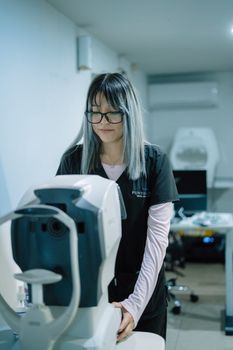
You arrive for an eye appointment expecting to see the doctor immediately, but another team member first asks about your symptoms, checks your vision, measures eye pressure, and reviews your medications. That person may be an ophthalmic assistant. Far from simply handling paperwork, this trained eye-care professional gathers information and performs tests that help the ophthalmologist evaluate your vision and eye health.
For patients, an ophthalmic assistant can make an appointment feel more organized and less intimidating. For job seekers, the role offers a practical entry into health care without requiring medical school or a four-year degree. Here is what the work involves, what a typical day looks like, and how to build a career in the field.
What Does an Ophthalmic Assistant Do?
An ophthalmic assistant supports an ophthalmologist, a physician who diagnoses and treats eye diseases and can perform eye surgery. The assistant collects accurate information, conducts approved tests, prepares patients, maintains equipment, and documents results for the doctor.
Exact responsibilities depend on the workplace, the assistant’s training, state requirements, and the supervising physician. Common duties include:
- Recording medical, surgical, medication, and eye-health histories
- Checking distance and near visual acuity with an eye chart
- Assessing pupils and eye movements
- Measuring intraocular pressure, also called eye pressure
- Testing peripheral vision or color vision
- Measuring eyeglass prescriptions with a lensometer
- Performing diagnostic imaging, such as retinal photography or optical coherence tomography
- Administering authorized eye drops under appropriate supervision
- Cleaning instruments and preparing examination rooms
- Explaining tests, contact-lens care, or postoperative instructions
- Entering findings into the electronic medical record
These tests provide important clinical information, but the assistant does not independently diagnose disease or prescribe treatment. For example, measuring elevated eye pressure may help identify a patient who needs further evaluation, but pressure alone cannot confirm glaucoma. The ophthalmologist interprets the complete examination and determines the diagnosis and care plan.
A Typical Day in an Eye Clinic
Preparing for Patients
The workday often begins by checking the schedule, preparing examination rooms, disinfecting equipment, and reviewing special testing needs. A patient coming for a routine examination may need basic vision testing, while someone with diabetes, glaucoma, cataracts, or a retinal condition may require imaging or other specialized measurements.
Starting the Examination
The assistant usually brings the patient into an exam room and asks why they came in. Careful questions matter. Sudden vision loss, flashing lights, new floaters, severe eye pain, an eye injury, or a red eye with nausea may require prompt attention. The assistant must recognize concerning information and quickly alert the supervising clinician rather than making a diagnosis.
Next, the assistant reviews medications, allergies, previous eye procedures, contact-lens use, and relevant medical conditions. Diabetes, high blood pressure, autoimmune disease, and family history can all be important to an eye evaluation.
Performing Tests
Testing varies by visit. Visual acuity measures how clearly a person sees, while tonometry measures pressure inside the eye. Visual field testing evaluates side vision, and retinal imaging creates detailed pictures that can help the doctor monitor changes over time. A comprehensive eye examination may combine several of these assessments because no single test provides a complete picture of eye health.
Some patients receive dilating drops so the doctor can examine structures inside the eye, including the retina and optic nerve. Because dilation can temporarily cause light sensitivity and blurry near vision, the assistant may remind the patient to use sunglasses and follow the clinic’s guidance about driving.
Supporting the Doctor and Patient
Once preliminary work is complete, the assistant summarizes findings and prepares the room for the ophthalmologist. During or after the physician’s examination, the assistant may update records, arrange additional testing, reinforce instructions, schedule follow-up care, or help a patient understand how to use prescribed eye drops correctly.
In surgical practices, experienced assistants may help with preoperative preparation, instrument setup, sterile procedures, and postoperative education. Their permitted duties depend on their qualifications, workplace policies, and level of supervision.
Where Ophthalmic Assistants Work
Most positions are found in ophthalmology offices and specialty eye clinics. Opportunities may also exist in hospitals, academic medical centers, ambulatory surgery centers, retinal practices, pediatric eye clinics, and glaucoma or corneal specialty practices.
The environment is generally clean, well lit, and fast paced. Assistants spend much of the day moving between rooms, operating equipment, using computers, and speaking directly with patients. Full-time schedules are common, although some practices offer part-time work. Clinics with emergency coverage or surgical schedules may require early mornings, evenings, or occasional weekends.
Education, Training, and Certification
Requirements differ among employers. Some candidates complete a postsecondary ophthalmic medical assisting certificate, while others enter through a supervised workplace-training route. Helpful coursework includes eye anatomy, medical terminology, infection control, patient communication, optics, pharmacology, and clinical testing.
The Certified Ophthalmic Assistant, or COA, credential is a recognized entry-level certification offered by the International Joint Commission on Allied Health Personnel in Ophthalmology. Eligibility may be based on an accredited training program or a combination of approved study and supervised work experience. Candidates should confirm current requirements before selecting a program or scheduling an examination.
A sensible starting plan includes:
- Earning a high school diploma or equivalent
- Researching ophthalmic assisting programs and local employer requirements
- Gaining supervised clinical experience
- Learning accurate documentation and equipment operation
- Completing cardiopulmonary resuscitation training if an employer requests it
- Pursuing certification when eligible
- Maintaining skills through continuing education
Skills That Matter in Everyday Practice
Technical knowledge is only part of the job. Patients may be nervous about losing vision, frustrated by long-term treatment, or unable to read forms because of poor eyesight. A successful ophthalmic assistant communicates calmly, gives clear directions, and allows patients enough time to respond.
Attention to detail is equally important. Mixing up the right and left eye, entering an incorrect medication, or recording the wrong measurement can affect the clinical record. Assistants must also follow privacy, infection-control, and safety procedures consistently.
Other valuable qualities include manual dexterity, comfort with technology, time management, teamwork, and the ability to remain composed when the schedule changes. People exploring support occupations more broadly can also learn from how responsibilities and advancement differ in other fields, such as these career opportunities in assistant fishing jobs.
Salary and Job Outlook
Pay varies by location, certification, experience, specialty, and employer. The Bureau of Labor Statistics career data for ophthalmic medical technicians reported a median annual wage of $45,570 in May 2025. It also projected employment to grow 21 percent from 2025 to 2035, although local hiring conditions and individual salaries may differ.
Experience can create opportunities to train new employees, coordinate patient flow, specialize in imaging, assist with surgery, or move into supervisory work. Some professionals pursue higher-level ophthalmic technician or medical technologist credentials. Others use the experience as preparation for careers in nursing, optometry, health administration, or other clinical fields.
Is This Career a Good Fit?
This role may suit you if you enjoy patient contact, detailed clinical work, and learning how sophisticated medical equipment operates. It can be rewarding to help a frightened patient feel comfortable or to collect accurate information that contributes to timely care.
However, the job also requires patience, precision, and emotional resilience. Clinics can be busy, some patients need substantial assistance, and eye emergencies require quick communication. Before enrolling in a program, consider observing an eye clinic, speaking with working assistants, or reviewing local job listings to understand employer expectations.
An ophthalmic assistant serves as an important connection between the patient, the technology, and the physician. With appropriate training and a commitment to careful, compassionate care, the position can provide both a meaningful daily role and a clear path for long-term advancement in eye health.