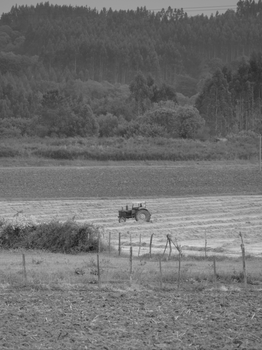
Imagine arriving at a crop trial early in the morning, checking soil-moisture sensors, collecting leaf samples, and discovering that one section of the field is showing signs of stress. By afternoon, you may be entering test results, calibrating equipment, and helping an agronomist decide whether the problem involves irrigation, nutrients, pests, or disease. This combination of fieldwork, science, and technology is central to the work of an agricultural technologist.
Although job titles vary among employers, agricultural technologists generally provide technical support for agricultural production, research, testing, and quality improvement. They help turn observations and scientific data into practical decisions that can improve crop performance, animal care, food quality, resource use, and workplace efficiency.
What Does an Agricultural Technologist Do?
An agricultural technologist works between hands-on farming and agricultural science. Rather than focusing only on routine production tasks, the technologist collects information, operates specialized equipment, follows testing procedures, and reports findings to scientists, farm managers, producers, or other agricultural professionals.
The role may overlap with positions such as agricultural technician, research technician, crop technician, field-testing technician, precision agriculture technician, or laboratory technician. Responsibilities depend heavily on the employer and specialty. Someone working for a seed company may monitor crop trials, while a technologist at a livestock facility may collect biological samples and maintain animal-care records.
Typical Daily Responsibilities
There is no single schedule that applies to every agricultural technologist. Work may change with the growing season, weather, research schedule, or production cycle. Common responsibilities include:
- Collecting soil, water, plant, feed, or animal samples according to established procedures
- Preparing samples for laboratory testing and storing them properly
- Operating tractors, irrigation systems, testing instruments, sensors, and other equipment
- Monitoring crops or animals for signs of disease, pests, nutritional problems, or environmental stress
- Installing, checking, and calibrating field or laboratory equipment
- Recording observations and entering research or production data
- Using spreadsheets, mapping systems, or farm-management software to organize information
- Maintaining experimental plots, greenhouses, livestock areas, or research facilities
- Creating charts, technical reports, presentations, and summaries of test results
- Following safety, sanitation, environmental, and quality-control procedures
Accuracy matters because a mislabeled sample, incorrect measurement, or incomplete record can affect an entire experiment or production decision. Agricultural technologists must therefore follow protocols carefully while remaining alert to unexpected conditions in the field.
Where Agricultural Technologists Work
An agricultural technologist may divide the day between outdoor sites, laboratories, processing facilities, greenhouses, barns, and offices. Common employers include farms, agricultural consulting firms, universities, government agencies, seed and fertilizer companies, food producers, biotechnology businesses, equipment manufacturers, and independent research organizations.
Field-based positions can involve heat, cold, dust, mud, insects, uneven ground, and exposure to noisy machinery. Laboratory work is usually more controlled but may require protective equipment and careful handling of chemicals or biological materials. Some jobs include lifting supplies, standing for long periods, driving between sites, or working early mornings and weekends during planting, harvesting, or time-sensitive trials.
Skills Needed to Succeed
Scientific and technical ability
Agricultural technologists need a working knowledge of plant or animal biology, soil science, chemistry, mathematics, and agricultural production. They should understand why samples are collected, how equipment functions, and what can interfere with reliable test results.
Observation and problem-solving
Small changes can signal larger problems. Wilting leaves, unusual insect activity, declining feed intake, or inconsistent sensor readings may require investigation. Successful technologists notice these details, document them, and help determine the next step rather than making unsupported assumptions.
Digital skills
Modern agriculture generates large amounts of information. Depending on the position, an agricultural technologist may use spreadsheets, GPS-enabled equipment, geographic information systems, remote sensors, mobile data-collection tools, or computerized laboratory instruments. Comfort with technology is important, but so is the ability to recognize when a device may be producing inaccurate readings.
Communication and organization
Technologists often work with scientists, producers, equipment operators, farm employees, and laboratory personnel. They need to explain observations clearly and maintain records that another person can understand. Time management is especially important when several samples, test sites, or production tasks must be handled on the same day.
Mechanical awareness
Not every agricultural technologist repairs machinery, but basic mechanical confidence is useful. Workers may need to inspect equipment, replace simple components, troubleshoot a sensor, or recognize when a machine should be removed from service and examined by a qualified specialist.
Education and Training Requirements
Requirements vary by employer. Many entry-level agricultural technician positions call for an associate degree in agricultural technology, agronomy, animal science, biology, food science, precision agriculture, or a related subject. Some employers accept a high school diploma combined with substantial agricultural experience, while research-intensive or supervisory roles may require a bachelor’s degree.
Helpful coursework may cover crop production, soil testing, pest management, livestock systems, agricultural machinery, chemistry, statistics, computer applications, and laboratory methods. Internships, cooperative education, farm employment, or supervised research can be particularly valuable because employers often want candidates who are comfortable working in real agricultural environments.
Training normally continues after hiring. New employees must learn the organization’s equipment, documentation systems, safety practices, and testing protocols. Specialized duties may require additional employer training or credentials.
Salary and Career Outlook
In the United States, the Bureau of Labor Statistics groups closely related positions under agricultural and food science technicians. Its career data for agricultural and food science technicians reports that the median annual wage for agricultural technicians was $49,630 in May 2025. Actual earnings depend on education, experience, location, industry, specialty, and level of responsibility.
Employment of agricultural and food science technicians is projected to grow 5 percent from 2025 through 2035, faster than the average for all occupations. Demand is connected to continuing research involving crop resilience, pests and pathogens, soil quality, water resources, livestock production, food processing, and more efficient use of agricultural inputs.
Career growth may lead to positions such as senior technician, laboratory coordinator, crop consultant, research manager, precision agriculture specialist, quality-control supervisor, or agricultural sales and technical-support representative. Completing a bachelor’s degree may also open paths into agricultural science, agronomy, environmental science, or management.
Is This Career a Good Fit for You?
This career may suit you if you enjoy science but do not want to spend every day at a desk. It is also a strong option for people who like practical problem-solving, working with equipment, observing plants or animals, and seeing how data affects real production decisions.
However, prospective students should be comfortable with variable conditions and detailed procedures. Agricultural work can be physically demanding, seasonal, and affected by weather. A person who dislikes outdoor work, repetitive sample collection, or careful recordkeeping may prefer a different technical field.
Before choosing a program, compare its curriculum, laboratory facilities, internship opportunities, faculty experience, transfer options, and relationships with local agricultural employers. If you are considering several hands-on technical occupations, reviewing how training works in another field, such as this guide to career opportunities in a surgical technologist program, can help you compare work environments and educational expectations.
A Career Connecting Science With the Field
An agricultural technologist helps producers and researchers understand what is happening in fields, laboratories, greenhouses, and livestock facilities. The job combines scientific procedures, digital tools, mechanical equipment, and practical agricultural knowledge. For someone who wants a technical career with visible, real-world results, it can provide a meaningful route into modern agriculture without limiting work to either the farm or the laboratory.