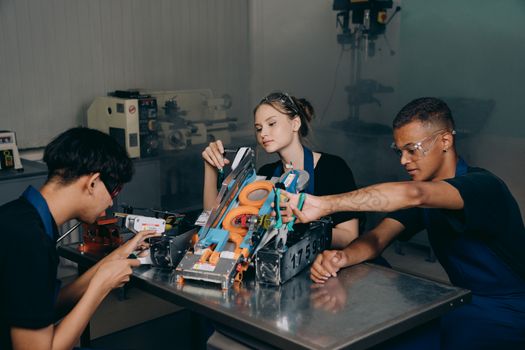
You may picture elevator mechanic school as a traditional trade-school program with classrooms, tuition and a graduation ceremony. In practice, the most common route is different: aspiring mechanics usually enter a paid apprenticeship that combines technical instruction with supervised work in actual buildings. Understanding that distinction can help you avoid enrolling in a program that teaches useful basics but does not provide the experience or credentials employers expect.
What Is Elevator Mechanic School?
The phrase “elevator mechanic school” can refer to a union or employer-sponsored apprenticeship, a technical education program, or a combination of both. Elevator mechanics—also called elevator constructors, installers or repairers—work on elevators, escalators, moving walkways and other lifting equipment.
Most people enter the occupation with a high school diploma or equivalent and complete an apprenticeship. According to the U.S. Bureau of Labor Statistics career guide for elevator installers and repairers, a typical apprenticeship lasts four years and includes technical instruction plus paid on-the-job training.
A certificate from a technical school may strengthen an application, especially if it develops electrical, mechanical or welding skills. However, it does not automatically replace an apprenticeship. Before paying for a program, ask whether it is connected to employers, a union, an industry association or a registered apprenticeship sponsor.
What Does the Curriculum Cover?
An elevator is not simply a platform pulled by cables. It is a coordinated system of motors, brakes, doors, sensors, controllers, wiring and safety devices. Hydraulic elevators also use pumps, valves, cylinders and fluid systems. Training therefore draws from several skilled trades.
Electrical and Electronic Systems
Students learn electrical theory before progressing to motors, relays, switches, transformers, control panels and computerized controllers. Coursework may address alternating and direct current, circuit diagrams, voltage testing and safe troubleshooting. Because modern elevators rely heavily on digital controls and sensors, trainees must learn how mechanical and electronic components interact.
Mechanical Systems
Mechanical instruction covers traction machines, sheaves, bearings, guide rails, counterweights, brakes and door operators. Students learn how components are assembled, aligned, lubricated, adjusted and replaced. They also study the differences among traction elevators, hydraulic systems, escalators and related conveyances.
Blueprints, Codes and Mathematics
Mechanics must read construction drawings, wiring diagrams and manufacturers’ instructions accurately. Applied mathematics helps them calculate measurements, clearances, loads and electrical values. Programs may also introduce relevant building, electrical and elevator codes, although apprentices must continue learning the rules enforced in their local jurisdiction.
Safety Procedures
Safety training is central because mechanics may work around electrical energy, moving machinery, suspended loads and open hoistways. Instruction commonly addresses fall protection, personal protective equipment, safe ladder use, hazard communication, hoisting and rigging, and procedures for controlling hazardous energy. Trainees must learn to identify a hazard and secure the work area before beginning a repair.
Hands-On Skills Students Practice
Classroom knowledge matters, but an elevator mechanic becomes competent through repeated, supervised practice. Early apprentices usually assist experienced workers and take on more complex assignments as they demonstrate safe performance.
- Using multimeters and other testing equipment to check electrical circuits
- Reading wiring diagrams and tracing faults through a control system
- Installing rails, doors, fixtures, cables and mechanical assemblies
- Inspecting brakes, switches, sensors and emergency devices
- Adjusting door timing, alignment and leveling accuracy
- Maintaining hydraulic pumps, valves, cylinders and piping
- Lubricating equipment and replacing worn components
- Using hand tools, power tools, hoists and rigging equipment safely
- Testing completed work and documenting maintenance or repairs
Troubleshooting is one of the most valuable skills. A mechanic may receive a report that an elevator stops unevenly, makes an unusual noise or refuses to open at a floor. The mechanic must interpret the complaint, inspect the equipment, test possible causes and correct the problem without creating another hazard.
General mechanical ability can make this learning process easier. Students can explore how practical repair knowledge supports long-term employment in this guide to the career benefits of developing mechanic skills.
Admission Requirements and Useful Preparation
Requirements vary by apprenticeship sponsor, employer and location. Applicants commonly need to be at least 18, possess a high school diploma or equivalent, and meet requirements related to physical ability, transportation and work authorization. Selection may include an aptitude test, interview or drug screening.
Helpful high school subjects include algebra, geometry, physics, mechanical drawing, electronics and shop. Experience in electrical work, industrial maintenance, construction, welding or automotive repair can also improve an applicant’s readiness. Strong reading skills are important because mechanics must follow technical manuals, code provisions and detailed safety procedures.
Physical preparation matters as well. The work may involve climbing, kneeling, lifting, standing for long periods and entering cramped machine spaces. Applicants should understand that job sites may be hot, cold, dusty or noisy, and repair mechanics may sometimes be on call outside normal business hours.
Credentials You May Need
Completing training is only one part of becoming job-ready. Credential requirements depend on state and local law, the employer and the type of work performed.
Apprenticeship Completion
A recognized apprenticeship completion credential shows that the worker has finished the required classroom instruction and on-the-job training. After completing the program, an apprentice may advance to mechanic or a comparable journey-level position, depending on the sponsoring organization.
State or Local License
Many states require elevator mechanics to hold a license. Requirements may include documented experience, approved education, an examination, fees and periodic renewal. Some cities or other local jurisdictions impose additional rules. Prospective students should check the licensing authority where they plan to work rather than assume that a school certificate is sufficient.
Optional Certifications
Industry certifications can demonstrate knowledge in areas such as installation, maintenance, inspection or accessibility equipment. A certification does not necessarily grant legal permission to work, so it is important to distinguish voluntary certification from a government-issued license.
Employers may also value safety training, welding qualifications, first-aid preparation or a valid driver’s license. Continuing education is often necessary because control technology, equipment designs and code requirements change over time.
How to Evaluate an Elevator Mechanic Program
Do not select a program based only on its name or advertising. Ask direct questions about where graduates work and what the program actually qualifies them to do.
- Is the program part of or connected to a recognized apprenticeship?
- Does training include paid, supervised job-site experience?
- Who provides instruction, and what industry experience do instructors have?
- Are electrical controls, hydraulics, safety and troubleshooting covered?
- Does the program prepare students for applicable licensing examinations?
- What tools, books, fees and travel costs are not included?
- Are completion rates and job-placement claims documented?
- Will the credential be recognized by employers in the intended work location?
Be cautious if a short course promises immediate qualification as a fully trained elevator mechanic. This occupation involves safety-critical equipment, and competence develops through extensive supervised practice rather than classroom instruction alone.
What Happens After School?
New mechanics commonly begin with installation, maintenance or repair work. With experience and additional training, they may move into advanced troubleshooting, system adjustment, modernization, supervision or inspection. The best preparation is a program that builds sound technical knowledge while requiring safe, consistent performance in real working conditions.
For most candidates, elevator mechanic school is not one isolated educational event. It is the classroom portion of a longer apprenticeship and career-long learning process. Look for training that combines recognized instruction, substantial hands-on experience and credentials accepted in the area where you want to work.