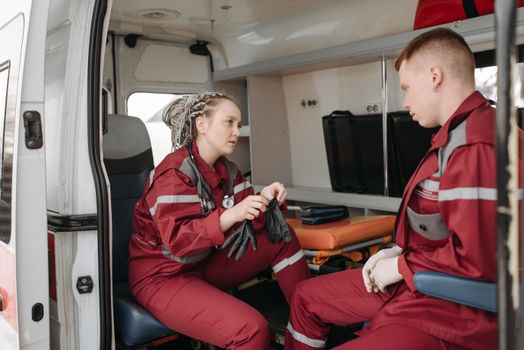
You are ready to start an emergency medical services career, but you may be wondering whether becoming an EMT requires years of college. The short answer is no. Most people can complete EMT school, pass the required examinations, and obtain a state license in about two to six months. Accelerated students may finish sooner, while part-time students or those facing licensing delays may need six months or longer.
The exact timeline depends on your course schedule, state requirements, clinical or field experience, examination availability, and how quickly your licensing application is processed. For a convenient overview, you can bookmark this guide to how long it takes to become an EMT.
How Long Is EMT Training?
Initial EMT education commonly includes around 150 hours of instruction, although states and individual programs may require more. National EMS education guidance is competency-based, meaning students must demonstrate that they can apply the required knowledge and skills rather than simply complete a certain number of classroom hours.
How long EMT training takes on the calendar depends on how those hours are scheduled:
- Accelerated programs may take six to eight weeks and usually require classes or training on several days each week.
- Traditional college programs often last 12 to 16 weeks, or approximately one semester.
- Evening and weekend programs may take four to six months because class hours are spread out.
- Programs that include additional clinical shifts, internships, or local requirements may take longer.
An accelerated course is not necessarily easier. It covers substantially the same entry-level material in a shorter period, so students may have daily classes, frequent examinations, skills practice, and significant reading outside class.
What Happens During EMT School?
EMT school combines academic instruction with hands-on practice. Students learn how to assess patients, recognize life-threatening conditions, provide basic emergency care, and assist with safe transportation. The curriculum generally covers airway and breathing emergencies, cardiac arrest, shock, bleeding, trauma, medical emergencies, childbirth, pediatric care, ambulance operations, communication, and patient documentation.
Skills laboratories allow students to practice procedures such as taking vital signs, providing CPR, using an automated external defibrillator, controlling bleeding, assisting ventilation, moving patients, and performing organized patient assessments. Programs may also require patient contacts in an ambulance, another mobile healthcare setting, or an approved simulated environment.
Attendance matters because EMT education includes practical skills that cannot be mastered through reading alone. Missing a laboratory, clinical shift, or field assignment can delay graduation, even if your academic grades are satisfactory.
The EMT Certification and Licensing Process
Finishing school is a major step, but course completion alone generally does not authorize you to work independently as an EMT. The typical process includes the following stages.
1. Meet the program’s admission requirements
Requirements vary by school and state. A program may ask for a high school diploma or equivalent, government-issued identification, CPR or Basic Life Support training, immunization records, health screening, a background check, or drug testing. Some jurisdictions have minimum-age rules for certification or employment.
2. Complete a state-approved EMT course
Choose a program approved by the appropriate state EMS authority. If you intend to pursue National Registry certification, the course must meet or exceed the National EMS Education Standards. Students normally must pass written tests, practical evaluations, and all required clinical or field components.
3. Complete the certification examination
Many states use the National Registry of Emergency Medical Technicians examination as part of the certification process. The EMT examination is computer-adaptive, meaning the number and difficulty of questions can change based on the candidate’s responses. Once an application, payment, program verification, and other requirements are complete, an Authorization to Test is issued so the candidate can schedule the examination.
The National Registry EMT education pathway requirements state that applicants must successfully complete an approved course, pass the certification examination, and satisfy any state-approved Basic Life Support skills competency requirement.
4. Satisfy practical skills requirements
The National Registry does not administer a separate EMT psychomotor examination, but a state may still require an approved practical skills evaluation. In some programs, competency is verified during the course. In others, students must attend a separate skills examination after graduation.
5. Apply for state licensure
National certification and state licensure are related but are not the same thing. National Registry certification shows that you met national examination standards; your state license or certification provides legal authorization to practice within that jurisdiction.
State applications may involve fees, identity verification, fingerprints, a criminal background check, proof of course completion, and examination results. Processing can take anywhere from several days to several weeks. Applicants should check with their state EMS office because requirements differ across the country.
Realistic EMT Timeline From Enrollment to Licensure
A student entering a traditional semester program might follow this schedule:
- Program admission and prerequisite paperwork: one to four weeks
- EMT course and skills training: eight to 16 weeks
- Clinical or field assignments: completed during the course or shortly afterward
- Examination application and scheduling: several days to a few weeks
- State licensing review: several days to several weeks
Altogether, a smooth process may take about three to five months. A highly accelerated route could take roughly two months, while limited course availability, missed clinical shifts, examination retakes, or background-check delays can extend the process beyond six months.
Can You Complete EMT School Online?
Some programs offer lectures and assignments online, but EMT training cannot usually be completed entirely from home. Students still need supervised skills laboratories and may need in-person clinical or field experience. Before enrolling in a hybrid course, confirm that it is approved by the state where you plan to become licensed.
Be cautious with programs promising instant or fully online EMT certification. Completing online lessons does not replace hands-on competency testing, the certification examination, or state licensing requirements.
Ways to Avoid Delays
- Verify state approval before paying for a course.
- Complete background checks, health records, and CPR prerequisites early.
- Plan transportation for laboratories and clinical shifts.
- Study throughout the course instead of waiting until the certification examination.
- Submit examination and licensing applications as soon as you are eligible.
- Keep copies of course records, identification, CPR credentials, and examination results.
Is EMT Training the Same as Paramedic School?
No. EMT is an entry-level EMS credential focused on basic emergency assessment, stabilization, and transportation. Paramedic education covers advanced procedures, medications, cardiac care, and other higher-level interventions, so it usually takes much longer. Many paramedic programs require applicants to hold an EMT credential first.
The Bottom Line
So, how long does it take to become an EMT? For most students, the full journey takes approximately two to six months. EMT school itself commonly lasts eight to 16 weeks, but part-time programs may run longer. You must then complete the appropriate examination, demonstrate required skills competency, and receive state authorization before practicing. Careful program selection and early paperwork preparation can help you move from the classroom to an entry-level EMS position without unnecessary delays.